Eat, Pray, War: Pakistan Hosts Peace Summit Paradox
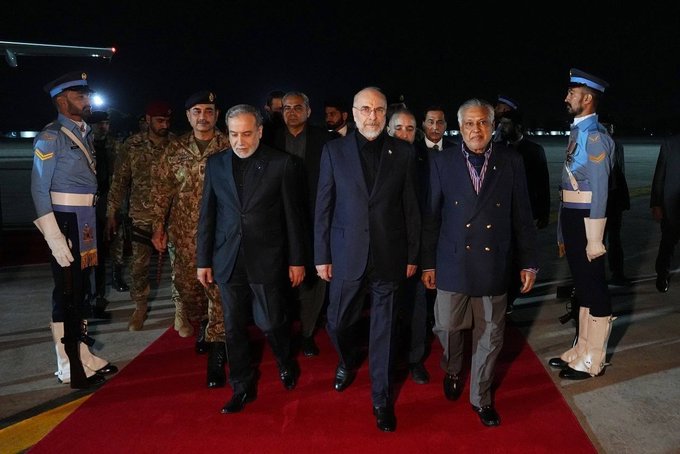
Iranian delegation arrives in Islamabad for summit. (Image X.com)
A nation with a fraught record on terror financing and FATF compliance steps into the global spotlight as mediator — while the two sides it is shuttling between have almost nothing in common*
By NIRENDRA DEV
New Delhi, April 11, 2026 — There is a line attributed to Joe Biden from 1986: “If there were not an Israel, we’d have to invent one.” In 2026, watching Pakistan emerge as the improbable host of the most consequential peace talks of the new century, one is tempted to imagine Donald Trump thinking something similar about General Asim Munir’s Pakistan — a country too useful to abandon, too unreliable to fully trust, and too broke to say no.
Welcome to the defining paradox of 2026: a rogue-adjacent state with a long and documented history of playing hide-and-seek with terror financing and FATF norms is now the venue for US-Iran ceasefire negotiations. The optics alone are extraordinary. The substance is more complicated still.
Why Pakistan — and why now
Pakistan brings genuine geographic and demographic assets to this role: a 900-kilometre border with Iran, the world’s second-largest Shia Muslim population, and the rare distinction of hosting no US military bases — which lends it a thin veneer of neutrality in Tehran’s eyes. It is also, as Trump might say, a useful beggar under a compliant Field Marshal, with no leverage to refuse Washington’s request and every incentive to seize a moment of global relevance.
But usefulness and credibility are different things. And what the Islamabad talks require above all else is credibility.
The trust deficit is total
The most honest assessment of the summit’s prospects comes in two words: no trust. The declared positions of the two delegations are as far apart as it is possible to be. Trump’s 15-point plan — never officially released but widely understood to have been deliberately leaked — reads, in Iranian eyes, closer to a surrender document than a framework for negotiation. Iran’s own 10-point proposal, which demands oversight of the Strait of Hormuz and full withdrawal of US combat forces from the Middle East, has been consistently rejected by Washington in every prior iteration.
Pakistani intermediaries — Prime Minister Shehbaz Sharif included — will be shuttling between two delegations that share no discernible common ground. The declared timeline is 15 days. It is a tight window for a near-impossible task.
Trump’s political calendar complicates everything
The Americans are not negotiating in a vacuum. Trump has already begun speaking about the war in the past tense — declaring victory before the ink is dry on anything. JD Vance, leading the US delegation, has the 2028 presidential race in sharper focus than any Iranian demand. November 2026 midterm elections require falling petrol prices, not prolonged military engagement. A state visit from King Charles looms later this month. A potential summit with Xi Jinping is pencilled in for May.
Trump needs an exit route. Iran needs time to regroup — its cities have been at an economic standstill since the conflict began on February 28, and the regime, for all its defiant posture, has absorbed massive damage.
International law and its ruins
Hovering over all of this is the accelerating collapse of the rules-based international order. Israel has continued its assault on Lebanon despite ceasefire announcements. The International Criminal Court’s arrest warrants for Israeli leaders have been ignored by Western governments that once delivered lectures on democratic norms. The ICC’s judges were placed on a US sanctions list. The world noticed.
India, Russia, China — and quietly, Pakistan — understand that international law as a constraining force is already in ruins. The Islamabad talks are not an attempt to rebuild it. They are an attempt to manage its absence.
Perhaps the most honest summation comes not from any diplomat but from a ghazal: Chupke chupke aansu behna — weeping quietly, hoping no one sees. Pakistan is hoping for a miracle. The miracle, as yet, has not RSVP’d.
Follow The Raisina Hills on WhatsApp, Instagram, YouTube, Facebook, and LinkedIn




About The Author