NATO Must Shift From Crisis Response to Permanent Deterrence: Andrew A. Michta
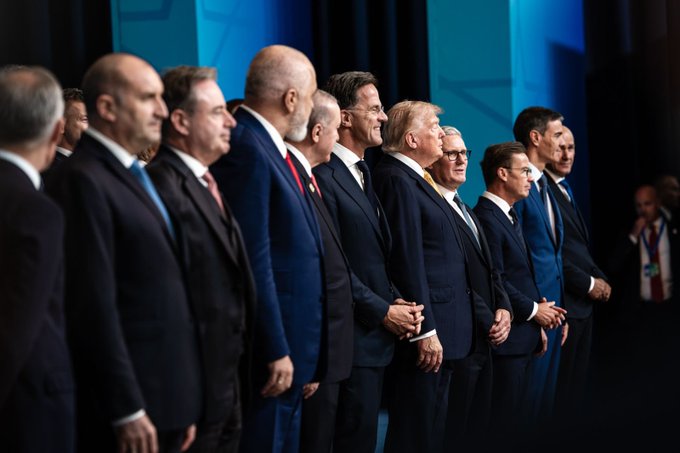
NATO Summit in Ankara (Image NATO on X)
By TRH World Desk
Writing in 19FortyFive, Professor Andrew A. Michta argues NATO’s post-Ankara strategy should focus on forward defence, military-industrial expansion and deterring Russia rather than relying on reactive crisis management.
New Delhi, July 10, 2026 — NATO should abandon its traditional focus on crisis management and instead make the defence of its eastern frontier the centrepiece of its long-term strategy, according to strategic affairs scholar Andrew A. Michta.
Writing in 19FortyFive, Michta, Professor of Strategic Studies at the Hamilton School, argues that the alliance’s direction after the Ankara summit signals a fundamental transformation—from expeditionary operations to a posture built on forward defence, industrial capacity and sustained deterrence against Russia.
According to Michta, the war in Ukraine has fundamentally altered Europe’s security architecture. NATO, he contends, can no longer assume that deterrence alone will prevent future aggression without maintaining credible military forces permanently deployed along its eastern border.
“The eastern flank now comes first,” Michta argues, saying that countries bordering Russia and Belarus have become the alliance’s principal line of defence rather than its strategic periphery.
He writes that the alliance must build the military capabilities necessary to deny Russia any opportunity for rapid territorial gains, replacing the older model that relied on reinforcing allies only after a conflict had begun.
Michta also stresses that military readiness alone will not be enough. He argues NATO must rebuild its defence-industrial base after decades of underinvestment that followed the end of the Cold War.
According to the article, Europe and North America need to expand defence production, strengthen supply chains, replenish ammunition stockpiles and ensure their industrial sectors can sustain a prolonged conflict if necessary.
The scholar says NATO’s challenge is no longer simply maintaining interoperability among allied forces but generating the industrial capacity required for long-term strategic competition.
Michta further argues that Europe’s security will increasingly depend on closer coordination between the United States and European allies, even as Washington continues to devote growing attention to the Indo-Pacific and China’s military rise.
Rather than viewing European and Indo-Pacific security as competing priorities, he suggests they should be treated as interconnected theatres in a broader contest among major powers.
The article also calls on European governments to translate recent increases in defence spending into tangible military capabilities instead of symbolic budget announcements.
According to Michta, NATO’s credibility will ultimately depend not on summit communiqués but on its ability to deploy combat-ready forces, sustain industrial production and convince Moscow that any attack on alliance territory would be impossible to achieve at an acceptable cost.
His assessment reflects a growing debate among Western strategic thinkers that the alliance is entering a new era in which deterrence will depend as much on industrial resilience and sustained defence investment as on troop numbers and advanced weapon systems.
Follow The Raisina Hills on WhatsApp, Instagram, YouTube, Facebook, and LinkedIn




About The Author