Ethanol-Blended Petrol Under Fire? Centre Says E20 Is Safe, Scientifically Tested
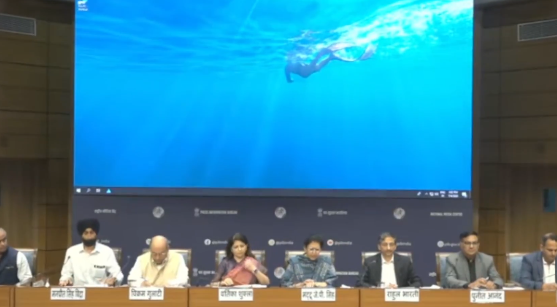
Viral Posts Spark E20 Debate, Government and Auto Industry Reaffirm Safety of Ethanol-Blended Petrol (Image PIB video grab)
By KUMAR VIKRAM
Modi Govt Defends E20 Petrol Amid Social Media Row, Says Ethanol Blending Is Backed by Science and Global Standards
New Delhi, July 4, 2026 — The Narendra Modi government has mounted a coordinated defence of India’s ethanol-blended petrol programme after viral social media posts alleging vehicle damage sparked fresh concerns over the nationwide rollout of E20 fuel.
In an apparent damage-control exercise, the Press Information Bureau (PIB) hosted industry experts to explain the scientific basis of ethanol blending, while Toyota Kirloskar Motor (TKM) issued a detailed statement rejecting claims that E20 fuel had damaged one of its vehicles.
The government’s intervention comes as social media has seen a spike in posts questioning whether ethanol-blended petrol is harming vehicles, with some critics alleging that the policy benefits ethanol producers at the expense of consumers.
PIB Brings Experts to Defend E20
Addressing the controversy, Vartika Shukla, an industry expert speaking at the PIB briefing, stressed that India’s ethanol blending programme was neither abrupt nor experimental.
“This ethanol blending in petrol has not been done overnight. It is a measured, scientifically driven, step-by-step process,” she said.
According to Shukla, India was blending only around 1.5% ethanol in petrol in 2013-14 before gradually scaling up the programme. She noted that the government achieved its ambitious 20% ethanol blending (E20) target by December 2025, five years ahead of schedule.
The programme, she said, underwent extensive consultations beginning in 2018 with automobile manufacturers, fuel companies, scientific institutions and regulators.
“It is supported by scientific evidence, extensive testing by automotive manufacturers and agencies such as the Automotive Research Association of India (ARAI) and SIAM, and is aligned with global best practices aimed at reducing carbon emissions,” Shukla said.
The government has consistently projected ethanol blending as a key pillar of India’s energy transition strategy, arguing that it reduces crude oil imports, cuts emissions and supports sugarcane farmers.
Toyota Rejects E20 Blame
The controversy intensified after a customer video circulated widely on social media claiming that a Toyota Hycross developed problems after being refuelled with E20 petrol. Toyota Kirloskar Motor responded with an unusually detailed public statement.
The company clarified that the Hycross involved was fully compatible with E20 fuel and had been designed, tested and certified for its use. Following a technical inspection, Toyota said engineers found no damage to the vehicle or its fuel system.
Instead, the company concluded that the problem had resulted from fuel contamination, not ethanol blending. According to Toyota, technicians drained and cleaned the fuel system, refilled the vehicle with standard E20 fuel and found it functioning normally before returning it to the customer.
“It is clearly apparent that this incident is not related to E20 fuel usage and was solely caused by non-standard and contaminated fuel,” the company said.
Toyota also advised motorists to refuel only at authorised and reputed fuel stations to minimise the risk of contamination or adulteration.
Viral Social Media Posts Add Pressure
The government’s clarification follows a series of widely shared posts from vehicle owners alleging fuel-related problems.
Among the most discussed was a post by X user Renuka Jain, who described her family’s experience during a road trip to Kasauli. She claimed that after refuelling near Chandigarh, their Land Rover Defender repeatedly stalled, forcing them to take nearly ten hours to complete a journey that normally takes much less.
According to her account, the dealership later informed them that the fuel had affected the vehicle’s fuel tank, with repair costs covered under an extended warranty.
Jain criticised ethanol blending, writing that “someone’s son is making money at the cost of lakhs of Indians” and questioned why the Opposition was not raising the issue.
The post quickly gained traction, adding momentum to online criticism of the government’s ethanol policy.
Science Versus Social Media
The government’s decision to deploy experts through the PIB, combined with Toyota’s public clarification, reflects growing concern that “misinformation” could overshadow years of scientific testing and regulatory preparation.
Industry bodies including SIAM and ARAI have previously maintained that vehicles certified as E20-compatible undergo extensive validation before entering the market.
At the same time, experts note that fuel contamination and adulteration remain distinct issues that can affect vehicle performance regardless of whether petrol contains ethanol.
As India moves deeper into its biofuel transition, the debate is likely to shift beyond engineering to public perception. For the Modi government, the challenge will be ensuring that confidence in one of its flagship green-energy initiatives is not eroded by viral anecdotes, even as manufacturers and regulators insist that the science behind E20 remains sound.
Follow The Raisina Hills on WhatsApp, Instagram, YouTube, Facebook, and LinkedIn




About The Author