The Long March, retold in orbit: how Beijing turns a 1934 retreat into a 2026 launch pad
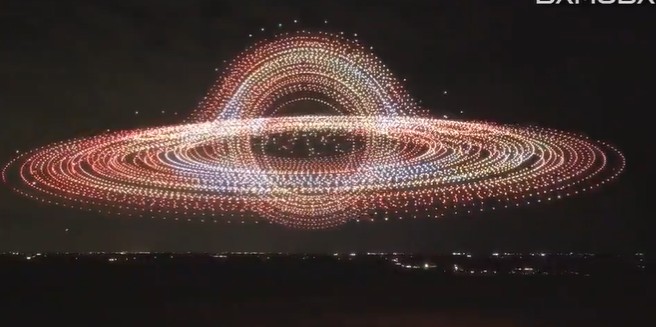
Ambassador Xie Feng links the Long March’s 90th anniversary to 671 rocket launches. A commentary on the history, the facts and the framing behind it. (Image video grab)
By TRH World Desk
Ambassador Xie Feng links the Long March’s 90th anniversary to 671 rocket launches. A commentary on the history, the facts and the framing behind it.
New Delhi, October 24, 2026 — On October 22, China marked 90 years since the end of the Long March. Ambassador Xie Feng’s post on X to American readers compresses that history into a few lines. It quotes President Xi Jinping on every generation having its own march, then links the 1934-36 trek to rockets and submarines.
The Long March-1 rocket put China’s first satellite, Dongfanghong-1, into orbit on April 24, 1970, and by October 10, 2026 the rocket family had completed 671 launches. That tally includes 650 successes, 12 failures and 9 partial failures.
The original march was a retreat that became a founding story. From October 1934 to October 1936, the Red Army trekked 12,500 km, and at the battle on the Xiangjiang River, more than 50,000 of its 86,000 troops died. Mao Zedong and his comrades reached Yan’an, which became the party’s headquarters from 1935 to 1948. Few events turned a near-defeat into a national myth so thoroughly.
The link to space has an unusual geography. The Xichang Satellite Launch Center sits in the Liangshan region, which Red Army troops had crossed decades earlier. The old route and the launch pad share the same hills.
Xi’s line is a political instrument as much as an inspirational one. He used it at the 80th anniversary in 2016, saying each generation has its own long march and should proceed in its own way. In that framing, his generation’s march meant reaching the two centenary goals and national rejuvenation. By 2026, the metaphor stretches to cover rockets, reusable boosters, submarines and lunar plans. The Long March 10B achieved China’s first orbital booster recovery, using a net-based system. Each milestone is presented as the next leg of the same journey.
Three caveats matter. First, historians have long debated the official telling. Accounts such as Sun Shuyun’s retracing of the route have questioned how heroic some celebrated episodes, including the Luding Bridge crossing, really were.
Second, the rocket that carried the symbolism was itself built from military technology. The first Long March rocket is derived from the Dongfeng-3 ballistic missile.
Third, the submarine belongs to a nuclear weapons programme, so the sentimental name sits beside strategic hardware.
None of this makes the achievements unreal. China’s launch record is large by any standard. But a post written for an American audience uses revolutionary memory to give technological prestige a moral weight that numbers alone cannot.
The Long March is China’s most flexible metaphor. It can mean sacrifice, endurance, self-reliance or national progress, depending on the speaker. That flexibility is its strength, and also the reason it deserves careful reading when it appears in diplomacy.
China’s ‘Peaceful Rise’? A Timeline Written in Blood and Bullying
Follow The Raisina Hills on WhatsApp, Instagram, YouTube, Facebook, and LinkedIn




About The Author