LK Advani and the Politics of Karma: Fate and Free Will Collide
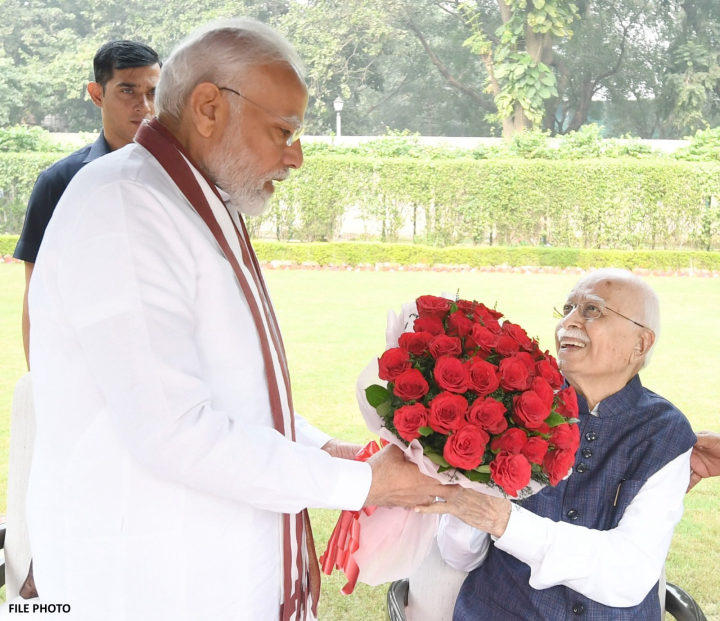
PM Narendra Modi with BJP patriarch LK Advani
Using L.K. Advani’s unfulfilled prime ministerial quest as a lens, this op-ed asks whether karma—not competence—ultimately decides who rules India.
By NIRENDRA DEV
New Delhi, December 28, 2025 — If karma has a political vocabulary, L.K. Advani may be its most compelling case study. Few leaders shaped post-Independence Indian politics as decisively—and yet, few were denied its ultimate prize as repeatedly. Advani qualifies description of the most consequential Prime Minister India never had. In the ruthless arithmetic of power, destiny often trumps merit.
Advani arrived in India as a refugee from Pakistan after Partition and rose through sheer organisational grit to become the ideological and strategic backbone of the BJP. He was never a placeholder. He was the centre of gravity. Yet when the moment came, power slipped away—not once, but persistently. This is where politics begins to resemble karma: action without proportionate reward.
Contrast this with the accidental rise of leaders like I.K. Gujral, H.D. Deve Gowda, and Manmohan Singh—men of integrity, yes, but beneficiaries of political coincidence rather than mass mandate. Singh’s ascent was famously engineered by Sonia Gandhi; Deve Gowda’s by Harkishen Singh Surjeet. In both cases, circumstance trumped ambition. Power arrived not as conquest, but as inheritance.
Then there is Jyoti Basu—another leader history kept waiting. In 1996, it was Prakash Karat who persuaded the CPI(M) politburo to block Basu’s prime ministerial bid. Basu himself later called it a “historic blunder.” Karma, perhaps, operates not only through personal choices but through collective vetoes.
Indian political culture has long internalised the idea that certain outcomes are pre-written. In Bengali idiom, janma, mrityu aur vivah—birth, death and marriage—are beyond human control. Politics may belong in that list. Advani’s denial, Basu’s rejection, and Singh’s elevation all suggest that power often flows where intention does not.
Yet karma in politics is not metaphysical mysticism. It is cause and effect layered with timing, alliances, betrayal and hesitation. Advani made enemies. He carried ideological baggage. He was indispensable—but perhaps too defined to be convenient.
As 2025 closes, Indian politics once again confronts this uncomfortable truth: elections measure popularity, but history measures fate. In the end, leaders may shape movements—but destiny decides crowns.
(This is an opinion piece. Views are personal.)
Atal Bihari Vajpayee Legacy: Poet Who Softened BJP’s Hard Edge
Follow The Raisina Hills on WhatsApp, Instagram, YouTube, Facebook, and LinkedIn




About The Author