Civil Servants and Legal Protection: When Should Government Pay for an Officer’s Defence?

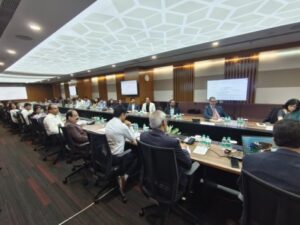
BRICS anti-corruption meeting in New Delhi. (Image DoPT on X)
By P. SESH KUMAR
From Coalgate and 2G to the 2026 DoPT circular, India needs a modern framework that protects bona fide decisions without shielding corruption
New Delhi, August 13, 2026 — There is another side to the debate over government-funded legal assistance for civil servants—one that is easily lost when every prosecution of a government officer is viewed through the binary lens of corruption versus impunity.
Some officers who enjoyed reputations for personal integrity within the civil service have spent years of retirement moving between lawyers’ chambers and criminal courts for decisions taken while they occupied government office.
The coal-block cases provide a stark example.
H.C. Gupta, Coal Secretary between 2005 and 2008, faced multiple prosecutions arising from Screening Committee recommendations made during that period.
His case generated considerable disquiet within the IAS fraternity. After convictions of Gupta, K.S. Kropha and K.C. Samaria, the IAS Association publicly described them as “honest IAS officers” and called the development profoundly unfortunate. That was a professional assessment, not a judicial finding of innocence.
The subsequent judicial record has itself been mixed.
Gupta has been convicted in some coal-block cases, with sentences stayed while remedies were pursued, but has also subsequently been discharged or acquitted in several others.
In the Bander coal-block case, decided in March 2026—roughly 17 years after the allocation and well after Gupta had retired—the Special CBI Court acquitted him and others.
The case demonstrated the enormous time gap that can exist between an administrative decision and its eventual criminal adjudication.
By then, however, the punishment of process had already lasted more than a decade: repeated prosecutions, court appearances, legal expenses, public stigma and the peculiar burden of a retired Secretary to Government having to defend decisions taken across a committee table many years earlier.
The 2G case illustrates the problem differently
The 2G spectrum litigation presents another dimension. The CAG’s 2010 Performance Audit sharply questioned the manner in which licences and spectrum were allocated.
The audit examined policy implementation, transparency and financial consequences. It was not, by itself, a determination of the criminal guilt of individual public servants.
Former Telecom Secretary Siddharth Behura was nevertheless arrested in February 2011 and prosecuted along with political and corporate accused under the IPC and Prevention of Corruption Act.
After years of trial, the Special CBI Court acquitted him and the other accused in December 2017.
Yet acquittal did not close the chapter.
The CBI challenged the judgment in 2018, and the Delhi High Court granted leave to appeal in March 2024, six years after the appeal had been filed, holding that aspects of the evidence required deeper examination.
Thus, the striking feature of the 2G case is the ability of an official decision to generate legal consequences that follow a bureaucrat across a substantial part of his post-service life.
Behura himself, after his acquittal, publicly argued that fear generated by cases such as his had damaged decision-making within the bureaucracy.
An audit finding is not an FIR
These cases also point to a distinction important for the CAG itself.
An audit finding is not an FIR. An audit-estimated financial consequence is not a finding of personal pecuniary gain.
Administrative irregularity is not automatically criminal mens rea.
CAG’s coal-block Performance Audit and its 2G Spectrum Performance Audit legitimately subjected the allocation of scarce national resources to searching scrutiny.
That is what public audit is expected to do. But criminal investigation has a different task.
It must travel the additional distance from a defective governmental process to the culpability of a particular individual under criminal law.
That evidentiary bridge cannot be supplied merely by the magnitude of an audit number or the intensity of subsequent political controversy.
Did Coalgate and 2G lead to the June 2026 clarification?
Here, restraint is necessary. There is presently no documentary evidence in the June 15, 2026 DoPT letter saying that the coal-block prosecutions, the 2G case, H.C. Gupta, Siddharth Behura or any particular officer prompted the circular.
The letter gives a more guarded explanation. It says there had been instances where questions were raised about the availability and circumstances in which legal and financial assistance could be provided to AIS officers.
DoPT therefore reiterated the existing 1959 and 1977 instructions.
The language suggests that practical doubts and representations had arisen within government, but it does not identify their source.
It would nevertheless be reasonable to read the circular against the larger institutional memory created by cases such as coal allocation and 2G—provided that connection is described as inference rather than established fact.
By 2026, government had ample evidence of what happens when decisions taken collectively through committees, Ministries and political executives are subsequently atomised into individual criminal liability years later.
The civil service had seen retired officers spend personal resources defending decisions taken in office.
Acquittals and discharges had appeared years after prosecution began.
At the same time, convictions in other cases demonstrated why blanket governmental indemnity would itself be indefensible.
Against that background, the June 2026 decision to recirculate legal-assistance instructions dating from 1959 and 1977 looks less mysterious.
The circular may reflect a broader concern that an officer should know, before taking a difficult decision, that the State will not automatically disappear from his side the moment his name enters a criminal complaint.
But the available record does not permit us to say that Coalgate or 2G caused the June 2026 clarification.
What they unquestionably did was provide powerful illustrations of the problem the clarification seeks to address.
Protection against harassment must not become protection against accountability
This leads to the central administrative dilemma.
Governance frequently asks civil servants to take difficult decisions and then condemns them for either acting too boldly or not acting at all.
A bureaucracy that knows every demolition order, prosecution sanction, procurement rejection, regulatory cancellation or law-and-order decision can become years of personally financed litigation will inevitably become defensive.
A degree of institutional indemnification is therefore not merely a bureaucratic perk.
It can be a condition for courageous administration. But accountability collapses at the opposite extreme.
If an official knows that every action bearing a file number will bring government lawyers, unlimited public expenditure and institutional protection long after retirement, the shield can become moral hazard.
The answer lies neither in “make officers pay for everything” nor in “Government must defend its officers whatever they did.”
The correct principle is harder but cleaner:
Government must defend the exercise of public authority; it must not automatically defend the misuse of public authority.
A 2026 circular carrying a 1959 operating system
Perhaps the strongest criticism of DoPT’s June communication is not what it did, but what it failed to do.
There was every reason to remind States of the protection available to officers.
But instead of merely recirculating documents dating back nearly seven decades, DoPT had an opportunity to create a coherent modern framework for litigation that now ranges from district courts to constitutional writs, CBI cases, anti-corruption proceedings, environmental litigation, procurement disputes and digital-era defamation.
The law of criminal procedure itself has changed.
The Bharatiya Nagarik Suraksha Sanhita, 2023, in force since July 1, 2024, now contains the contemporary statutory provision governing prosecution of specified Judges and public servants in Section 218, succeeding the familiar Section 197 framework of the Code of Criminal Procedure.
Yet the legal-assistance package reiterated in 2026 still carries monetary and procedural fossils from another administrative age.
A Rs 500 ceiling for a retired officer is not merely obsolete.
It signals that the policy has been reproduced rather than reviewed.
Replace Scattered Instructions
Government should now replace the scattered instructions with a consolidated Legal Assistance and Indemnification Framework for Public Servants, applicable, with suitable service-specific modifications, across the Union and capable of adoption by States.
The central test should be stated plainly.
Assistance should depend upon a demonstrable nexus between the proceedings and the bona fide discharge or purported discharge of public duty.
The authority should record why defending the officer serves public interest rather than merely the officer’s interest.
The fact that an act occurred during office hours, on official premises or through an official order should never be enough by itself.
The decision should ordinarily involve the administrative department and Law Department, with Finance concurrence where significant expenditure is involved.
Where allegations concern corruption, personal enrichment, fabricated records, abuse for private benefit or mala fides, an independent vigilance input should be required.
The same department whose decision is under challenge should not effectively become judge and paymaster in its own cause.
Defend the policy, scrutinise the individual
The framework should distinguish between the State defending its policy and the individual defending personal culpability.
Where an officer merely implemented a documented government decision, government should ordinarily enter the proceedings itself and protect the functionary.
Where allegations are severable and personal—bribery, diversion of property, private vendetta or pecuniary benefit—the individual component should remain his responsibility unless subsequent findings justify reimbursement.
Legal assistance should initially be capable of being provisional.
A final adverse finding establishing corruption or a predominantly personal purpose should permit withdrawal of further assistance and, in appropriate cases, recovery of defined expenditure.
Conversely, an officer who financed his own successful defence and is substantially vindicated should receive reimbursement within a fixed period rather than spend another five years pursuing government for the cost of proving that he did his job.
Public money needs public safeguards
Counsel selection also needs rules.
Public protection cannot become a back door for engaging celebrity counsel at unrestricted fees.
Panel counsel, transparent fee schedules, written justification for departures and ceilings for extraordinary expenditure should become standard.
Equally important is disclosure.
Governments need not publicly stigmatise officers while litigation remains pending.
But Parliament and State Legislatures are entitled to know, at least in aggregate, how many officials received legal assistance, the amount spent, the categories of litigation, the authority sanctioning expenditure, reimbursements made and recoveries effected.
Significant exceptional expenditure can be separately disclosed, subject to legitimate confidentiality considerations.
Such expenditure should also be amenable to ordinary financial audit under the CAG’s statutory mandate.
The question for audit is not whether the officer should have won his case.
It is whether the taxpayer was made to pay according to law, recorded public interest, prescribed authority and financial propriety.
And the extraordinary Rs 500 relic should finally be pensioned off.
The real lesson
The June 2026 DoPT communication brings an old administrative compact back into public view.
That compact says to the civil servant: The Republic will not abandon you merely because you took an unpopular decision on its behalf.
But democracy must add the second sentence: The Republic will not pay your lawyer merely because you committed a personal wrong while occupying its office.
India needs a system capable of distinguishing error from dishonesty, collective policy-making from private conspiracy, procedural irregularity from criminal intent, and an officer who benefited from a decision from one who merely happened to sign it.
The State ought to protect the latter against the crushing private cost of defending bona fide official action.
It should have no obligation to insure the former against corruption.
That distinction—made early, independently and on recorded reasons—would do more for fearless administration than either indiscriminate prosecution or indiscriminate indemnification.
The real question is therefore not whether government should defend its officers.
It should.
The question is who decides when the State is defending the administration and when it is merely defending the administrator.
That is where protection should end and accountability begin.
Part 1:
Government Will Pay IAS, IPS Legal Bills? The Truth Behind DoPT’s 2026 Circular
(This is second of the two-part article. This is an opinion piece. Views expressed are the author’s own.)
Follow The Raisina Hills on WhatsApp, Instagram, YouTube, Facebook, and LinkedIn




About The Author