Kerala 2026: UDF surge, Pinarayi’s last stand, Rahul’s consolation
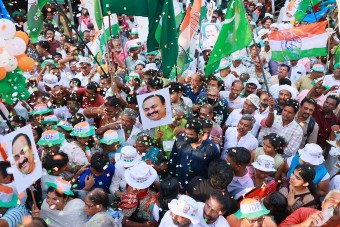
Kerala Congress campaign (Image Congress on X)
How anti-incumbency, minority trust, and a higher voter turnout may have quietly ended a decade of Left rule in God’s Own Country
By NIRENDRA DEV
Thiruvananthapuram, April 11, 2026 — The post-mortem has begun in Kerala — and the early readings point in one direction. Analysts, political observers, and even a section of hardcore LDF supporters are acknowledging what the ballot boxes may be confirming: a pro-Congress-UDF wave, quiet but real, has swept through the southern state.
The wave, crucially, was invisible while it built. As one political truism from this election goes — LDF and NDA votes can be identified; Congress or UDF votes are more or less invisible. The minorities moved. Sections of the population that see the UDF as the more reliable guarantor of stability moved. And a decade of anti-incumbency, simmering since 2016, finally found its outlet.
Pinarayi’s decade and its weight
Pinarayi Vijayan is a tough political animal. In 2021, defying all historical precedent and doing so amid a pandemic, he led the LDF to a ground-breaking 99-seat victory — the first time in Kerala’s recent history that a government returned to power. That achievement was genuinely historic.
But 2026 is a different terrain. The anti-incumbency that analysts say should have ended his run in 2021 has only grown heavier. Even pro-Left commentators have spent months saying the same thing: a younger chief ministerial face should have been projected. “Pinarayi Vijayan should have been changed; youth are needed more than an old man,” ran one widely shared social media post — blunt, viral, and not entirely unfair.
The CPI-M’s internal haggling over new faces in key constituencies was an open secret months before polling day. And the absence of Sitaram Yechury — the party’s general secretary who had memorably framed the 2021 win as a victory for secularism and constitutional democracy — left a quiet but palpable gap in the Left’s moral vocabulary.
The Congress arithmetic
For the Congress-led UDF, the numbers carry historical weight. Kerala’s electoral pattern shows a near-rhythmic alternation of power, with voter turnout a key variable. In 2001 and 2006, turnout hovered around 72 percent — and both times produced landslide victories for whichever side was riding the wave, UDF and LDF respectively. In 2011, turnout crossed 75 percent and the UDF scraped through with 72 seats. In 2021, a dip to 76 percent favoured the Left.
This year, Kerala recorded nearly 78 percent turnout. Higher turnout, Congress leaders argue, reflects an anti-Pinarayi sentiment that their side has been quietly harvesting. “We believe even CPI-M cadres have voted for us, as they feel a change is necessary for the party to survive,” one Congress leader said. The LDF disputes this, insisting its machinery was far better calibrated than during the 2024 Lok Sabha elections, when it badly misjudged cadre sentiment.
Meanwhile, IUML leader Sayyid Munavvar Ali Shihab Thangal struck a notably gracious note — asserting that while his party deserves the Deputy Chief Minister’s post, it will not stake a formal claim or negotiate over it.
Rahul’s consolation — and its limits
For Rahul Gandhi, a Kerala UDF victory arriving on the heels of a string of electoral setbacks would function as something between vindication and a lifeline. A state win does not resolve the Congress’s national problems — but it buys time, generates narrative, and gives the party’s India bloc partners something to point to.
The Left’s broader retreat is already being noted. With West Bengal and Tripura long gone, a Kerala loss would leave the communists without a major state government for the first time in decades. The anti-Left forces will not miss the opportunity to call it a Communist-mukt chapter. The irony — that Congress and the communists will then return to Delhi to cooperate on what they call national democratic exercises — will be visible to everyone.
Kerala has spoken, or is speaking. The crystal-gazers, astrologers, and spin doctors are already at work interpreting the signs. The real answer lies, as always, in the invisible vote.
Caste Census 2027: Is Modi Trying to Rewrite Mandal Politics?
Follow The Raisina Hills on WhatsApp, Instagram, YouTube, Facebook, and LinkedIn




About The Author