Ken-Betwa Tribal Protests Explained: Why Villagers Resist
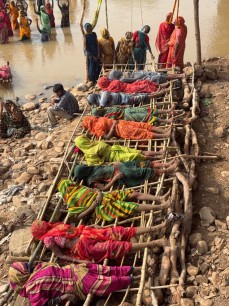
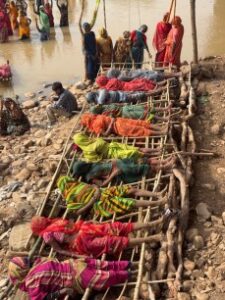
Tribal women staging a pyre protest against the Ken-Betwa river linking project in Chhatarpur, Madhya Pradesh (Image X.com)
By KUMAR VIKRAM
Why Tribal Communities Are Protesting the Ken-Betwa River Interlinking Project
New Delhi, July 27, 2026 — India’s first river interlinking scheme was meant to be a flagship fix for water-starved Bundelkhand. Instead, it has become the site of one of central India’s most sustained displacement movements, with tribal families lying on mock funeral pyres, wearing symbolic nooses, and blocking roads to stop it. Here’s what the Ken-Betwa project is, why Gond and Kol tribal communities are resisting it, and where things stand as of mid-2026.
What Is the Ken-Betwa River Interlinking Project?
The Ken-Betwa Link Project (KBLP) is designed to divert what planners call “surplus” water from the Ken River in Madhya Pradesh into the Betwa River basin in Uttar Pradesh, aiming to irrigate the drought-prone Bundelkhand region. Its centerpiece is the Daudhan Dam, feeding a roughly 221-km link canal that runs through Chhatarpur, Tikamgarh, and Jhansi districts.
The government pegs the project at ₹44,605 crore, with officials projecting irrigation for roughly 9–10 lakh hectares of farmland, drinking water for about 62 lakh people, and over 100 MW of hydropower plus solar generation, as Union minister Bhupender Yadav told the Lok Sabha in late 2025. Prime Minister Narendra Modi laid the foundation stone on December 25, 2024, and a six-year construction contract worth roughly ₹3,389 crore has since been awarded, per The Wire.
The Protests: A Timeline of Escalating Resistance
Opposition to the project isn’t new — activists and legal challengers have contested it for roughly two decades — but the ground-level agitation has intensified sharply through 2026:
– April 2026: Tribal women in Dhondhan village staged a dramatic “pyre protest,” lying on symbolic funeral pyres to argue that displacement felt worse than death. This is when the movement’s now-signature slogan emerged, as documented by Down To Earth.
“Nyay do, ya maar do” (“Give us justice, or kill us”). Around the same time, hundreds of tribal farmers, mostly women, lying on mock pyres in Chhatarpur district on April 9.
– This phase of the agitation became known as the “Chita Andolan” (pyre movement), organized by tribal women who wore symbolic nooses and warned they would rather die than accept the terms on offer, according to NewsGram.
– Mid-2026: Protests briefly paused after district officials offered assurances, but talks broke down. Villagers resumed demonstrations, alleging that promised commitments on compensation, rehabilitation, and family verification were never implemented, per The Indian Tribal.
– July 3, 2026: Villagers staged a fresh round of pyre protests.
– July 8, 2026: The Madhya Pradesh government tried to defuse the standoff by approving an enhanced rehabilitation package, but protesters rejected it as insufficient and vowed to continue.
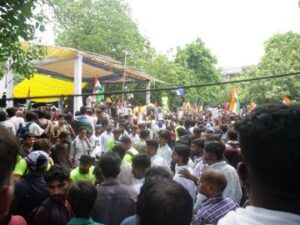
Beyond the pyre protests, affected families have used a whole repertoire of tactics —Jal Satyagraha (water-based protest), Mitti Satyagraha (soil/land protest), hunger strikes, road blockades, and gheraos of local administrators — showing this is a sustained movement rather than a single flashpoint.
Why Are Tribal Communities Opposing the Project?
Mass displacement without adequate rehabilitation
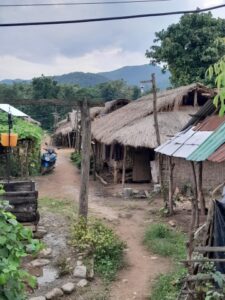
The Daudhan Dam alone is expected to displace 5,288 families in Chhatarpur and 1,400 families in Panna district, according to The Indian Tribal. Of 24 villages that have stood for centuries in the dam’s footprint, eight are set to be fully submerged, and 16 are being folded into the Panna Tiger Reserve — meaning residents lose access to lands they’ve farmed and forests they’ve depended on for generations, per Down To Earth.
Protesters say compensation offers have been inconsistent and, in some cases, allegedly fraudulent. In Bundelkhand, families have alleged forced relocation, demolitions carried out during the monsoon season, gender disparities in payouts, and claims of illegal compensation.
Rejection of the government’s compensation offer
Even after Madhya Pradesh raised its rehabilitation package to ₹12.5 lakh per family and expanded the number of eligible families, protesters turned it down, arguing that the dispute isn’t purely about money. As NewsGram reports, demonstrators frame the fight as being about protecting ancestral land itself, not securing a bigger payout.
Communities see little direct benefit
The irrigation, drinking water, and power benefits of the project are aimed largely at farmers elsewhere in Bundelkhand, particularly in Uttar Pradesh. The Gond and Kol communities being displaced are, by most accounts, not direct beneficiaries of the scheme — they bear the cost of submergence and forest loss without sharing in the promised gains, a point highlighted by Down To Earth.
Alleged violations of forest and land rights law
Activists argue that the pace and manner of relocation has bypassed statutory protections under India’s forest rights framework, and that families dependent on forest-based livelihoods are being moved before rehabilitation provisions are properly implemented.
The Environmental Case Against the Project
Tribal displacement is only one side of the opposition — the project has also drawn sustained criticism from conservationists and courts because of its footprint inside the Panna Tiger Reserve (PTR), a critical tiger habitat.
A Supreme Court-appointed Central Empowered Committee (CEC) report found that the project would submerge around 9,000 hectares of land — roughly 5,803 hectares of it inside the tiger reserve — and clear about 6,017 hectares of forest, with 4,141 hectares of that loss falling inside the reserve’s ecologically sensitive core, according to Mongabay India.
Estimates of tree loss vary by source and year — from roughly 18–23 lakh trees cited in CEC-linked reporting to figures in the millions cited elsewhere — but every account agrees the felling would be extensive.
The CEC also warned that the project would sever the tiger reserve’s core habitat from the rest of the park, undermining what had been one of India’s most successful tiger reintroduction programs, per Mongabay India.
The Supreme Court itself has weighed in on the underlying environmental philosophy at stake, cautioning that “our approach should be eco-centric and not anthropocentric,” as cited by Down To Earth.
Legally, the project’s status remains unsettled: it has forest clearance, but wildlife clearance has faced continued scrutiny before the Supreme Court, and separate petitions on environmental clearance remain pending before the National Green Tribunal (NGT).
Where Things Stand Now
As of mid-July 2026, the standoff is unresolved. The state government’s revised ₹12.5 lakh compensation package has not satisfied protest leaders, and demonstrations in Chhatarpur district are ongoing, with families warning they will keep up the agitation until their full set of demands — covering compensation, verified rehabilitation lists, and protection of ancestral land — is met, per NewsGram.
Meanwhile, construction of the Daudhan Dam continues, and Down To Earth’s ground reporting suggests further rounds of protest are likely as displacement deadlines approach.
FAQ
What is the Ken-Betwa river interlinking project?
It’s India’s first river interlinking scheme, transferring water from the Ken River to the Betwa River via the Daudhan Dam and a link canal, intended to irrigate Bundelkhand and supply drinking water and hydropower to parts of Madhya Pradesh and Uttar Pradesh.
Why are tribal communities protesting?
Primarily over displacement without adequate rehabilitation, inconsistent or allegedly fraudulent compensation, loss of forest-based livelihoods, and the fact that displaced Gond and Kol families are not the project’s direct beneficiaries.
What is the “Chita Andolan” or pyre protest?
A protest tactic in which tribal women lie on mock funeral pyres to symbolize that displacement without justice feels worse than death — first drawing wide attention in April 2026 and repeated in July 2026.
How many families will be displaced?
An estimated 5,288 families in Chhatarpur district and 1,400 families in Panna district are expected to be displaced by the Daudhan Dam.
Is the project environmentally cleared?
It has forest clearance, but wildlife clearance and environmental clearance challenges remain before the Supreme Court and the National Green Tribunal respectively.
Follow The Raisina Hills on WhatsApp, Instagram, YouTube, Facebook, and LinkedIn




About The Author