INS Taragiri: Stealth Frigate Joins the Fleet With BrahMos Missiles
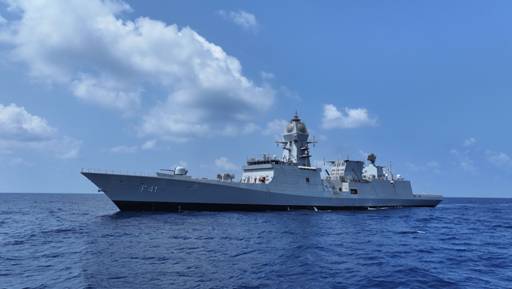
INS Taragiri (Image PIB)
The fourth Project 17A warship, built by Mazagon Dock and displacing 6,670 tonnes, was commissioned at Visakhapatnam. Defence Minister Rajnath Singh called a strong Navy “an absolute necessity” — not an option.
By TRH News Desk
New Delhi, April 3, 2026 — India’s newest warship, INS Taragiri, was commissioned into the Indian Navy at Visakhapatnam in a ceremony presided over by Defence Minister Rajnath Singh. The stealth frigate is the fourth platform of the Project 17A class — designed by the Warship Design Bureau and built by Mazagon Dock Shipbuilders Limited — and carries over 75% indigenous content, making it one of the most self-reliant major warships India has fielded.
“This ship is not merely a warship,” Rajnath Singh said at the commissioning, adding: “It is a symbol of India’s growing technological prowess, self-reliance, and formidable naval power.”
What INS Taragiri brings to the fleet
Displacing approximately 6,670 tonnes, INS Taragiri is built for multi-role operations across the full spectrum of naval activity — from high-intensity combat to anti-piracy patrols, coastal surveillance, and humanitarian missions. Its advanced stealth technology significantly reduces radar signature, providing what the Ministry of Defence described as “a lethal edge in contested environments.”
The armament package includes BrahMos supersonic cruise missiles and surface-to-air missiles, supported by modern radar and sonar systems. The ship is capable of high-speed transit and extended deployment at sea without resupply.
Chief of the Naval Staff Admiral Dinesh K. Tripathi, speaking at the ceremony, recalled the legacy of the original INS Taragiri — a Leander-class frigate commissioned in 1980 that was a pioneer in India’s anti-submarine warfare capability — before underlining the Navy’s commitment to remaining “combat-ready, credible, cohesive, and future-ready.”
The strategic argument Rajnath Singh made
The Defence Minister used the commissioning to articulate a comprehensive case for naval investment that went well beyond the ship itself. With India’s coastline stretching over 11,000 kilometres and approximately 95% of the country’s trade moving by sea, he said building a strong Navy is “not merely an option but an absolute necessity.”
He also extended the definition of maritime security into the digital domain — noting that the majority of the world’s data travels through undersea cables, and that damage to them could disrupt global order. “We must not limit ourselves to safeguarding our coastlines,” he said. “We must also ensure the security of critical sea lanes, choke points, and digital infrastructure inextricably linked to our national interests.”
The Aatmanirbharta signal
INS Taragiri was built in significantly reduced timelines compared to earlier projects — a point the government emphasised as evidence of a maturing shipbuilding ecosystem. Defence exports have reached an all-time high of ₹38,424 crore in financial year 2025-26, Rajnath Singh noted, compared ₹Rs 1,200 crore thirteen to fourteen years ago. “This is proof that India’s self-reliance is growing steadily,” he said.
Follow The Raisina Hills on WhatsApp, Instagram, YouTube, Facebook, and LinkedIn




About The Author