Women at the Centre of Crime: OTT Rewrite Female Protagonists
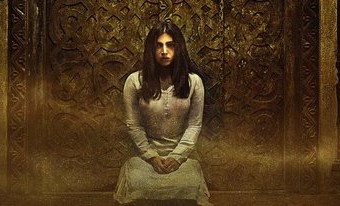
Durgavati OTT series on Amazon Prime (Image OTT poster)
Can Fiction Be Less Strange Than Truth? Women Protagonists Are Reshaping Indian OTT Crime Drama
By NIRENDRA DEV
New Delhi, March 8, 2026 — “True justice is born in the hands of those who refuse to give up.” When that line lands in a web series today, the figure refusing to give up is increasingly a woman — not as an emotional anchor or a supporting presence, but as investigator, suspect, perpetrator, and survivor all at once.
The entertainment world has always assigned women words like charismatic, resilient, compassionate, and independent. But the more interesting shift on Indian OTT platforms is a harder-edged one: the acknowledgment that women are equally capable of moral complexity, psychological damage, and — yes — crime. There has long been a tendency, particularly in feminist discourse, to resist examining women’s capacity for cruelty and heartlessness. The new wave of Indian streaming content is quietly dismantling that resistance, placing women not just at the centre of crime narratives, but inside them.
The OTT Revolution and the Female Crime Narrative
For those unfamiliar with the terminology: OTT — Over-the-Top — refers to streaming services such as Netflix, Prime Video, and their peers that deliver content directly over the internet, bypassing traditional broadcast and cable platforms. In India, the OTT boom has coincided with a significant shift in how female characters are written, cast, and morally framed in crime and thriller series.
The stories are increasingly “inspired by true events” — a phrase that raises its own philosophical question: can fiction ever be less strange than truth? Perhaps not. But what these narratives are doing is bringing psychological realism to female characters in ways that commercial Hindi cinema rarely attempted.
Daldal (Prime Video): The Youngest DCP and Her Unhealed Wounds
The new crime thriller Daldal on Prime Video, starring Bhumi Pednekar, is among the more direct examples of this trend. Pednekar plays Mumbai’s youngest DCP — a woman who reached the top of a male-dominated profession, but who carries the internal wound of a childhood in which her cop-mother physically punished her for her growing interest in singing. The paradox of a woman shaped by maternal violence becoming the city’s most formidable law enforcer is not incidental to the plot; it is the plot.
Some critics argue that Daldal over-emphasises its bold female-centric positioning. But even in that excess lies something meaningful: the willingness to present a woman’s body and psychology not as decorative or supportive, but as the primary site of the story’s moral and dramatic weight.
Gen Z Isn’t Prude—Done With Fake Screen Sex, Says Olivia Wilde
Accused (Prime Video): Sexual Misconduct, Institutional Power, and a Quiet Reckoning
In the film Accused on Prime Video, actress Konkona Sen Sharma plays Dr Geetika Sen, a senior academic accused of sexual misconduct involving a former intern, Natasha, and a friend named Sophie. The investigation clears her of the anonymous complaint. The Deanship is offered back. And yet Geetika declines — privately acknowledging her own shortcomings, in a scene that refuses the easy redemption arc.
It is a quietly subversive ending: the institution exonerates her; she does not fully exonerate herself.
Kohrra Season 2 (Netflix): Punjab’s Grief and the Weight of a Female Detective
Of the recent Indian OTT crime series, Kohrra Season 2 on Netflix stands apart — and the Punjabi-language version is the more immersive of the two available. Simple Punjabi idioms like keda and daso create an intimacy that the Hindi dub cannot replicate, particularly for audiences in north India.
The investigation centres on the murder of NRI influencer Preet Bajwa, whose body is discovered in a barn. Barun Sobti and Mona Singh play detectives Amarpal Garundi and Dhanwant Kaur — two officers whose personal lives are as fractured as the case they are solving. Dhanwant Kaur (Mona Singh) has lost her son. Her husband is alcoholic and goes missing. Her capacity to function professionally while privately disintegrating is the series’ most compelling performance.
The story threads through land disputes, family conflict, the bonded labour system in Punjab, and the systemic exploitation that lurks beneath the surface of prosperous NRI families. A single one-liner from Dhanwant to her senior on the nature of commitment is among the most quietly devastating moments in recent Indian streaming drama.
A Global Pattern — and a Local Reckoning
This is not a uniquely Indian development. Several Western OTT productions have explored female officers discovering that despite years of professionalism, their male superiors have no genuine intention of sharing power. The procedural becomes a study in institutional misogyny — the woman solving crimes within a system that would prefer she remain invisible.
What Indian OTT has added to this global template is something more particular: the weight of family, caste, community expectation, and intergenerational violence that shapes its female protagonists before they ever put on a badge or enter a courtroom.
For years, screens positioned women as emotional anchors for male-centred stories. What is emerging now — imperfectly, unevenly, but unmistakably — is something different: women placed at the centre of crime and power, their inner lives as complex and as capable of darkness as any man’s.
Dreadful crimes committed by both women and men challenge our comfortable belief in fundamental human goodness. That Indian storytelling is finally willing to sit with that discomfort — without flinching toward easy resolution — may be the most significant shift of all.
Follow The Raisina Hills on WhatsApp, Instagram, YouTube, Facebook, and LinkedIn




About The Author