India–US Trade Deal: Zero Duty for US, 18% for India—Who Won?
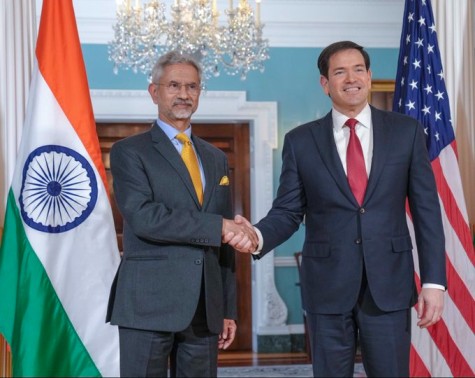
EAM S Jaishankar with US Secretary of State Marco Rubio in Washington (Image Jaishankar on X)
As Trump and Modi announced a trade deal, Manish Anand warns that the fine print suggests a deeply asymmetrical bargain
By TRH Op-Ed Desk
New Delhi, February 5, 2026 — The announcement of an India–US trade deal arrived with trademark political drama. First came US President Donald Trump’s declaration on social media, followed shortly by Prime Minister Narendra Modi’s confirmation. What did not arrive immediately was clarity.
That clarity, when it finally emerged, raised uncomfortable questions.
In a detailed monologue on The Raisina Hills YouTube channel, strategic affairs analyst Manish Anand pointed out that the deal—at least in its publicly known contours—appears structurally unequal. According to the information now available, American goods will enter India at zero duty, while Indian exports to the US will face tariffs of up to 18%.
“That asymmetry is built into the deal itself,” Anand observed, noting that while political announcements were swift, the fine print is still being finalised. External Affairs Minister S. Jaishankar, speaking days after the announcement during his US visit, confirmed that the trade agreement’s final text is still under negotiation.
The numbers make the imbalance starker. Annual India–US goods trade stands at roughly $140–145 billion. In 2025, India exported goods worth approximately $103–104 billion to the US, while American exports to India were around $49 billion. Under the announced framework, Anand notes, India is expected to import nearly $100 billion worth of American goods annually—effectively doubling US exports to India.
“That is a 100% gain for the US straight away,” Anand said, cautioning that while some Indian sectors like textiles may benefit, the overall gains for India appear limited at this stage.
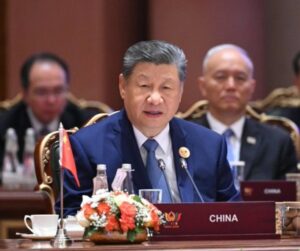
Anand also addressed how the deal may have come together. Citing reports from The Washington Post, he recalled the geopolitical signalling from the Shanghai Cooperation Organisation summit in China, where visuals of Prime Minister Modi alongside Presidents Vladimir Putin and Xi Jinping generated unease in Western capitals. According to Anand, this may have prompted Washington to re-engage swiftly to prevent India from drifting further into a Eurasian strategic orbit.
He further revealed that National Security Advisor Ajit Doval was dispatched to Washington to deliver a clear message: India would not accept dictated terms. Drawing on past experiences—including US sanctions after the 1998 Pokhran nuclear tests—Anand said India conveyed it was prepared to wait out Trump’s remaining term if needed.
Yet the deal was announced nonetheless.
Looking ahead, Anand stressed that the real test lies beyond tariffs. India will be watching closely for relief on H-1B visas, manpower mobility, and long-pending visa applications—critical for India’s IT, biotech, healthcare, and knowledge sectors.
Despite the uneven trade optics, Anand underlined that India–US strategic relations remain fundamentally strong, anchored in shared democratic values, Indo-Pacific interests, and growing technology cooperation. But trade, he warned, cannot rest on symbolism alone.
“A deal announced is not a deal delivered,” Anand cautioned. “The balance will be known only when the fine print is signed.”
The Handshake Deal: Big Headlines, Small Print, Bigger Stakes
Follow The Raisina Hills on WhatsApp, Instagram, YouTube, Facebook, and LinkedIn




About The Author