Rice, Rules and Accountability: Inside the FCI-NERAMAC Controversy
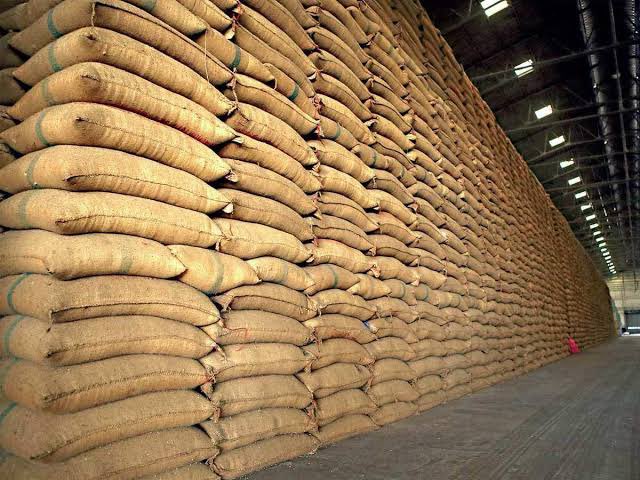
photo credit twitter Prema Khandu
By P. SESH KUMAR
An examination of the FCI-NERAMAC rice sale controversy, the ACC’s unprecedented ‘non est’ order, OMSS policy loopholes, and what the episode reveals about India’s food procurement and audit system.
New Delhi, July 16, 2026 — The Department of Food and Public Distribution last week suspended an Executive Director (IAAS-1994) of the Food Corporation of India over alleged irregularities in the sale of rice to the North Eastern Regional Agricultural Marketing Corporation (NERAMAC) under the Open Market Sale Scheme (OMSS-Domestic). Four days later the Secretariat of the Appointments Committee of the Cabinet (ACC) declared that order non est — legally stillborn — and repatriated the officer at the CAG’s request.
Number 27/48/2026-EO(SM-I), from the ACC Secretariat on 10 July 2026, records that “without prejudice to the merits of the contemplated disciplinary proceedings” the Department’s order of 6 July suspending the ED “is treated as non-est,” and that he stands repatriated to his parent cadre.
A Government of India Department suspended a Joint-Secretary-rank officer, and ninety-six hours later the ACC erased the order from legal existence — not set aside, not revoked, but declared never to have been. The Ministry, reportedly, did not answer why.
On 25 May a Delhi Regional Office General Manager was suspended for “issue of Rice without auction to NERAMAC which is not covered under the current OMSS(D) Policy.”
On 17-18 June NERAMAC suspended its own Managing Director and an AGM. On 6 July the Ministry suspended the ED — and, the same day, set up a committee to “review and restructure” FCI, tasked with reviewing the responsibility of the ED and intermediary officers.
On 7 July FCI suspended three more; on 9 July the CAG asked for its officer back; on 10 July the ACC obliged.
If we strip away the personalities, the case is embarrassingly simple. OMSS(D) lets FCI liquidate surplus grain at a notified reserve price, ordinarily through weekly e-auctions.
But OMSS(D) is not an e-auction with a prohibition list attached; it is an eligibility-and-price schedule, enumerating who may buy outside the auction and at what price: State Governments and their Corporations in non-surplus States, and Community Kitchens, at a concessional Rs 2,250 a quintal; ethanol distilleries at the same rate; the central cooperatives — NAFED, NCCF, Kendriya Bhandar — for fortified ‘Bharat’ rice. Everyone else bids at auction.
NERAMAC is none of these — a Central public sector enterprise (CPSE) under the Ministry of Development of North Eastern Region, not a State corporation, cooperative, ethanol distillery or ‘Bharat’ buyer — and it did not bid.
Let us concede at once the point a contrarian may press: nowhere does the policy bar a CPSE from lifting FCI rice. But that is the wrong test. A public authority has the powers conferred on it, not the powers not denied to it. The flaw is not that NERAMAC was forbidden; it is that no notified channel, and no notified reserve price, existed through which the sale could lawfully be made — exactly what the General Manager’s suspension order alleged.
Then the price, where irregularity acquires a smell. The 31,000 tonnes, said to be worth about Rs 143 crore, were reportedly offloaded at Rs 23.25 a kilogram — Rs 2,325 a quintal, the very lowest rate in the policy, reserved for welfare and biofuel.
The Haryana firm that allegedly ended up with it would, at auction, have paid Rs 560-640 a quintal more: some Rs 17-20 crore of arbitrage. The subsidy is larger still: at an economic cost near Rs 4,100 a quintal, the exchequer bought at about Rs 127 crore and released at about Rs 72 crore. The gap existed so the poorest households of the North East could eat. It was allegedly harvested by a trader.
A Central agency lifting concessional rice for onward sale is not, in itself, anathema; it is what NAFED does every week. What legitimises it is an approved purpose and an authorisation — both missing here. So the single fact that decides this case, and which nobody has published, is whether a departmental approval existed for the NERAMAC lifting.
If it did, FCI’s officers executed a Government decision, and the Government has suspended five people over its own policy call; if it did not, they manufactured a category that did not exist and priced it at the cheapest rate on the books.
Everything turns on that file, and it is not in the public domain. Let us note, too, the adjective the order chose — current policy — quietly conceding that some earlier approval might have; if precedent exists, the case changes from inventing a fraud to following a beaten path, and that is the first question the inquiry should ask.
The e-auction was not defeated by a clever bid; it was stepped around. Every carve-out is a doorway, and every doorway becomes, in time, a market — not a moral observation but a structural one, as old as the Corporation.
Where FCI — and the Ministry — Went Wrong
The ED held no ordinary deputation post. He held an Executive Directorship at Joint Secretary equivalence under the Central Staffing Scheme — the CAG’s letter, tellingly, carries the suffix “/CSS” — and such appointments are made by the ACC. The appointing authority was the ACC.
The Department is merely the administrative ministry of the borrowing organisation: not the appointing authority, not the cadre controlling authority. FCI, a statutory corporation, could not have suspended him either. The Ministry reached for an instrument that was never in its hand. It could have asked the CAG to suspend its own officer, or sought the ACC’s approval — taking days. Instead it issued the order itself, handing the officer a clean, unanswerable threshold defence.
A void suspension is not merely ineffective; it is corrosive, letting the institution look vindictive at the very moment it is trying to look serious about corruption.
Let us steel-man the Government department. Thirty-one thousand tonnes had allegedly walked into the wrong hands; a committee had found diversion; five officers sat in the chain. Had it waited a fortnight for the file to crawl to the ACC, we would be writing a more familiar note — about how Government protects its own. Speed was not the sin. The sin was believing that urgency confers jurisdiction. It never has.
A harder observation. Of the five officers, four are FCI’s own; the one outsider, on a three or five-year tour from IAAS, is the one whose suspension was botched and the one now gone. Whether the Ministry simply moved on the most senior man in the chain, or the house found a way to expel an irritant who was tightening what it preferred loose, neither is proved. But a system in which the only genuinely disposable person in the room is the only outsider in it has a design fault.
“Without Prejudice to the Merits”: Who Contemplates Now?
If the suspension is non est, why did the ACC say its order was “without prejudice to the merits of the contemplated disciplinary proceedings”? Because it voided the instrument, not the case.
A jurisdictional nullity says nothing about culpability; it says only that the wrong hand held the pen. The committee’s findings do not evaporate with the order — they travel.
For an IAAS officer back on his cadre the disciplinary authority is the President, and the CAG the cadre controlling authority; the Department may — and if it credits its committee, must — forward its material to the CAG.
Some in the fraternity hope the CAG will now declare the entire process null and void. It should do no such thing — and I say so having interacted closely with officers who spent years auditing FCI and who (including me) have every sympathy for a man caught in that machine. The CAG has just administered a lesson about acting within jurisdiction; it would be a poor lesson if its next act reached outside its own, to pronounce on the validity of another department’s inquiry. Institutional solidarity that shades into institutional impunity is precisely the disease we are diagnosing. We cannot prescribe it as the cure.
The Long Shadow: Why FCI Has Never Been Auditable
The original Section 34 of the Food Corporations Act, 1964 gave the Corporation a conventional audit by chartered accountants. By Act 67 of 1972 Parliament added a CAG power to direct the audit, conduct supplementary or test audit, and comment upon the professional auditors’ report — a change its Statement of Objects and Reasons attributes to the 1970 Joint Select Committee on the CAG’s own Duties, Powers and Conditions of Service Bill. FCI’s audit architecture was rebuilt not out of worry about FCI, but as collateral tidying in the settlement of the CAG’s own powers. Two auditors, then, one certifying and one second-guessing — an arrangement that works until they disagree in public. They did: fraternity recollection is of a headstrong statutory auditor who, met with FCI’s failure to reply to draft paragraphs, gave the Corporation an adverse certificate, the ICAI standing behind its member through a long stalemate. It ended by statute — on 2 June 2000, by Act 12 of 2000, the CAG became “the sole auditor.” That solved the embarrassment of two auditors disagreeing in public; it did not solve the problem that produced it — an entity that does not reply to audit. A single auditor with an unanswered draft paragraph is exactly as helpless as two.
Beneath certification sits the thing never fixed: physical verification. FCI’s balance sheet is a heap of grain, and every material assertion — quantity, quality, shortage, transit loss — rests on somebody going to a depot and counting. That single assertion has been outsourced, contested and politicised for decades; what is recollected, is that a Ministry review team visiting FCI in that era was met with a petrol bomb thrown by FCI labour. That is the temperature of the room. Anyone who imagines FCI’s accountability deficit is a matter of weak internal controls has never tried to count its grain.
What Audit Found, and What Parliament Did With It
Its 2006 performance audit found that of 14.07 million tonnes issued at below-poverty-line prices in 2003-04, only 5.93 million reached poor families — the rest leaking “because of corruption in the delivery system.” In 2013 the storage audit recorded the vertiginous arithmetic of the surplus era — central pool stocks swelling past what any storage system could hold, forcing the question where the surplus was really sitting, or whether it was fictitious. Report No. 20 of 2023, for the year ended March 2022, returned to the same subject; it was laid before Parliament on 7 August 2024. An audit of March 2022 reaching Parliament in August 2024 is not accountability; it is archaeology. Delay is not a procedural blemish in public audit. Delay is the defence.
The Shanta Kumar Committee, in January 2015, put the charge sheet in one place: diversion of 46.7 per cent of PDS grain in 2011-12, stocks grotesquely above buffer norms while cereal inflation ran at 8-12 per cent, and a claim that cash transfers could save more than Rs 30,000 crore a year. Steel-man the critics, largely right on the numbers: leakage was nearer 35 per cent and falling, and the headline figure rested on a much-criticised methodology by one of the Committee’s members.
The lesson is not that FCI is clean; it is that a reform case built on an inflated number can be shot down, and was. Parliament’s own committees have been blunter and less noticed: the Standing Committee, in August 2021, found FCI’s share in direct procurement under five per cent, hired capacity utilised past 130 per cent while FCI’s own godowns idled, and diversion complaints climbing to 2,469 a year.
It asked the Ministry to frame a transfer policy and dispose of vigilance cases speedily — saying out loud that people sit in the same chairs too long, and that this is the mechanism of capture. Nothing of much significance followed, though sources say there is a transfer policy, on paper. Some say the suspended ED used to be in-charge of Personnel/ HR till a few months back when he was relieved of the responsibility as a likely retribution for non acquiescence to unreasonable demands.
Vigilance as Post-Mortem
In January 2023 the CBI’s Operation Kanak searched fifty locations across Punjab, Haryana and Delhi and named seventy-four accused in a single FIR — a syndicate of FCI officers, millers and middlemen taking Rs 1,000 to Rs 4,000 a truck for waving through substandard grain. The Food Secretary named the disease: the systemic issue lies in the level of discretion available to field officers. In February 2026 the CBI trapped a depot in-charge at Chandausi demanding Rs 50,000 to clear sixteen stacks; in July 2026 we discuss 31,000 tonnes that went to Haryana instead of Assam. The tariff at the bottom is a few thousand rupees a truck, at the top a few tens of crores a consignment; the mechanism is identical — discretion in the dark, where the value of the decision to the buyer dwarfs any penalty the system can impose.
Vigilance in FCI is theatre: not because its officers are idle, but because they are condemned to arrive after the grain has left. A Chief Vigilance Officer is a bird of passage in a house of permanent residents; internal audit reports, in substance, to the management it audits; statutory audit reaches Parliament two years late. Every one is a post-mortem, and one cannot cure a patient by improving the autopsy.
Broader Lessons
Four lessons compress it. An asset that cannot be counted cannot be audited: every reform changed who signs the certificate, none changed how the grain is counted, so the certificate remains a signature on an unverifiable number.
Discretion is the currency of corruption, and every exception to a competitive process is a licence to print it — the carve-outs are individually defensible and collectively fatal, because the moment a category exists someone will be paid to be placed inside it.
And disciplinary jurisdiction is the load-bearing wall, not a technicality: if deputationists can be suspended at will by the bodies they are sent to discipline, deputation stops being a check and becomes a hostage arrangement.
A Practical Way Forward
Enough diagnosis — what would work, without amending a statute? Kill the discretion at source: abolish every non-auction release under OMSS(D) except to a notified non-surplus State Government, and publish even that — buyer, quantity, depot, price, date, end-use — on the Department’s website within twenty-four hours, in machine-readable form. Not a PDF. A dataset.
The single most powerful anti-corruption technology available to the Government of India is a public spreadsheet, and it costs nothing.
Make the end-use condition mean something: a public enterprise lifting subsidised grain should file a delivery-completion certificate reconciling, tonne for tonne, to the fair-price-shop layer — no certificate for the last consignment, no allocation of the next.
The system should have been physically incapable of giving NERAMAC a second lot until it accounted for the first. Instrument the depot, where value is created and destroyed: weighbridge readings, gate passes, stack cards and truck telemetry should flow, automatically and unalterably, into a read-only audit data lake open to the CAG, the CVO and internal audit.
The Depot Online System was a start; it was never made a control.
Take physical stock verification out of management’s hands: let an Audit Committee of the Board — independent-majority, not the Managing Director — appoint the verification agency and receive internal audit’s reports, since an internal auditor who reports to the person he audits is a compliance ornament.
Fix the calendar: lay the audit report and accounts within twelve months of the year’s close, and publish the Corporation’s replies to draft paragraphs, or its failure to reply, as a statistic in the Annual Report.
Deliver, and critically review, the transfer policy the Standing Committee asked for in 2021 — a public sensitive-posts register, tenure capped at three years, rotation out of the zone — because capture is a function of time in the chair.
And write down who can suspend whom: for an ACC appointee, any suspension proposal should route to the Establishment Officer and the cadre controlling authority before an order issues, on a seventy-two-hour clock so the rule cannot shelter the guilty. That is the difference between a case that survives judicial scrutiny and one that dies at the threshold, taking the institution’s credibility with it.
Who is the Villain?
The Food Corporation of India is not a villain. It took a country importing wheat under PL-480 and made it a food-surplus republic, and it still moves more grain each year than most nations produce. It is maligned partly because it is indispensable and therefore visible, and partly because it has spent sixty years resisting the one thing that would redeem it: the willingness to be counted.
An Executive Director has been suspended, unsuspended, and sent home; five officers remain under a cloud, two more in Guwahati, and a trader in Haryana is presumably enjoying his margin. The CAG will decide whether to charge-sheet its officer, and it should decide on the evidence, not the fraternity. And thirty-one thousand tonnes of rice, bought with public money at full economic cost and released at a subsidised price so that the poorest households in Assam and the North East could eat, did not reach them. That sentence should sit at the top of every file — above the file numbers and the non-est orders and the review committees — until somebody explains it.
(This is an opinion piece. Views expressed are the author’s own.)
Follow The Raisina Hills on WhatsApp, Instagram, YouTube, Facebook, and LinkedIn




About The Author