Suing Before Publishing: The Powerful’s Weapon Against the Press
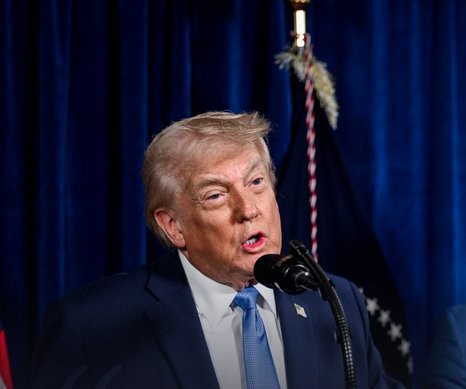
US President Trump delivers remarks on Operation Epic Fury from the White House.
Wall Street Journal editor Emma Tucker warns that pre-publication litigation is now an established PR strategy — and the threat to investigative journalism has never been more structural
By TRH World Desk
New Delhi, May 7, 2026 — A new and chilling frontier in the war on press freedom was laid bare at the Sir Harry Evans Investigative Journalism Summit in London on Wednesday, when Wall Street Journal editor-in-chief Emma Tucker warned that the most powerful figures in the world are now suing news organisations before stories are even published — turning the act of reporting itself into a legal liability.
“One of the biggest challenges to us now isn’t so much what happens afterwards,” The Guardian quoted Tucker telling the summit, named after the legendary Sunday Times editor. “It’s what happens before you even publish. That is a massive challenge for us.”
Tucker’s remarks crystallise a shift that press freedom advocates have been tracking with alarm: the weaponisation of litigation not to correct false reporting, but to prevent true reporting from ever reaching readers.
Lawfare as a PR Strategy
Tucker said the tactic of suing newspapers before they had published a story had become an established PR strategy of the powerful, amid growing distrust of established media. The implication is profound — defamation law is no longer primarily a remedy for reputational harm. “It has been repurposed as a pre-emptive strike against accountability journalism,” the UK-based daily quoted the journalist in the report.
Tucker’s own publication is currently being sued by US President Donald Trump over its reporting on his relationship with the late convicted sex offender Jeffrey Epstein. That suit, like many high-profile cases of its kind, is notable less for its legal merit than for the pressure it places on newsrooms, lawyers, insurers, and sources who may hesitate to cooperate under the shadow of litigation.
Legal experts per the report of The Guardian describe this model as a SLAPP — a Strategic Lawsuit Against Public Participation. As Canadian media law specialist Howard Winkler told the daily, “the protection of reputation is very much about public theatre, not so much about the law.” Threatening or filing a lawsuit, he noted, is “just one way of attempting to mitigate the impact of reporting.”
What distinguishes the current moment is how institutionalised the tactic has become. The Sir Harry Evans Summit itself was convened under the recognition that investigative journalism faces simultaneous threats from political pressure, corporate timidity, AI disinformation, a weakened business model, and lawfare from powerful special interests intended to intimidate, harass, and silence.
The pattern extends well beyond any single political figure. Trump has filed more than a dozen lawsuits against news organisations over stories he disliked — none of which have ever succeeded in court. Yet legal victory is not the point. In high-profile cases involving public figures suing for enormous sums, the plaintiff’s chance of winning and the media organisation’s ability to pay are beside the point — the numbers are clearly inflated.
The chilling effect is real and measurable: smaller outlets self-censor, sources dry up, and editors calculate the legal cost of publishing before they calculate the public interest in doing so.
Tucker’s warning arrived on the same day as news that the FBI has opened a criminal leak investigation into an Atlantic reporter who covered FBI Director Kash Patel — a case where federal law enforcement itself has become an instrument of editorial intimidation. Together, these developments represent twin pillars of an emerging architecture designed to make accountability journalism prohibitively costly before a single word reaches the public.
The summit featured Nobel Peace Prize laureate Maria Ressa and international human rights lawyer Caoilfhionn Gallagher KC speaking on how lawfare is used to harass, intimidate, and even imprison journalists — underscoring that this is not a Western phenomenon alone, but a global authoritarian playbook.
The question Tucker’s warning poses is urgent: if the threat is no longer the story you published, but the story you were trying to publish, what institutional, legal, and financial architecture can journalism build to survive it?
Follow The Raisina Hills on WhatsApp, Instagram, YouTube, Facebook, and LinkedIn




About The Author