China’s PLA Closing Gap with US Military with ‘World-Class’ Status

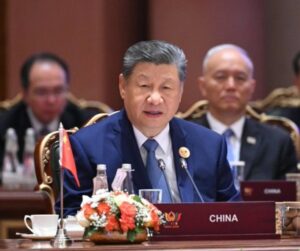
US President Donald Trump with Chinese President Xi Jinping in Busan on Thursday. (Image China MFA)
Rapid modernisation, AI-driven warfare and nuclear expansion push China closer to US military edge, raising concerns for India
By NIRENDRA DEV
New Delhi, March 17, 2026 —China’s People’s Liberation Army (PLA) is rapidly modernising and narrowing the long-standing military gap with the United States, even as it continues to lag in technological integration and global force projection, according to defence assessments.
Beijing has set a clear timeline—full military modernisation by 2035 and achieving “world-class” military status by 2049. The transformation is centred on “intelligentised” warfare, integrating artificial intelligence, big data and advanced systems to enhance combat capability and regional dominance.
Recent projections indicate China could expand its nuclear arsenal to over 1,500 warheads by 2035, alongside significant advances in intercontinental ballistic missiles (ICBMs), strategic bombers and nuclear submarines to strengthen second-strike capability.
The PLA has also accelerated development of next-generation platforms, including stealth fighter jets like the J-20, hypersonic missile systems, combat drones and aircraft carriers. China already operates the world’s largest navy and is expected to expand its carrier fleet significantly in the coming decade.
Military doctrine has evolved steadily—from “People’s War” to “Local Wars under Modern High-Tech Conditions”—driven by lessons from conflicts such as the 1991 Gulf War. The focus has shifted towards precision warfare, rapid deployment and technology-led operations.
Despite these advances, experts note that the PLA still trails the US in operational integration and global reach. However, sustained investment—China’s defence budget has surged sharply over the past decade—is steadily closing that gap, raising strategic concerns in Washington and other Western capitals.
For India, these developments carry direct implications, particularly after the 2020 Galwan clash. China’s growing presence in the South China Sea and Indian Ocean Region, coupled with advances in robotics and unmanned systems, underscores the need for continued military preparedness.
India has responded by accelerating modernisation, strengthening border infrastructure, and expanding naval capabilities. Initiatives such as drone-integrated infantry units and enhanced partnerships like the Quad reflect New Delhi’s evolving strategy to address shifting regional security dynamics.
As China pushes towards its 2035 and 2049 milestones, the balance of military power in the Indo-Pacific is set to face a significant test.
Ex-US official warns of China military operation against Taiwan in late 2020s
Follow The Raisina Hills on WhatsApp, Instagram, YouTube, Facebook, and LinkedIn




About The Author