UP Links Tax to Welfare: Yogi Govt Unveils Fiscal Model
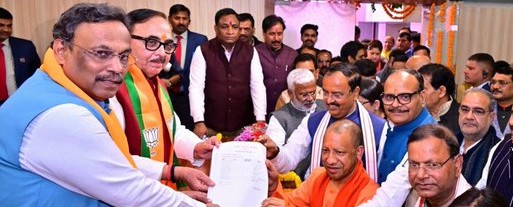
Uttar Pradesh CM Yogi Adityanath proposes nomination of Pankaj Choudhary in Lucknow (Image X.com)
From cow welfare cess to expressway tolls, Uttar Pradesh maps every rupee to public use, boosting trust and development
By S. JHA
Lucknow, March 17, 2026 —The Uttar Pradesh government has rolled out a new fiscal approach that directly links tax collection to public welfare spending, positioning it as a transparent and outcome-driven governance model.
In an official statement, the state government said, “Tax is no longer just a means of revenue collection, but a tool for development, where every rupee is visibly linked to public interest.” The model ensures citizens can clearly see where funds originate and how they are utilised.
A key feature is the 0.5% cow welfare cess imposed on excise revenue from liquor sales. The government noted that while the burden on consumers is minimal, the levy generates significant funds that are directly used for the care of stray cattle through shelters providing food, treatment and housing.
The policy also earmarks sector-specific revenues for corresponding development. Stamp duty from real estate is being channelled into religious and tourism projects such as the Kashi Vishwanath Corridor, boosting heritage and employment. Mining revenue is funding irrigation and water management, while toll collections from expressways like Purvanchal and Bundelkhand are being used to build feeder roads connecting rural areas.
Similarly, mandi fees are being reinvested in crop protection and farmer welfare schemes.
Highlighting the transparency aspect, the statement said citizens can now clearly track how taxes—from liquor, property or tolls—are being deployed, strengthening public trust.
The government added that rising capital expenditure across infrastructure, agriculture, logistics and tourism is part of its roadmap to make Uttar Pradesh a $1 trillion economy by 2029-30.
Describing it as a replicable framework, the state said the model offers a template for other states to align taxation with sectoral development, ensuring more efficient and targeted public spending.
Uttar Pradesh Plans 8 Data Center Parks to Power India’s AI Future
Follow The Raisina Hills on WhatsApp, Instagram, YouTube, Facebook, and LinkedIn




About The Author