Bharat Tiwari’s Death Has Become Bihar’s Political Rorschach Test
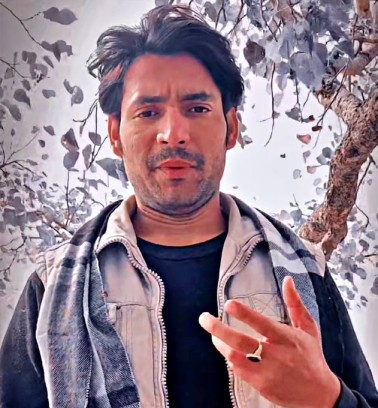
Why Bharat Tiwari’s Death Is Haunting Bihar’s NDA Government (Image X.com)
By AMIT KUMAR
Bharat Tiwari Killing: Why the Encounter Has Become Bihar’s Biggest Political Flashpoint
Patna, July 6, 2026 — In election-bound Bihar, politics rarely waits for a judicial verdict. It usually arrives at the crime scene before the forensic team does.
That pattern is playing out once again in the controversy surrounding the police killing of Bharat Bhushan Tiwari in Bhojpur, an incident that has rapidly evolved from a law-and-order case into one of the state’s biggest political flashpoints. With a judicial inquiry underway, suspended police officers, competing narratives and daily political visits to the victim’s village, the encounter has become a test of the NDA government’s credibility as much as Bihar’s policing.
Santosh Suman, Bihar’s minister, decried attempts to politicise the killing of Tiwari. Speaking to reporters, Suman said that “some people are trying to become political stars by raising the issue of the killing of Tiwari.” He said that the people should wait for the report of the judicial commission appointed to probe the incident.
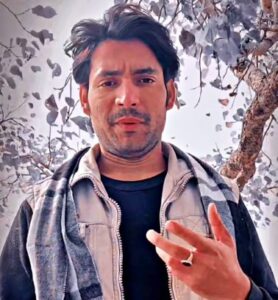
What makes the episode politically explosive is not merely the circumstances of Tiwari’s death but the optics surrounding it. Videos circulating on social media have stoked allegations that he had surrendered before being shot, while the police maintain he fired at personnel and posed a threat. His family disputes that account and insists he was killed after agreeing to surrender.
In Bihar, however, facts have acquired a habit of travelling more slowly than political slogans.
Every party has found a script that suits it. The Opposition has cast Bharat Tiwari as the latest victim of an increasingly trigger-happy policing culture. Government critics speak of an “encounter state”, demanding accountability from senior officers rather than merely suspending those on the ground.
The ruling alliance, meanwhile, faces a more delicate challenge. It cannot afford to appear soft on crime, yet neither can it ignore growing public unease over an encounter that has generated sympathy well beyond conventional political constituencies. That explains the calibrated response: a judicial probe, suspension of police personnel and repeated assurances that anyone found guilty will face action.
Then came the political theatre.
Union Minister Chirag Paswan visited the family and promised strict action against officials responsible if wrongdoing is established.
Senior JD(U) leader and minister Ashok Choudhary went further, publicly describing the encounter as “wrong” while questioning why the situation escalated as it did. His remarks have inevitably stoked speculation about unease within the ruling alliance, even as leaders deny any rift, reported Navbharat Times.
Meanwhile, Pappu Yadav has accused the government of staging political drama, and the victim’s family has threatened an indefinite hunger strike if justice is not delivered, added the Hindi daily.
The irony is difficult to miss.
Every leader now promises justice for Bharat Tiwari. Few appear equally interested in answering the institutional question his death raises: why do controversial police encounters continue to become political crises before they become legal conclusions?
There is another paradox.
Governments often celebrate “instant justice” when the accused fits the public stereotype of a hardened criminal. But the political calculus changes dramatically when the person killed is viewed by sections of society as an activist, a local campaigner or someone whose final moments were streamed before thousands online. Public perception begins to compete with the official version.
In that sense, Bharat Tiwari’s death has become far bigger than Bharat Tiwari.
It has become a referendum on whether Bihar’s promise of law and order can coexist with constitutional due process.
The judicial inquiry will eventually determine the legality of the encounter. But politically, the verdict is already being written—in television studios, on social media, and in villages where every party is trying to convince voters that it alone stands for justice.
Follow The Raisina Hills on WhatsApp, Instagram, YouTube, Facebook, and LinkedIn




About The Author