US–Iran Ceasefire: Trump Blinks as Tehran Gains Edge on Hormuz
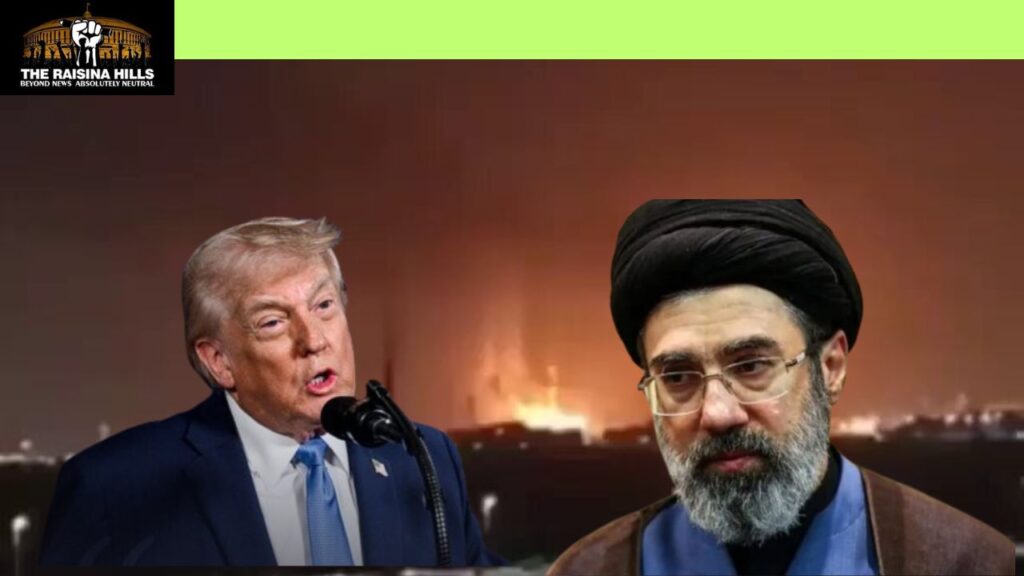
US President and Iran supreme leader.(Images X.com)
Pakistan Brokers Iran-US Ceasefire: Islamabad Talks Set for April 10 as Two-Week Truce Takes Effect
By TRH World Desk
New Delhi, April 8, 2026 — In a dramatic diplomatic breakthrough that pulled the Middle East back from the edge of catastrophic escalation, the United States and the Islamic Republic of Iran declared a mutual two-week ceasefire late on April 7, 2026 — brokered through Pakistan’s back-channel diplomacy. The announcement, confirmed simultaneously by US President Donald Trump, Iranian Foreign Minister Seyed Abbas Araghchi, and Prime Minister Shehbaz Sharif, sets the stage for formal peace negotiations in Islamabad on Friday, April 10.
The Iranian Statement: Conditional but Historic
In a statement issued from Tehran, Iran’s Foreign Minister Abbas Araghchi, on behalf of the Supreme National Security Council, “expressed gratitude to Pakistan’s Prime Minister Sharif and Field Marshal Asim Munir for their tireless efforts” to end the war, and declared that if attacks against Iran were halted, Iran’s armed forces would cease their “defensive operations.”
Crucially, Tehran’s agreement came with a significant caveat on the Strait of Hormuz. Iran’s explanation of the 10-point plan included its claim that the Strait of Hormuz would be subject to “regulated passage under the coordination of the Armed Forces of Iran,” thereby conferring upon Iran a unique economic and geopolitical standing. This language signals that while Iran has agreed to allow shipping, it is asserting a degree of sovereign authority over the waterway — a point likely to be contested vigorously during the Islamabad talks.
The conditional nature of Iran’s acceptance reflects the immense domestic pressures on Tehran. Throughout the war, Iran’s paramilitary Revolutionary Guard had called the shots in all decisions, with individual commanders making decisions on what to strike and when, with the nation’s political leadership sidelined. Whether IRGC field commanders fully comply with the ceasefire in the coming hours remains a critical open question.
Trump Announces Suspension of Strikes
US President Donald Trump said he was holding off on threatened attacks on Iranian bridges, power plants, and other civilian targets, subject to Tehran agreeing to a two-week ceasefire and reopening of the Strait of Hormuz, the pivotal waterway through which a fifth of the world’s oil is transported during peacetime.
Trump cited Iran’s 10-point proposal as the turning point. He wrote that Iran had provided a 10-point peace proposal and that it was “a workable basis on which to negotiate,” adding that almost all points of past contention had been agreed to between the two countries, and that a two-week period would allow a final agreement to be consummated.
The announcement came just hours before Trump’s self-imposed 8 p.m. ET deadline — and only a day after he had threatened, in stark terms, that “a whole civilization will die” if Iran failed to reopen the strait. The dramatic reversal illustrates both the volatility of the current diplomatic environment and the singular influence Pakistan’s intermediaries wielded in the final hours.
Markets reacted sharply to the news. Oil prices plunged after the announcement, with US crude sliding around 8% to approximately $103 per barrel after having traded as high as $117 earlier in the day. S&P 500 futures surged more than 1.6%, Nasdaq 100 futures rose 1.8%, and Dow futures climbed 725 points.
Follow The Raisina Hills on WhatsApp, Instagram, YouTube, Facebook, and LinkedIn




About The Author