Orbital Mirrors and the Sunlight Startup: Hype vs Reality
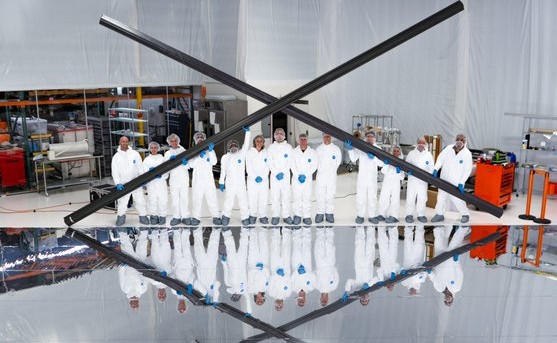
Reflect Orbital announces fresh angel investment (Image X.com)
The viral claim that a startup can beam sunlight from space is partly true. Here is what the engineering and economics actually show.
By P. SESH KUMAR
New Delhi, March 27, 2026 — The social-media pitch is irresistible: a company called Reflect Orbital will “sell sunlight” at night by bouncing the Sun’s rays from space back to Earth. It sounds like science fiction dressed up as a startup deck, and that is precisely why it has spread so fast.
The truth is more interesting, and more limited. Reflect Orbital is a real California startup. The underlying idea of orbital mirrors is also real, and it is not new. But the bolder online claims often race far ahead of what has actually been demonstrated.
What exists today is a company with funding, a public product pitch, a booking portal, and plans for prototype missions-not a working commercial service that can already flood cities or power nations after sunset. The technology is plausible in a narrow engineering sense, but scaling it into an economical, environmentally acceptable, globally governable business is a far tougher proposition than the viral posts suggest.
Reflect Orbital is not a hoax. It is a real startup that says it wants to deliver “a spot of sunlight on-demand” using constellations of mirrors in space. On its own website, it describes a localized illuminated area of about 5 km diameter and says the light can be directed, dimmed, and configured for uses such as solar-energy extension, disaster response, and industrial lighting.
The company has also publicly announced venture funding, including a $20 million Series A in May 2025. So the basic social-media claim that “there is a company trying to sell sunlight” is true. But the more dramatic suggestion that this is already a mature, functioning service is false. What exists is a proposal, not an operating utility. Even Reflect Orbital’s own booking portal reads like a reservation system for a future service, with deposits and price inquiries, not a proven commercial platform delivering regular contracted beams today.
The easiest way to understand the technology is to forget lasers, death rays, and magical new suns. This is not about creating energy in space and transmitting it as electricity. It is much simpler. Imagine a giant, very thin, carefully aimed mirror flying in orbit. That mirror does not make light; it merely redirects sunlight that already exists.
The idea is to place the mirror in an orbit where it can still see the Sun even when the ground below is in twilight or darkness, then tilt it so some of that sunlight is reflected toward a chosen patch of Earth. Reflect Orbital’s public pitch says its satellites would provide configurable light ranging from something like full-moon brightness up to much stronger illumination. Research groups in Europe and the UK have described similar “orbiting solar reflector” concepts aimed especially at extending output from ground-based solar farms around dawn and dusk.
That is why the social-media line that the company will “replace the night” is badly exaggerated. These systems are not designed to turn midnight into noon across a city or a country. Reflect Orbital’s own materials describe highly localized, target-specific beams. Earlier technical studies and newer academic work also point to more modest use cases: extra light for solar farms at the edges of the day, temporary illumination for selected zones, or limited-duration service during satellite passes. Space.com reported that one early configuration pitched by the company envisioned 57 satellites in sun-synchronous orbit providing about 30 extra minutes of sunshine for power plants at the time of day when energy demand is high. That is a far cry from the viral fantasy of permanent artificial daytime.
In fact, the concept itself is old enough to have a Cold War aftertaste. NASA was studying orbital illumination decades ago; one 1982 NASA report said orbiting mirrors were technically feasible for certain illumination applications. Russia even flew a real orbital mirror experiment in the 1990s under the Znamya project. That history matters because it kills two myths at once.
First, the idea is not fake. Second, it is not revolutionary in the sense of having appeared from nowhere yesterday. What is new is the startup-era attempt to commercialize it using cheaper launches, lighter materials, better control systems, and software-driven targeting. In other words, Reflect Orbital is reviving an old dream under new economics.
India’s LoC Village Simari Shines Bright with Full Solar Light
But this is where physics and business start quarrelling. Redirecting light is easier than making it useful at scale. A mirror in orbit must be very large, very light, very precisely controlled, and very durable. It must survive radiation, temperature swings, debris risk, and constant attitude-control demands. The reflected beam also spreads, weakens, and depends on geometry. That is why serious research papers usually discuss dawn-and-dusk enhancement for solar farms rather than grand promises of all-night illumination everywhere. Even optimistic university modelling that got headlines in 2024 described 20 ultra-thin reflectors in orbit giving solar farms roughly two extra hours of light a day on average. That is interesting, but it is not a trivial engineering lift. It implies a space architecture, not a clever gadget.
The cost question is where the social-media excitement becomes especially slippery. Some reports cited statements that one mirror’s light could cost around $5,000 an hour under large annual contracts, and Reflect Orbital’s booking portal shows deposits for future beam reservations. Yet cost-effectiveness is still an open question, not a settled business case. Academic literature has explored whether orbiting reflectors could compete with or complement energy storage for solar plants, but that is not the same as proving bankable economics in the real world.
Much depends on launch prices, mirror size, satellite lifetime, maintenance, insurance, atmospheric losses, targeting accuracy, regulatory costs, and the value of electricity exactly at the time the extra light arrives. Reflect Orbital has reportedly been trying to drive per-satellite manufacturing costs sharply downward, which tells us the company itself knows this business lives or dies on cost compression. For now, the economics remain speculative rather than demonstrated.
Then comes the larger problem: even if the engineering works, the sky is not a private warehouse. Astronomers, dark-sky advocates, and environmental critics have objected sharply. DarkSky International says the proposed system could illuminate areas up to 5 km wide at intensities several times brighter than full moonlight and argues that multiple satellites would be needed per target area, with significant ecological, human-health, safety, and astronomical risks.
The International Astronomical Union already documents how reflected light from satellite constellations can streak telescope images. Recent criticism from astronomy groups has been unusually severe because this proposal is not merely about satellites being visible; it is about deliberately adding more reflected light to the night environment. That is why many scientists see Reflect Orbital not as a cute moonshot but as a test case in who gets to alter the shared night sky.
The regulatory position is also murky and important. In the United States, FCC materials show that the agency has been actively rethinking how environmental review applies to space-based operations, including concerns related to launches, re-entries, satellites reflecting sunlight, and orbital debris. That alone should sober up anyone who thinks this is merely a whimsical business experiment. Regulators themselves are grappling with whether the existing legal machinery is even adequate for a technology that changes the visual environment of the sky across borders. Social media often treats the issue like a cool product launch. In reality, it sits at the junction of space law, telecom licensing, environmental review, aviation safety, astronomy, and global commons governance.
Who leads this race today? The United States leads the commercial hype cycle because Reflect Orbital is the most visible startup trying to turn the idea into a product. Europe, especially through ESA’s SOLARIS effort and UK-linked research, appears to lead much of the structured public-domain technical exploration around orbital reflectors as a stepping stone toward broader space-based solar-power systems. Russia deserves historical credit as the early pioneer because it actually flew mirror experiments in the 1990s. But it would be misleading to say there is already a packed field of mature national competitors racing neck-and-neck to sell orbital sunlight. The field is still thin, experimental, and highly unsettled.
What about scalability? In theory, yes, the system is scalable: add more satellites, increase mirror size, refine pointing, and one can extend coverage or duration. In practice, scalability is exactly where the trouble explodes. More satellites mean more launch cost, more orbital traffic, more brightness in the sky, more collision risk, more debris concerns, more regulatory scrutiny, and more public backlash. The startup’s own public narrative has varied across reports-from tens of satellites for specific solar applications to thousands in orbit over time. That very range reveals the core reality: the concept may scale on paper more easily than it will scale politically, ecologically, and commercially.
For India, the realistic assessment is sobering but not dismissive. India is a major solar power story already, with Ministry of New and Renewable Energy (MNRE) reporting cumulative solar capacity of about 143.6 GW as of 28 February 2026. That means India has a strong reason to watch any technology that could squeeze more value from solar assets. But India is not, at least publicly, a front-rank player in orbital reflector commercialization. Its immediate energy priorities are far more terrestrial: transmission, storage, distribution reform, land, rooftop adoption, manufacturing depth, and balancing variable renewables at scale.
For India, orbital sunlight is not a near-term substitute for batteries, pumped storage, grid modernization, or better forecasting. At best, it is a long-horizon niche technology worth monitoring, perhaps for future demonstration partnerships around solar-farm augmentation in select deserts or remote zones if global regulation and economics mature. Today, however, India’s money would almost certainly buy more reliable clean-energy gains on the ground than in mirrored constellations overhead.
So what is the final verdict on the viral claim? The claim has a solid seed of truth wrapped in layers of overstatement. Reflect Orbital is real. Orbital mirrors are real in concept. Limited use cases-especially adding some light to solar farms near dawn and dusk-have genuine technical literature behind them. But the louder online version, which implies that commercial sunlight-for-sale from space is practically here, economically obvious, and socially uncomplicated, is not borne out by the evidence.
The project remains a high-risk frontier idea: technically intriguing, commercially unproven, environmentally controversial, and politically under-governed. The most realistic future is not “nights abolished.” It is a much narrower path in which such systems, if they survive regulatory and environmental pushback, may someday serve specialized industrial or energy applications in tightly controlled circumstances. Until then, Reflect Orbital is best understood not as the company that has conquered the Sun, but as the company testing whether an old orbital mirror dream can survive first contact with economics, ecology, and public consent.
(This is an opinion piece. Views expressed are author’s own.)
Century-old Data of Observatory reveals clues to Sun’s future
Follow The Raisina Hills on WhatsApp, Instagram, YouTube, Facebook, and LinkedIn




About The Author