Raakh Review: A Crime Nightmare Built on Unforgettable Villains
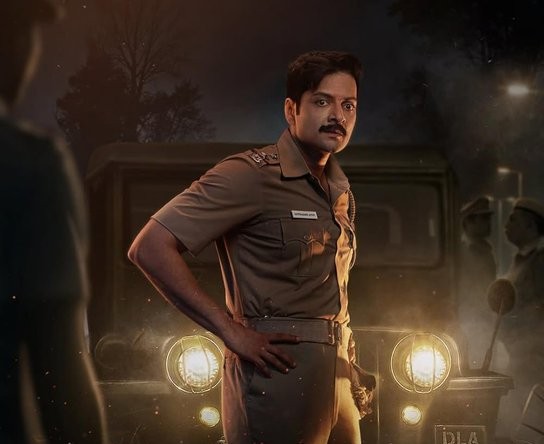
Ali Fazal and a True-Crime Nightmare That Haunts Long After You Watch Raakh (Image Film poster)
By KUMAR VIKRAM
Raakh Review: Ali Fazal and a True-Crime Nightmare That Haunts Long After You Watch It
New Delhi, June 14, 2026 — There is a scene in Raakh — Prime Video’s new crime series set in 1978 Delhi — where one of the two killers walks into a room and the air in the scene simply changes. No music cue, no cinematic flourish. Just the specific, quiet menace of a man who has done unspeakable things and has not lost a night’s sleep over any of them. That scene, and a dozen like it, is why Raakh works as powerfully as it does.
Streaming on Prime Video from June 12, 2026, Raakh is based on the Ranga-Billa case — one of post-Independence India’s most notorious double murders — that shook the country and eventually led to the abolition of the death penalty debate in Indian legal and political circles. That real-world weight gives the series its gravity from the first frame. The murders it depicts are not fictional exercises in suspense. They happened. The victims were real. And the series never lets you forget that.
The Story
The year is 1978. Lt Col Ashok Arora (Aamir Bashir) lives in Delhi Cantonment with his wife Mona (Sonali Bendre), 16-year-old daughter Suman (Divya Sharma), and 14-year-old son Sahil (Vivaan Sharma). One rainy evening, Suman and Sahil leave for a radio station where Suman is scheduled to sing on air. They never arrive. When the police are called in, SI Jayprakash Jatav (Ali Fazal) begins a desperate investigation. The next day, both children are found brutally murdered at a forest-like area called the Ridge.
Running parallel to the investigation is a second track set four days earlier in Bombay, where we meet Babu aka Kumar (Akash Makhija) and Rajjo (Ramandeep Yadav) — small-time criminals whose crimes rapidly escalate until they flee to Delhi. In a bold structural choice, directors Prosit Roy, Anusha Nandakumar, and Sandeep Saket reveal the killers’ identities in the very first episode, abandoning the traditional whodunit formula in favour of something more unsettling: we know who did it, and now we must watch the damage they do.
Performances
Akash Makhija and Ramandeep Yadav are the stars of the show. They take Raakh to dizzying heights. The makers delve deep into their psyche and the way they have totally gotten into the skin of their characters is truly award-worthy. Makhija in particular achieves something rare in Indian crime drama — he makes his character comprehensible without making him sympathetic. There is a scene involving his mother (a brilliantly cast Kalyanee Mulay, unrecognisable under extraordinary prosthetics) that is the single most chilling sequence in the series. He does not raise his voice. He doesn’t need to.
Ali Fazal, freed from the gallery-playing bravado of Mirzapur, delivers his most controlled performance in years. He keeps his act subtle yet extremely strong. His character has flaws, but one still roots for him, even when he goes out of his way to catch the culprits. Sonali Bendre brings quiet devastation to Mona — a mother trying to process the incomprehensible. Her screen time is limited but every minute of it registers. Divya Sharma and Vivaan Sharma as the doomed siblings are excellent, delivering performances that feel lived-in rather than performed. Aamir Bashir, Dibyendu Bhattacharya, and Anshul Chauhan provide able support throughout.
Direction and Craft
Prosit Roy’s direction is exemplary. He adds the required emotions and brutality and it helps in enhancing the impact manifold. Saumyananda Sahi’s cinematography is one of the series’ quiet achievements — the Taj Mahal sequence and a key scene in the Ridge forest are shot with a stillness that makes them feel like crime scene photographs. The period production design by Shailaja Sharma is meticulous, and the background score by Ajay Jayanthi and Parth Pandya underscores rather than announces.
Where It Stumbles
Raakh is not without its frustrations. While the first two episodes focus on establishing the premise and key characters, the pacing drops at a few places. We learn the full backstory of Kumar in considerable detail, but Rajjo remains comparatively underdeveloped — a missed opportunity given how central he is to the crime.
The track involving Jayprakash and his father, while genuinely moving, occupies more screen time than the story strictly requires. There is even a scene suggesting that Jayprakash had a glimpse of Dr B R Ambedkar in his childhood — the scene has relevance, but adds to the length and the makers should have thought of a better way of communicating the idea in lesser time.
The finale structure is also slightly misjudged. Episode 7 ends on a note of genuine catharsis — and then the series continues, inserting a crucial but deeply disturbing flashback immediately after the emotional peak. To place it immediately after a clapworthy scene might work for some, but a section of the audience will be left disturbed and their joy will be short-lived.
Verdict
On the whole, Raakh is a hard-hitting and disturbing series that works due to its gripping narrative, atmospheric treatment and strong performances. While Ali Fazal and Sonali Bendre leave a mark, it is Akash Makhija and Ramandeep Yadav’s chilling acts that elevate the show considerably.
Despite its slow pace at times, Raakh makes for a compelling watch. 123telugu.com awarded it 3.25/5, while Bollywood Hungama rated it 3.5 stars — both assessments landing in the same honest middle ground: not a flawless show, but an important, seriously crafted one that treats its real-life tragedy with the gravity it deserves.
Raakh is now streaming on Prime Video.
★★★½ / ★★★★★
O Horizon: Maria Bakalova Carries a Film Too Afraid of Its Premise
Follow The Raisina Hills on WhatsApp, Instagram, YouTube, Facebook, and LinkedIn




About The Author