‘Terrorists or Militants’: BBC in Crosshairs of Doublespeak
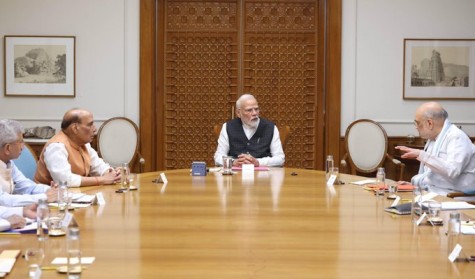
PM Narendra Modi chairs CCS meeting post-Pahalgam terror attack in New Delhi (Image credit PIB)
Row widens as US panel slams The New York Times; India cracks down on Pakistani channels, tightens visa enforcement
By NIRENDRA DEV
New Delhi, April 22, 2026— The Indian government issued a strong protest to the BBC over its description of the Pahalgam attackers as “militants,” calling the terminology misleading and insensitive after the killing of 26 tourists in Jammu and Kashmir.
The Ministry of External Affairs formally conveyed its objections to BBC India head Jackie Martin, flagging concerns that such language risks diluting the gravity of terrorism. The controversy erupted after a BBC report referred to the incident as a “militant attack,” even as India maintained it was a clear act of terrorism.
The row quickly expanded beyond India. In the US, the United States House Foreign Affairs Committee publicly criticised media coverage that used terms like “militants” and “gunmen.” In a sharp post on X, the panel called out The New York Times, stating: “This was a terrorist attack, plain and simple… when it comes to terrorism, the NYT is removed from reality.”
The BBC report also highlighted Pakistan’s response as “tit-for-tat,” a framing Indian officials view as creating false equivalence. Critics argue that such narratives provide what security experts describe as “media oxygen” that can inadvertently amplify extremist messaging.
The debate underscores a broader geopolitical fault line: how global media characterises acts of violence in conflict zones like Kashmir, and whether terminology shapes international perception.
In parallel, India launched a sweeping digital crackdown following the attack. Acting on inputs from the Ministry of Home Affairs, authorities banned 16 Pakistani YouTube channels accused of spreading misinformation and provocative content.
The blocked platforms — with a combined reach of around 63 million subscribers — included major outlets such as Dawn News, ARY News, Geo News, and Samaa TV.
Channels run by prominent journalists, along with content linked to former cricketer Shoaib Akhtar, were also restricted for Indian users.
Security measures extended to cross-border mobility. Following consultations led by Amit Shah, authorities enforced strict visa deadlines for Pakistani nationals.
Under the Immigration and Foreigners Act 2025, overstaying or violating visa conditions can attract up to three years in jail and fines of ₹3 lakh. Hundreds of Pakistani nationals exited India via the Attari-Wagah border in the days following the attack, while Indian citizens also returned from Pakistan.
Additionally, India declared several Pakistani defence officials persona non grata and scaled down diplomatic engagement.
The developments signal a coordinated push by New Delhi to control both the narrative and the security fallout after the Pahalgam attack. From challenging international media language to tightening digital and physical borders, the government’s approach reflects a zero-tolerance stance on terrorism — and on how it is portrayed globally.
Follow The Raisina Hills on WhatsApp, Instagram, YouTube, Facebook, and LinkedIn




About The Author