Modi’s Women’s Reservation and Delimitation Push: A Political Test for Rahul Gandhi and the Opposition
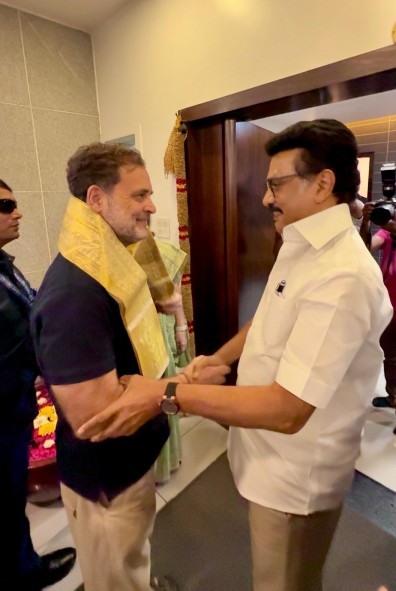
The government's revised proposals on women's reservation and delimitation are set to test parliamentary alignments. (Image INC India)
By AMIT KUMAR
Last updated November 29, 2026, 8.20 pm
Prime Minister Narendra Modi’s renewed push to link women’s reservation with delimitation has opened another important political contest between the BJP-led NDA and the Opposition. Beyond the legislative implications, the proposed changes could influence political alignments ahead of several Assembly elections and the 2029 Lok Sabha polls.
The Union Cabinet has cleared a fresh set of legislative proposals that seek to implement 33 per cent reservation for women in Parliament and state legislatures through an expansion of legislative seats. The revised formula proposes increasing the strength of the Lok Sabha and state Assemblies by 50 per cent while retaining the existing inter-state share of parliamentary representation. The government is seeking to advance implementation of women’s reservation before the 2029 general election.
The proposals are scheduled to come before Parliament during the special sitting beginning November 30. Their passage will require the government to secure the constitutionally mandated majority for the amendment.
The political significance of the initiative is considerable. Modi has placed women’s representation at the centre of a legislative agenda that also addresses concerns raised by several regional parties over the possible impact of delimitation on states with different population-growth patterns.
The BJP’s political approach has often involved combining legislative initiatives with wider electoral messaging. Women’s representation, welfare programmes, development and the party’s ideological positioning have remained important elements of its political strategy. The new proposals offer the BJP an opportunity to present itself as pursuing a major reform in women’s participation in elected institutions.
The Opposition, meanwhile, faces the challenge of coordinating its position across parties with different regional interests. The Congress, Trinamool Congress, DMK, Samajwadi Party, RJD and parties associated with regional leaders have their own political calculations.
The fresh delimitation-linked bill has already ruptured the Opposition unity. Delimitation and women’s reservation affect the institutional interests of states and parties, creating scope for issue-based positions that may differ from broader political alliances.
The political debate also comes against the backdrop of women’s representation in Parliament. Women accounted for 5.6 per cent of elected members in the 1971 Lok Sabha. Their representation rose to 14.4 per cent after the 2019 general election, before falling to 13.6 per cent in the 2024 election, when 74 women were elected.
These figures underline the gap between women’s share of the electorate and their representation in legislative institutions. The reservation proposal seeks to address that imbalance, although its implementation depends on the passage of the required legislation and the delimitation framework.
For Rahul Gandhi and the Congress, the immediate challenge is to develop a coordinated response that addresses both the principle of women’s reservation and the concerns surrounding the proposed restructuring of legislative representation. A fragmented Opposition could find it difficult to shape the debate or influence the final legislative outcome.
The coming parliamentary session will therefore be an important test of the government’s ability to secure support beyond its own alliance. It will also test whether Opposition parties can agree on a common position despite their differing regional priorities.
The implications extend beyond the immediate legislative exercise. With Assembly elections approaching in several states and the next general election scheduled for 2029, the debate over women’s reservation and delimitation is likely to remain an important part of India’s political discourse.
The outcome will depend not only on the government’s legislative strategy but also on the ability of political parties to negotiate, build consensus and respond to the concerns of voters.
(This is an opinion piece. Views are the author’s own.)
Modi’s Delimitation Plan Faces an Equality Test: Who Really Benefits?
Follow The Raisina Hills on WhatsApp, Instagram, YouTube, Facebook, and LinkedIn




About The Author