Is Iran Really Weaker? Defence Expert Reveals What the World May Be Missing
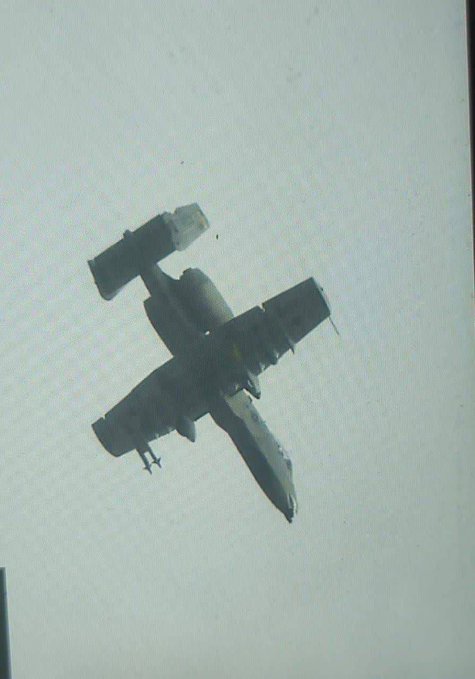
U.S. aircraft shot down Iran (Image X.com)
By TRH World Desk
‘We Have No Idea of Iran’s Full Capacity’: Defence Expert Robert Fox Warns Against Underestimating Tehran
New Delhi, June 12, 2026 — Claims that Iran’s military capabilities have been severely degraded by sustained Israeli and American military operations may be overstating the reality on the ground, according to veteran defence analyst Robert Fox, who argues that Tehran retains significant offensive capacity despite months of conflict.
Speaking to Al Arabiya English, Fox challenged assertions made by political leaders regarding the extent of damage inflicted on Iran’s military infrastructure, warning that public estimates of Tehran’s remaining capabilities are often impossible to verify.
Fox specifically questioned recent claims by US President Donald Trump suggesting that only a fraction of Iran’s air-defence systems, missile inventory and drone forces remain operational.
“How does he know that?” Fox asked, arguing that even the most sophisticated satellite surveillance and intelligence gathering systems cannot provide precise figures about military assets dispersed across a vast and complex country.
The analyst pointed to another major intelligence uncertainty: the whereabouts of Iran’s stockpile of highly enriched uranium. Despite extensive monitoring efforts, Western governments have struggled to provide definitive answers regarding the location of approximately 440 kilograms of uranium enriched to 60 percent purity.
According to Fox, such intelligence gaps demonstrate the limitations of modern surveillance capabilities in wartime.
He also compared the situation to claims made by Russian President Vladimir Putin regarding battlefield gains in Ukraine, suggesting that leaders on all sides frequently use unverified statistics to project confidence and influence public perception.
More importantly, Fox argued that Iran has proved far more resilient than many military planners anticipated at the start of the conflict.
“Iran is a lot more capable than we ever expected it to be,” he said.
Despite repeated strikes on military facilities, Tehran has managed to preserve a substantial number of mobile launch systems capable of firing short-range ballistic missiles. These platforms are difficult to locate and destroy because they can be rapidly relocated and concealed, Fox added.
Fox also stated that Iran’s drone programme also remains a significant concern. While several drone production sites have reportedly been targeted, he suggested that Iran may still possess hundreds, if not thousands, of unmanned aerial vehicles.
Another key factor is Iran’s regional network of allied groups. Recent attacks launched against Israel by the Iran-backed Houthis underscore Tehran’s ability to project power indirectly even when its own territory is under pressure.
Perhaps most strikingly, Fox argued that Western intelligence agencies still lack a clear picture of the true strength of both the Islamic Revolutionary Guard Corps and Iran’s conventional armed forces.
“We have no idea really of the full capacity” of Iran’s military establishment, he said, adding that current assessments are “not really any clearer” than they were several months ago.
His comments highlight a growing debate among defence experts over whether battlefield damage has translated into a decisive weakening of Iran’s long-term military capabilities, or whether Tehran retains enough assets, missiles, drones and proxy networks to remain a major regional threat despite sustained military pressure.
The Deal That Could Change Everything — And the Ghosts That Keep Getting in the Way
Follow The Raisina Hills on WhatsApp, Instagram, YouTube, Facebook, and LinkedIn




About The Author