India’s Reform Window Opens as Election Pressure Eases
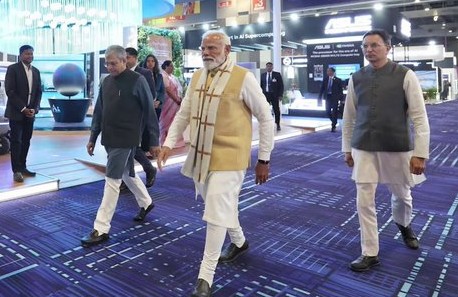
Prime Minister Narendra Modi at Bharat Mandapam to unveil the AI Impact Summit (Image Vaishnaw on X)
A pause in the election cycle gives India a chance to accelerate pending reforms in key sectors shaping future growth.
By S. JHA
Mumbai, May 4, 2026 — With no major elections due until next year, India has a rare policy window to accelerate pending structural reforms that have so far seen uneven progress, according to a report by Kotak Institutional Equities.
The report underscores that while several supply-side reforms—such as GST, direct benefit transfers, and banking sector clean-up—have already reached maturity, a second generation of reforms remains incomplete and now requires political focus and administrative push.
Key among these are land reforms, electricity distribution, and administrative and judicial changes, all of which are categorized as “work-in-progress” or showing “no progress.” Analysts argue that the absence of immediate electoral pressures provides the central government and states with an opportunity to take politically difficult decisions that are often delayed during campaign cycles.
Electricity sector reforms, particularly around tariff rationalisation and subsidy reduction, are seen as crucial for improving state finances. Similarly, land acquisition and usage reforms remain critical for unlocking investments in manufacturing and infrastructure but continue to face political resistance.
Judicial reforms—especially those related to appointments and efficiency—have seen little traction, even as delays in dispute resolution continue to impact business sentiment. Administrative reforms aimed at streamlining decision-making and reducing bureaucratic friction are also pending.
On the investment front, the report points to unfinished agendas such as faster approvals, strengthening single-window clearances, and further liberalisation in sectors like mining and energy pricing. While coal block auctions and production-linked incentives have boosted manufacturing, deeper reforms are needed to sustain momentum.
The banking sector, though stabilised through consolidation and insolvency reforms, may also require further governance and capital efficiency improvements to support long-term growth.
The report suggests that the coming months could be decisive. With political capital relatively intact and electoral distractions minimal, policymakers have a chance to push through long-pending reforms that could shape India’s medium-term economic trajectory.
Modi at 75 Isn’t Slowing Down — BJP’s Surge Signals 2029 Play
Follow The Raisina Hills on WhatsApp, Instagram, YouTube, Facebook, and LinkedIn




About The Author