Chandrashekhar Regretted Voting Against Vajpayee: Sudip Bandyopadhyay Recalls the Power of One Vote
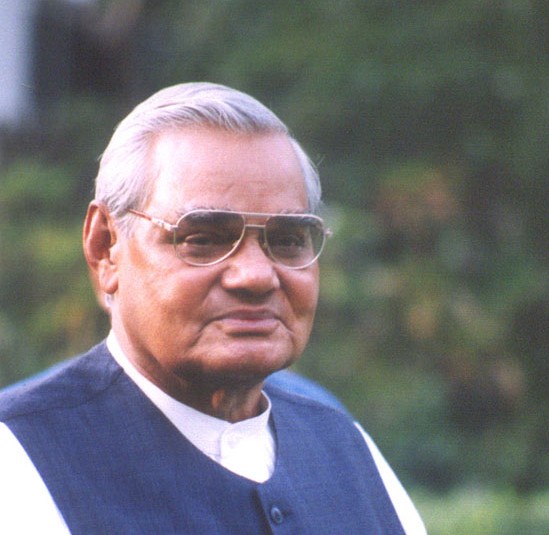
Former PM Atal Bihari Vajpayee. (Image credit BJP)
By NIRENDRA DEV
Former TMC leader recalled Chandrashekhar’s reaction after the Vajpayee government lost the 1999 confidence vote by a single vote.
New Delhi, September 19, 2026 — Former Prime Minister Chandrashekhar once expressed regret over having voted against the Atal Bihari Vajpayee government, recalling how a single vote had determined the fate of the government, then Trinamool Congress Lok Sabha leader Sudip Bandyopadhyay said during a special discussion on the 75-year journey of Parliament in September 2023.
Recalling the episode in the Lok Sabha, Bandyopadhyay said Chandrashekhar was sitting next to him when Vajpayee’s government lost a confidence vote by one vote in April 1999.
“Sudip, what is the result of the voting?” Bandyopadhyay recalled Chandrashekhar asking him.
“I said, ‘Vajpayee ji has been defeated by margin of one vote only.’ He said to me, ‘Oh, if I had the idea, I could have voted for Vajpayee ji by which the voting pattern could have been different,’” Bandyopadhyay said.
The exchange was recalled during the September 18, 2023 discussion on the parliamentary journey of 75 years. The official Lok Sabha record carries Bandyopadhyay’s account.
The Vajpayee government had lost the confidence motion on April 17, 1999, with 269 members voting in its favour and 270 against it. The government subsequently resigned.
Giridhar Gamang, then Odisha Chief Minister as well as a sitting Lok Sabha MP, voted against the government. His vote became a defining part of the episode, although the final result also reflected the withdrawal of support by allies and other opposition votes, including National Conference MP Saifuddin Soz’s cross-voting.
Bandyopadhyay used the memory to underline the importance of parliamentary debate and the role of the Opposition.
“Let the present House run with a positive note. A common principle of parliamentary democracy is that the House belongs to the Opposition,” he said.
He also criticised the passage of Bills without adequate debate, saying both the ruling side and the Opposition needed to be more objective in their approach.
Adhir Ranjan Chowdhury Recalls Nehru’s Parliamentary Conduct
During the same discussion, Congress leader Adhir Ranjan Chowdhury invoked Jawaharlal Nehru’s contribution to parliamentary democracy.
Quoting Nehru, Chowdhury said parliamentary democracy required “ability”, devotion to work, cooperation, self-discipline and restraint. He also recalled Nehru’s emphasis on listening to the Opposition.
Chowdhury said Nehru, despite enjoying a large parliamentary majority, respected Opposition voices and did not believe in “steamrolling” the Opposition.
The Parliament Digital Library’s summary of the September 18, 2023 discussion records Chowdhury’s remarks on Nehru’s role in establishing parliamentary traditions and his emphasis on cooperation, self-discipline and restraint.
Chowdhury also referred to B.R. Ambedkar’s formulation of social democracy around liberty, equality and fraternity, arguing that these principles needed to remain central to India’s parliamentary democracy.
He recalled several landmark moments in Parliament’s history, including Nehru’s “Tryst with Destiny” speech on the eve of Independence and parliamentary tributes following Mahatma Gandhi’s assassination.
‘History Is a Promissory Note for the Future’
Bandyopadhyay also reflected on the evolution of India’s parliamentary institutions, referring to legislation including the Anti-Defection Law of 1985, the Child Labour (Prohibition and Regulation) Act of 1986, the Scheduled Castes and Scheduled Tribes (Prevention of Atrocities) Act of 1989 and the Panchayati Raj reforms of 1992.
“History is the remembrance of the past. It transmits from generation to generation,” he said, adding that history should be treated as a “promissory note for future”.
Bandyopadhyay also stressed that there should be no attempt to create a division between the terms India and Bharat.
“We firmly stand by both. Jai Hind. Jai India. Jai Bharat,” he said.
The September 18, 2023 special discussion was formally titled “Parliamentary Journey of 75 Years Starting from Samvidhan Sabha – Achievements, Experiences, Memories and Learnings.”
Nandigram Nemesis: Why Mamata Banerjee Now Faces an Existential Crisis?
Follow The Raisina Hills on WhatsApp, Instagram, YouTube, Facebook, and LinkedIn




About The Author