‘Cancel Me If You Can’ Review: Portnoy’s Memoir, Unpacked
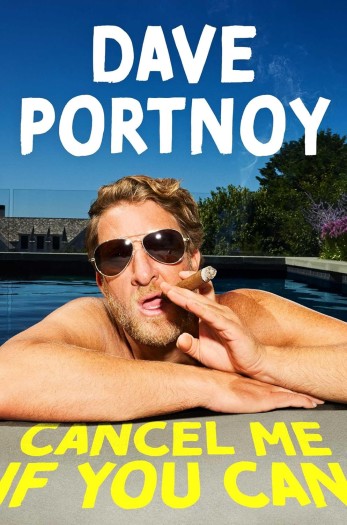
Cancel Me If You Can’ book Review. (Image book cover)
By TRH Book Desk
Cancel Me If You Can. Author: Dave Portnoy. Publisher: Simon & Schuster. Pages: ~300. Format: Hardcover, e-book, audiobook (read by the author)
July 2026 — Dave Portnoy has spent more than two decades daring people to cancel him. His first book asks them to read about it instead.
Cancel Me If You Can, released this month by Simon & Schuster, traces the Barstool Sports founder’s path from handing out a four-page broadsheet newspaper on the streets of Boston in 2004 to building what has grown into a nine-figure company with over 300 employees and 150 active brands.
The publisher frames it as the story of a man who refused to bend to those who tried to tear him down, staying true to himself and blocking out the haters — a pitch that also happens to describe how Portnoy has handled nearly every controversy of his career, and how he’s handling this book’s reception now.
The memoir moves chronologically from Barstool’s scrappy print-newspaper origins through its sale to Penn Entertainment, with detours into Portnoy’s disgust with talent agents, his run-ins with podcast stars, and what he describes as an alleged secret firing effort by ESPN.
Much of the back half is devoted to relationships that curdled along the way — most notably with Dan “Big Cat” Katz and Eric “PFT Commenter” Sollenberger, the hosts of Barstool’s Pardon My Take, whose widening rift with Portnoy he says even longtime followers underestimated.
He also revisits the contract dispute with Call Her Daddy co-founders Alex Cooper and Sofia Franklyn, and the 2021 Business Insider allegations of sexual misconduct that he fought in court and lost.
Portnoy has been candid in interviews about how hard the book was to produce. He initially hired a ghost writer who spent six to eight months on a draft but scrapped it after reading the first paragraph because “it doesn’t sound like me,” before spending another six to eight months a day writing it himself.
Talking to Forbes around release, he didn’t dress up the experience: “It sucked,” Portnoy said of writing the memoir.
The critical reception has been sharply divided between outlets covering it as a business story and those reviewing it as literature — and the literary side has not been kind.
Slate’s review, headlined “Hagiography for a Dumbass,” is the most pointed critique to run in a major US outlet.
Critic Scaachi Koul argued that after one clear-headed opening line about what Barstool was meant to be, the book settles into “settling scores, reminding everyone how great he is, and defending himself against accusations that he’s sexist while he says a bunch of sexist things in print.”
Koul was especially unsparing about how the book handles the 2021 misconduct allegations and singled out Portnoy’s treatment of specific journalists — including a passage where he goes to a New York Times reporter’s house after she requests an interview, an anecdote Koul notes even his own book editor suggested he cut.
Not every outlet approached the book adversarially. The New York Post’s coverage leaned into Portnoy’s own explanation for why he wrote it at all: “Ego,” Portnoy told the paper.
“The thought of walking into an airport and seeing this book in all the bookshops really appealed to me.”
Forbes and NPR both ran extended interviews treating the memoir as a vehicle for Portnoy to expand on the Barstool-Penn deal, his feuds, and his plans for the company’s future, without rendering a verdict on the writing itself.
Portnoy has responded to the harsher notices with characteristic shrugging bravado —reposting Slate’s own promotional line calling the book something that might not be “meant to be read by humans,” and answering it with four laughing emojis on social media.
Cancel Me If You Can isn’t trying to win over anyone who’s already made up their mind about Dave Portnoy, and on that narrow measure, it succeeds.
Longtime Barstool fans get an origin story, a victory lap, and a knowing wink at every scandal along the way, all delivered in the same unfiltered, bar-stool voice that built the brand in the first place.
Readers looking for genuine self-reckoning, or a more measured account of the controversies Portnoy has weathered, will likely find the book confirms whatever they already believed about him — just at 300 pages of length.
As one of the more skeptical US critics put it, this is a book that treats every past accusation as settled and every critic as a punchline; whether that reads as confidence or evasion probably depends on how you felt about Dave Portnoy before you opened it.
‘The Living Declaration’ Traces 250 Years of Arguing Over Four Sentences
Follow The Raisina Hills on WhatsApp, Instagram, YouTube, Facebook, and LinkedIn




About The Author