Bulgaria Election: Not About Russia, But a Warning for Europe
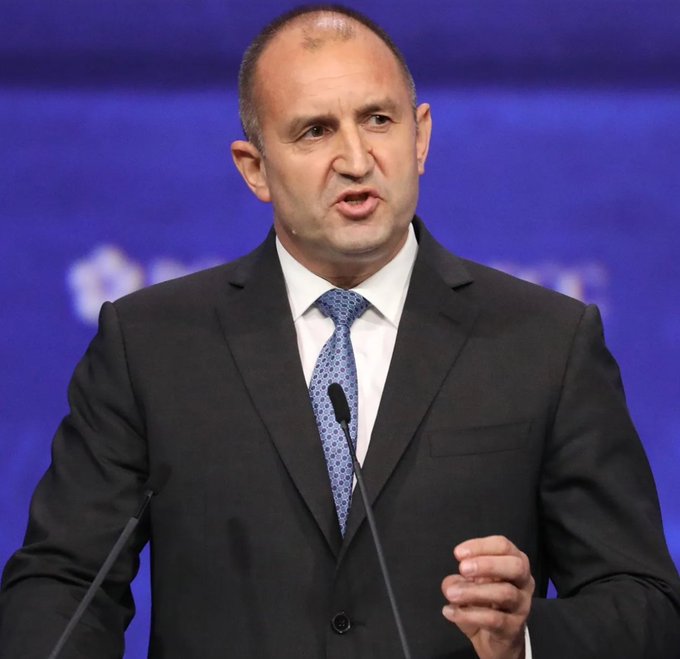
Bulgaria Election 2026 (Image X.com)
Former Kyrgyz PM Djoomart Otorbaev says vote reflects “exhaustion with Europe’s stagnation,” not a geopolitical shift
By TRH World Desk
New Delhi, April 21, 2026 — Bulgaria’s election outcome is being widely interpreted across Europe as a geopolitical tilt toward Moscow. But a sharply worded analysis by former Kyrgyz Prime Minister Djoomart Otorbaev argues that this reading “is convenient—and fundamentally misleading.”
In a LinkedIn post, Otorbaev framed the victory of Bulgarian President Rumen Radev not as a pro-Russia shift, but as a reflection of deeper structural dissatisfaction within Europe itself.
“Europe didn’t wake up to a ‘pro-Russian Bulgaria’… it woke up to find something far more uncomfortable: a mirror,” Otorbaev wrote.
Not a Russia Pivot
While Radev has previously taken a softer stance toward Russia—including criticism of sanctions and cautious rhetoric on the Russian invasion of Ukraine—Otorbaev stressed that these positions are being overstated.
He noted that Bulgaria remains firmly embedded in the European Union framework, benefiting from funding, trade access, and institutional integration. The country’s recent eurozone entry and inclusion in the Schengen Area reinforce that alignment.
“These are not the moves of a state preparing to pivot East—they are the commitments of a country embedded in the European project,” he wrote.
A Vote Driven by Exhaustion
According to latest updates, Radev’s bloc “Progressive Bulgaria” won a landslide, positioning it strongly in the 240-seat parliament. Combined with reformist allies, a constitutional majority appears within reach.
However, Otorbaev argues that this support is less ideological and more emotional. “That majority is not built on ideology—it is built on exhaustion. Exhaustion with corruption. With institutional decay. With the perception that Brussels lectures but does not lead.”
This sentiment cuts across traditional political divides, drawing both pro-European and pro-Russian voters into what he calls a “protest convergence.”
Decline of Hardline Pro-Russia Forces
Interestingly, the nationalist, pro-Kremlin party Vazrazhdane is projected to see a steep decline—from 33 seats to just 12.
For Otorbaev, this undermines the argument of a broader pro-Russia wave. Instead, it suggests consolidation of voter sentiment around governance concerns rather than foreign policy alignment.
Not Another Orbán
Comparisons between Radev and Hungarian Prime Minister Viktor Orbán have surfaced in European media, but Otorbaev dismisses them as simplistic.
He argues that Bulgaria’s economic dependence on EU structures, political pluralism, and coalition dynamics will limit any radical departure from European norms.
“The constraints are too strong—economic, institutional, and political,” he noted, adding that a pro-European opposition remains influential.
A Broader European Signal
Otorbaev’s central argument is that Bulgaria’s election is less about geopolitics and more about a growing disconnect between European institutions and voters.
“European voters are no longer voting for Europe as it currently functions. They are voting against its perceived stagnation.”
He warns that unless the EU addresses governance concerns—particularly corruption, institutional reform, and leadership credibility—similar electoral signals could emerge elsewhere.
The Bigger Picture
Rather than a shift toward Russia, the Bulgarian vote reflects a recalibration within Europe—a demand for accountability and renewal.
“Call it what it is: a protest vote against a weakening centre,” Otorbaev concluded, adding that Bulgaria may be “the first of many” to send such a message.
FAQs:
Q1. Is Bulgaria turning pro-Russia after the 2026 election?
No, analysts like Djoomart Otorbaev argue the vote reflects domestic dissatisfaction and institutional fatigue rather than a geopolitical shift toward Russia.
Q2. Why is Rumen Radev’s victory significant?
It signals voter frustration with corruption, governance issues, and perceived stagnation within the EU framework.
Q3. What does this mean for the European Union?
The result highlights growing pressure on EU institutions to reform and reconnect with voters, or risk similar outcomes in other member states.
Follow The Raisina Hills on WhatsApp, Instagram, YouTube, Facebook, and LinkedIn




About The Author