Punjab Paradox: BJP’s 2 MLAs, 7 RS MPs — A Question of Ethics
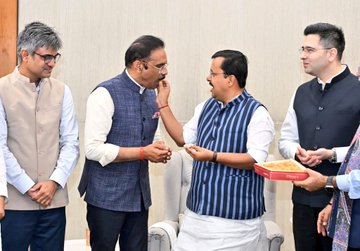
BJP president with defecting AAP leaders in New Delhi on Friday (Image BJP on X)
Numerical legality meets moral scrutiny as India’s Upper House system faces fresh debate
By TRH Political Desk
New Delhi, April 25, 2026 — Politics, it is often said, is a game of numbers. But what happens when the numbers begin to defy the very spirit of representation?
In Punjab, the Bharatiya Janata Party holds just two seats in the 117-member Assembly. Yet, paradoxically, it is poised to have as many as seven members in the Rajya Sabha from the state. Constitutionally, there is little to fault. Politically, however, the optics are far more troubling.
The Rajya Sabha was envisioned as the Council of States — a chamber where representation flows indirectly from state legislatures. In theory, the arithmetic should mirror the political balance within the Assembly. In practice, shifting alliances, defections, and strategic manoeuvres often distort this balance.
This is where the ethical debate sharpens. When leaders switch political affiliations without relinquishing their Upper House seats, the question is not merely legal — it is moral. Should a mandate, however indirect, travel with the individual or remain with the party and the electorate that enabled it?
The controversy surrounding Raghav Chadha and similar cases has only intensified this scrutiny. Critics argue that retaining Rajya Sabha membership after a political shift undermines the representative character of the institution. Supporters, on the other hand, point to the absence of explicit legal prohibitions.
What emerges is a larger, more uncomfortable truth: Indian politics is increasingly operating in the grey zone between legality and propriety. The system allows it, but does that make it right?
As electoral battles intensify and political realignments become more frequent, such contradictions are likely to grow sharper. The Punjab case is not just an anomaly; it is a reflection of a deeper churn within India’s democratic framework.
Chadha asserted that the breakaway group of the AAP constitutes two-third majority of the party in the Rajya Sabha. But the unanswered questions is: Did the people in the 2022 Punjab Assembly elections give a mandate for Chadha to take away all Rajya Sabha MPs of the state?
In the end, the question is simple yet unsettling — is politics merely about winning within the rules, or about upholding the spirit behind them?
Follow The Raisina Hills on WhatsApp, Instagram, YouTube, Facebook, and LinkedIn




About The Author