Why Vedanta Power Shares Are Rallying Despite Operational Challenges
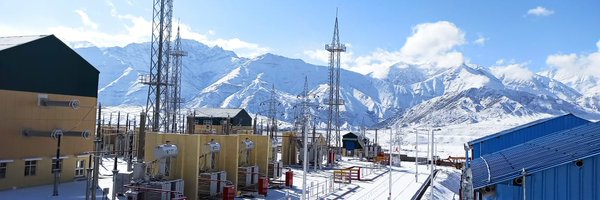
Photo credit X Power Grid
By S. JHA
Vedanta Power, the thermal power business demerged from the Vedanta group, surged more than 15% on Wednesday as investors backed its standalone growth story despite the impact of a fatal boiler explosion earlier this year.
Mumbai, July 1, 2026 — Vedanta Power Limited, the thermal generation business carved out of the Anil Agarwal-led Vedanta group’s landmark five-way demerger, is trading sharply higher on Wednesday, with gains of over 15%. The stock has traded in a relatively narrow band since its stock market debut, even as the company works through the aftermath of a fatal boiler explosion at one of its key plants earlier this year.
Vedanta Power, formerly Talwandi Sabo Power Limited (TSPL), made its market debut on June 15, 2026, opening at ₹41.80 on the NSE and ₹41.30 on the BSE, according to financial platform Univest. The stock briefly hit its upper circuit on listing day before settling lower. Since then, the share price has held mostly within its 52-week range of ₹39 to ₹45.23, last trading around ₹41.21, per data tracked by Bajaj Broking, which also pegs the company’s current market capitalisation at roughly ₹16,587.90 crore.
Like the other demerged Vedanta entities, Vedanta Power trades in the Trade-to-Trade (T2T) segment, meaning every transaction must result in delivery of shares with no same-day intraday trading permitted, Univest noted. That structure is standard for newly listed demerged companies and is typically reviewed once trading stabilizes.
How the Business Came Together
Vedanta Power’s roots trace to Talwandi Sabo Power Limited, originally incorporated in Punjab in 2007 as a special purpose vehicle by Punjab State Power Corporation Limited to develop a 1,980 MW thermal project, before Vedanta acquired it through auction, according to data compiled by Bajaj Broking. As part of the group’s broader demerger, effective from a record date of May 1, 2026, the company’s Merchant Power Business Undertaking was carved out of Vedanta Limited on a going-concern basis, with shareholders receiving Vedanta Power shares in proportion to their existing Vedanta holdings.
Business Standard’s coverage of the demerger placed the standalone power business’s revenue at ₹4,268 crore in the first half of FY26, prior to the listing, describing the unit as India’s fifth-largest private sector thermal power generator.
VOGL Shares Crash Over 10% Since Debut: Should Investors Worry?
Business Scope
The company’s core asset is the Talwandi Sabo Thermal Power Plant in Mansa district, Punjab, comprising three 660 MW units for a total of 1,980 MW, which supplies power primarily to the Punjab State Power Corporation under long-term power purchase agreements, according to Univest. Beyond Talwandi Sabo, Bajaj Broking’s profile of the company describes a current installed capacity of 4.2 GW across multiple sites, with an additional 0.6 GW unit at its Sakti facility still under development, placing Vedanta Power behind only Adani Power’s 18.2 GW, Tata Power’s 8.9 GW, JSW Energy’s 5.7 GW, and Reliance Power’s 5.2 GW among India’s private thermal players. The portfolio also includes the Chhattisgarh plant acquired in 2022 from Athena Chhattisgarh Power Limited, since renamed the Sakti Thermal Plant.
A Difficult Backdrop: The April Boiler Explosion
Vedanta Power’s listing arrived against the backdrop of one of the more serious industrial accidents in India’s power sector this year.
On April 14, 2026, a boiler explosion at the company’s Chhattisgarh Thermal Power Plant in Sakti district’s Singhitarai area killed at least nine people initially, according to district officials cited by India TV, with the toll later rising as injured workers succumbed to their wounds.
Trade publication POWER Magazine reported that the death toll climbed to 24 by April 19, citing reporting from The Economic Times, with dozens more injured in the blast.
POWER Magazine’s investigation into the incident detailed that the explosion occurred when a high-pressure steam tube connecting Boiler 1 to the turbine ruptured, and that a preliminary technical assessment pointed to impaired air flow, a buildup of unburnt fuel on furnace surfaces, and an aggressive load ramp-up as contributing factors.
The affected unit, which had only completed trial operations and received its commercial operation declaration in July 2025, remains a focal point for investors assessing the company’s near-term operational risk as it begins life as a standalone public company.
Prospects and Risks
Coverage of the broader demerger has flagged Vedanta Power’s accident as a notable shadow over its independent debut. Newsletter Daily Brief by Zerodha noted that the company was “reeling from a fatal accident” at one of its two main plants, which has been shuttered with no clarity on when it might reopen, and observed that the remaining demerged entities face real tests now that the conglomerate’s “implicit cushion” is gone.
On the more constructive side, recent contract activity suggests continued commercial momentum: Groww reported that a subsidiary of Bluspring, STEAG, secured a ₹406 crore operations and maintenance contract from Vedanta Power covering a 600 MW thermal plant for a five-year term beginning July 2026, a sign that day-to-day operations across the rest of the portfolio continue to move forward.
Equity Capital Markets research firm ICICI Direct’s broader assessment of the demerger noted that thermal power generation provides utility-like, relatively stable cash flows that can appeal to defensive investors even amid sector-wide commodity and regulatory pressures, a framing that may work in Vedanta Power’s favor as it rebuilds investor confidence following the Chhattisgarh incident.
The Bigger Picture
Vedanta Power’s measured post-listing trading pattern stands in contrast to sharper swings seen in some of its sister entities, suggesting the market has so far treated the stock with caution rather than outright pessimism. Brokerage commentary collected by Business Standard pointed to elevated debt at parent Vedanta Resources and continued dependence on commodity and regulatory cycles as persistent overhangs across the demerged group, while wealth advisory firm Equentis estimated the overall restructuring has already unlocked close to ₹63,500 crore in shareholder value across all five entities combined.
For Vedanta Power specifically, the coming quarters are likely to hinge on two parallel tracks: the outcome of the regulatory and criminal investigations into the April explosion, and the company’s ability to demonstrate stable generation and contract execution across its remaining, undamaged thermal assets as it establishes its own track record independent of the former Vedanta conglomerate.
(Disclaimer: This article is only for informational purposes. Please consult SEBI-registered advisor for investment advice.)
Follow The Raisina Hills on WhatsApp, Instagram, YouTube, Facebook, and LinkedIn




About The Author