India’s GST Fraud Crisis Needs Smart Enforcement, Not Tax Terror
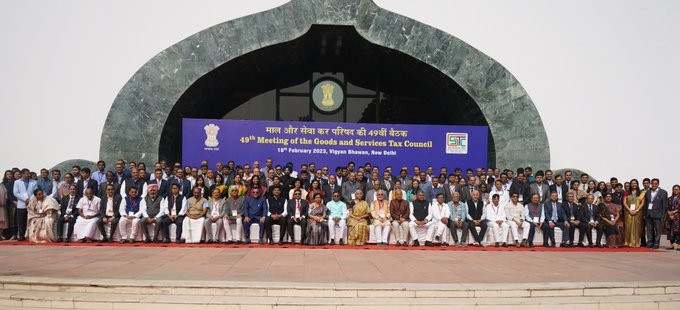
GST Meeting in Madurai (Image X.com)
India’s rising fake GST invoice cases reveal deep structural weaknesses in enforcement, prosecution and inter-state coordination. The solution lies in intelligent risk-based compliance, not treating every taxpayer as a suspect.
By P. SESH KUMAR
New Delhi, May 12, 2026 — No modern tax system, however digitised, automated or algorithmically armed, can eliminate misuse altogether. That is the first truth often lost in the noisy debate on GST fraud. Taxation is not conducted in a laboratory; it operates in the rough bazaar of human incentives, commercial pressure, greed, weak enforcement and occasional administrative overreach. The fantasy that one more software lock, one tighter invoice control or one stronger registration filter will make fraud “a thing of the past” is attractive but naïve. The true test of a tax administration is not whether it achieves zero leakage, but whether leakage remains within an acceptable band, whether fraud is detected early, whether evasion is punished swiftly, whether honest taxpayers are protected, and whether the fear of being caught outweighs the thrill of cheating.
India’s fake GST invoice problem must therefore be examined with balance, not panic. The numbers are serious. Parliamentary data placed before the Rajya Sabha showed 7,231 fake ITC cases involving ₹24,140 crore in FY 2022–23, 9,190 cases involving ₹36,374 crore in FY 2023–24, 15,283 cases involving ₹58,772 crore in FY 2024–25, and 24,109 cases involving ₹41,664 crore up to October 2025 in FY 2025–26. That is not a rounding error. It shows an organised fraud economy exploiting fake firms, dummy registrations, circular invoices and bogus refund claims. But it must also be placed against a GST revenue base now running at over ₹22 lakh crore annually and moving towards the ₹24–30 lakh crore range. The detected misuse is worrying enough to demand reform, but not so overwhelming as to justify transforming GST into a regime of universal suspicion.
The international experience teaches the same lesson. The United Kingdom, with one of the more mature tax administrations in the world, estimated its total tax gap for 2023–24 at 5.3 per cent of theoretical liabilities, or £46.8 billion. HMRC still collected 94.7 per cent of tax due, yet leakage remained. The United States IRS projected the gross tax gap for tax year 2022 at $696 billion, with a voluntary compliance rate of around 85 per cent. The European Union continues to publish VAT gap reports because VAT leakage, carousel fraud and missing-trader fraud remain stubborn realities even in advanced economies. Singapore, often cited as a model of clean administration, still reported a GST missing-trader fraud case involving about S$181 million in fictitious sales in 2025. The lesson is blunt: advanced software does not abolish fraud; it merely changes the battlefield.
This is why the argument that OTP registration, weak invoice serial control and modifiable auto-filled returns are the root causes of GST fraud is only partly correct. These are vulnerabilities, not the entire disease. Stronger dealer verification is essential, especially for high-risk sectors and suspicious new registrations. Invoice sequencing must be tightened. Auto-populated data must be protected from casual manipulation. But fraud does not live only inside software fields. It lives in collusion, professional facilitation, weak prosecution, poor inter-state coordination, identity theft, shell companies, rented premises, mule bank accounts and criminal confidence that detection may come late and punishment later still.
In India’s quasi-federal GST architecture, this becomes still more complex. GST is not administered by a single fiscal command centre. It is jointly owned by the Union and the States, with taxpayers divided across jurisdictions, intelligence held in different silos, and enforcement capacity varying sharply from one State to another. A fake invoice chain can begin in one State, pass through three others, claim credit in a fifth, and vanish before the weakest link is even noticed. Therefore, calling GST fraud a mere software problem understates the challenge. Software modification can tighten gates; it cannot by itself harmonise field verification, prosecution standards, appellate outcomes, audit quality, political incentives and Centre-State intelligence-sharing.
The harder question is what constitutes an acceptable threshold of leakage. No Government can publicly bless evasion, but every serious tax administration implicitly works with risk tolerance. Spending ₹100 to chase ₹10 of leakage is foolish. Harassing one lakh genuine small taxpayers to catch a few sophisticated fraudsters is administratively unjust and economically damaging. The goal should be a declining, measurable and publicly monitored GST compliance gap. We need not merely detection figures, but a GST tax-gap estimate, sector-wise risk mapping, recovery ratios, prosecution outcomes, conviction rates, time taken in adjudication, and repeat-offender analysis. Without this, the public sees only raids and headline numbers, not the true health of the system.
Deterrence is ultimately the heart of the matter. Fraud falls when the probability of being caught rises, the time between detection and punishment shrinks, the penalty hurts, and the social cost of exposure becomes real. Naming and shaming serious convicted offenders, denying ITC to demonstrably collusive beneficiaries, attaching assets quickly in organised fraud cases, prosecuting masterminds and enablers, and revoking licences of professionals who knowingly build fake-invoice networks would do more than another round of portal tinkering. Singapore’s approach to missing-trader fraud, for instance, combines investigation, denial of wrongful claims, prosecution and strong warnings to intermediaries. That is the spirit we must deepen.
At the same time, deterrence cannot become departmental adventurism. A fair tax system must distinguish between deliberate fraud, aggressive tax planning, clerical mismatch and genuine business error. If every mismatch is treated as fraud, honest taxpayers will fear the system more than fraudsters do. This is where bipartisan, or more accurately non-partisan and professionally impartial, tax assessment becomes crucial. Assessment must not be revenue-hungry, target-driven or selectively aggressive. It must be evidence-based, technology-assisted, reviewable and insulated from arbitrary pressure. The taxpayer should know that fraud will be punished, but genuine compliance will be respected.
Rewarding good taxpayers is equally important. Mature tax administrations increasingly use cooperative compliance, tax governance frameworks and risk-based trust models. Singapore’s Tax Governance Framework allows companies to demonstrate strong tax risk management and governance at board level. Such programmes are not soft options; they help administrations segment taxpayers intelligently. Those with strong internal controls, clean history and transparent reporting should receive faster refunds, fewer intrusive audits, lower-risk ratings and recognition. Those with suspicious networks, repeated mismatches and weak economic substance should face deeper scrutiny. This is smarter than treating everyone as a potential criminal.
Our way forward must therefore be a layered compact. We must tighten registration, but we need to make it risk-based. We may strengthen invoice controls, but preserve correction mechanisms for genuine errors. We need to use AI, but only as an intelligence trigger, not as an automatic punishment machine. We must build a national GST fraud-risk grid connecting GSTN, e-way bills, e-invoices, bank trails, MCA data, PAN-Aadhaar signals and customs data. Publish annual GST compliance-gap estimates. Create specialised prosecution capacity. Operationalise GST Appellate Tribunals effectively so genuine disputes are not trapped indefinitely. Protect honest taxpayers from mechanical notices. And reserve the full force of the State for organised invoice mills, not minor clerical slips.
The real lesson is clear. GST fraud cannot be wished away by software absolutism, nor excused as inevitable leakage. Between naïve perfection and cynical tolerance lies the hard road of modern tax administration: intelligent surveillance, fair assessment, swift adjudication, credible punishment and visible respect for compliant taxpayers. A robust GST system is not one where fraud never occurs. It is one where fraud becomes costly, risky, quickly detected, publicly exposed and legally punished-while honest commerce moves without fear.
(This is an opinion piece. Views expressed are the author’s own.)
FAQ:
What is fake GST invoice fraud?
Fake GST invoice fraud involves creating bogus firms or invoices to wrongly claim Input Tax Credit (ITC) refunds or evade taxes without actual supply of goods or services.
Why is GST fraud difficult to stop completely?
Even advanced economies like the United Kingdom and Singapore face VAT or GST fraud due to shell firms, identity theft, weak enforcement and organised financial networks.
What is the main solution to GST fraud?
Experts argue the answer lies in risk-based enforcement, faster prosecution, stronger inter-state coordination, AI-backed intelligence systems and protection for honest taxpayers.
The 10×Illusion: A Critical Review of GST 2.0’s Self-Eulogies
Follow The Raisina Hills on WhatsApp, Instagram, YouTube, Facebook, and LinkedIn




About The Author