India’s 7.8% GDP Growth Sparks a Bigger Question: Where Are the Jobs?

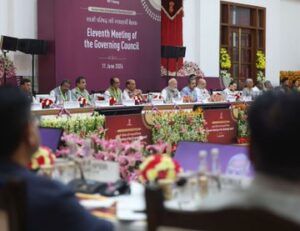
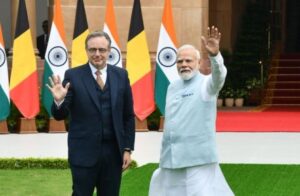
PM Narendra Modi on Thursday chaired the 11th Governing Council meeting of the Niti Aayog in New Delhi. (Image Modi on X)
By TRH Op-Ed Desk
Political analyst Manish Anand questions whether headline GDP growth reflects India’s economic reality, pointing to employment, wages, rural consumption, agriculture and private investment.
New Delhi, September 3, 2026 — India’s reported 7.8% GDP growth has triggered a larger debate over whether headline economic numbers adequately reflect the reality faced by ordinary citizens, according to political analyst Manish Anand.
In his monologue for The Raisina Hills, Anand said the credibility of government data has increasingly become a question whenever major economic figures are released.
“The first question that comes to the mind of any impartial and knowledgeable person is: Can this be trusted? Can this be believed?” Anand said.
He noted that Prime Minister Narendra Modi presented the 7.8% GDP growth figure as evidence of strong economic expansion, with the number also exceeding the Reserve Bank of India’s 7% estimate cited in his analysis.
However, Anand pointed to former Finance Ministry secretary Subhash Chandra Garg’s criticism of the figure. According to Anand, Garg has argued that the actual growth rate could be closer to 2.8%, primarily because of revisions to the comparable base from the previous year.
“The argument is that if the base has been reduced, the comparison with the current quarter will naturally make the growth figure appear higher,” Anand said while explaining Garg’s contention.
Anand said the broader question is whether an economy growing at close to 8% should be generating more visible improvements in employment and household incomes.
“If the economy does not create jobs, what is the meaning of GDP?” he asked. “If people’s per capita income does not increase, what is the meaning of GDP growth?”
India’s Degree Mill Crisis: Education Boom Fails to Deliver Jobs
He also questioned whether GDP growth can be considered meaningful if people’s spending power and workers’ take-home wages do not rise.
According to Anand, protests by young people in different cities over employment and recruitment exams raise questions about the employment-generating capacity of the economy.
“This means there is either a problem with the numbers, or there is a very large structural challenge in the economy,” he said.
Anand also linked the debate to India’s demographic dividend, arguing that a large working-age population should ordinarily provide a significant boost to economic growth. Yet, he said, India continues to face what he described as a long-running problem of “jobless growth.”
He further questioned the pace of India’s progress toward the government’s earlier $5 trillion economy goal, arguing that the country remained around the $4 trillion level in his assessment.
Another concern raised by Anand was the role of consumption. He described India as a consumption-based economy and argued that stronger household spending is essential for sustained economic momentum.
Agriculture, he said, remains particularly important because a large section of the population continues to depend on it. He pointed to complaints of fertiliser shortages and weather-related disruptions and argued that slow agricultural growth can constrain rural incomes and consumption.
“If people’s incomes do not increase, rural consumption will not increase. And if consumption does not increase, economic momentum cannot come,” Anand said.
Anand argued that much of the visible economic momentum is being supported by public investment, including spending on roads and railways, while private investment and consumption remain comparatively weaker in his assessment.
“The government is trying to pump-prime the economy through public investment,” he said, raising the question of whether this can provide the foundation for stronger and more broad-based growth.
Follow The Raisina Hills on WhatsApp, Instagram, YouTube, Facebook, and LinkedIn




About The Author