Voter Roll Controversy: Courts Question ECI’s Form 6 Push as Form 8 Dispute Deepens
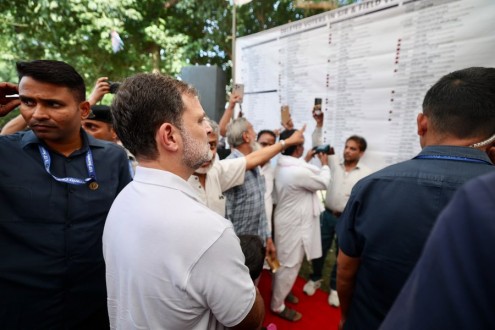
LoP Rahul Gandhi during a public hearing on SIR of the ECI in New Delhi (Image Rahul on X)
By KUMAR VIKRAM
Bombay High Court orders restoration of voters excluded during Goa’s SIR, while the Supreme Court prepares to revisit the Election Commission’s Form 6 clarification in Delhi. Is a technical correction leaving the larger problem unresolved?
New Delhi, November 5, 2026 — The Election Commission of India (ECI) is facing mounting judicial scrutiny over its Special Intensive Revision (SIR) of electoral rolls, with a fundamental question emerging: why should existing voters, whose names have disappeared from the draft electoral roll, be forced to register afresh instead of using the prescribed procedure for changing their address?
The controversy intensified on November 5, when the Bombay High Court’s Goa bench ordered the restoration of six members of a family whose names were excluded during the SIR process despite their submission of Form 8 for address changes. The court directed the electoral registration officer to include their names within 10 days and refused the Election Commission’s request for a stay.
The ruling comes against the backdrop of a contentious exchange in the Supreme Court over Delhi’s SIR.
On October 28, the Supreme Court questioned the Election Commission’s insistence that voters excluded from the draft electoral roll should submit Form 6, which is intended for fresh inclusion. The bench suggested that people who had shifted residence should be allowed to use Form 8, while those unable to submit enumeration forms should be given an appropriate opportunity to complete the process.
Form 6 is intended for new enrolment, whereas Form 8 is the established mechanism for changing an existing voter’s address or correcting electoral entries. For an existing voter, being pushed into a fresh registration process can create confusion and potentially expose them to unnecessary procedural hurdles.
The Election Commission’s subsequent clarification, however, continued to maintain that voters excluded from the draft roll could submit Form 6. This has triggered objections from RTI activist Anjali Bhardwaj and other petitioners, who argue that the clarification does not adequately address the Supreme Court’s concerns.
When the issue was raised again before the Supreme Court, Chief Justice Surya Kant reportedly assured petitioners that they need not be apprehensive because the matter remained before the court. The petitioners were asked to file an application, with the issue scheduled for hearing on November 19. The bench also indicated that an extension of the SIR deadline could be considered if necessary.
The controversy has another dimension. LawChakra has reported that the ECI modified the online presentation of Form 6 after objections and scrutiny, while maintaining that the form itself had not formally been amended. The question is whether correcting the technical presentation has resolved the underlying legal and procedural concern.
The scale of the issue makes it particularly consequential. According to the petitioners, approximately 47.56 lakh voters were excluded from Delhi’s draft electoral roll.
The Election Commission maintains that SIR involves preparing electoral rolls afresh, rather than simply deleting names from an existing list. But administrative terminology cannot settle the central democratic question: how does an eligible voter ensure that their name remains on the electoral roll?
Electoral revision must strengthen voter verification without turning genuine voters into applicants struggling to establish their right to vote.
The Supreme Court’s November 19 hearing could prove crucial in determining whether the ECI’s clarification adequately addresses the concerns raised by the judiciary. Until then, the controversy over Form 6 and Form 8 is more than a procedural dispute. It is a test of whether electoral administration can protect the integrity of voter rolls without creating avoidable barriers to democratic participation.
The Election Commission’s credibility ultimately depends not merely on the accuracy of electoral rolls, but also on ensuring that eligible citizens are not inadvertently excluded from them.
Supreme Court Questions Bengal SIR Category as Delhi Audit Flags Wrong Voter Deletions
Follow The Raisina Hills on WhatsApp, Instagram, YouTube, Facebook, and LinkedIn




About The Author