


By TRH Op-Ed Desk
Political commentator argues Bihar violence shows Modi government facing its first-ever pan-India Gen Z-style protest, warns crackdowns will only fuel it further
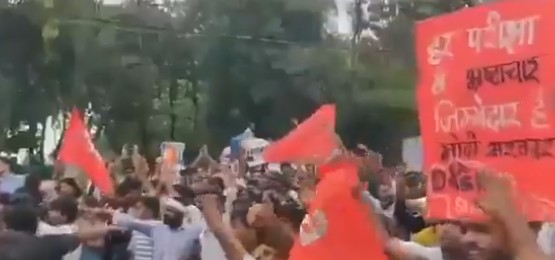
New Delhi, July 22, 2026 — The student protests that erupted in Patna, Bihar, on Wednesday mark a turning point in the Cockroach Janata Party’s (CJP) NEET protest movement, according to political analyst Manish Anand in a video commentary for The Raisina Hills. Anand argued that what began as a Jantar Mantar sit-in in Delhi has now spread nationwide and taken on the character of a genuine mass movement — one he said the government will struggle to suppress no matter how much force is used.
Anand said this marks the first time the Modi government has confronted a spontaneous, leaderless “Gen Z-style” protest of the kind previously seen in Bangladesh, Nepal and several African nations, distinguishing it from the more organised farmers’ protest. He noted that despite alleged lathi charges, tear gas, and reports of pellet firing that left one protester seriously injured, demonstrators have shown no sign of retreating.
The analyst was sharply critical of the government’s refusal to accept Union Education Minister Dharmendra Pradhan’s resignation, framing it as protecting one minister at the cost of nationwide unrest. Drawing on a LinkedIn post by former education secretary Anil Swaroop, Anand contrasted how paper leaks were handled under former minister Prakash Javadekar versus the current examination system, calling the shift a clear case of “governance failure” driven by outsourcing sensitive exam evaluation work to private contractors — including, he noted, a Hyderabad-based firm previously blacklisted by the Telangana government.
Anand pointed to the same day’s news that the Jharkhand Public Service Commission had cancelled an exam as further evidence of systemic accountability failure, arguing that no institution — not Parliament, not the CAG — is taking responsibility for repeated paper leaks and exam cancellations affecting India’s youth.
He also alleged that a mainstream media reporter was heckled at Jantar Mantar, suggesting public anger extends to what he described as the media’s past tendency to look away from the issue. Anand’s message to the government: this is a moment for accountability and institutional reform, not political maneuvering.
Paper Leaks Won’t Stop by Changing Ministers, Says Former Education Secretary
Follow The Raisina Hills on WhatsApp, Instagram, YouTube, Facebook, and LinkedIn




