


By Amit Kumar
Former Coal Secretary Anil Swarup says replacing ministers is no solution, arguing that India needs competent institutions, accountable leadership and foolproof examination systems to end recurring paper leaks.
New Delhi, July 22, 2026 — The political storm over recurring examination paper leaks has increasingly focused on ministers and bureaucrats. Yet some of the sharpest criticism is now coming from former civil servants who argue that the crisis is less about personalities and more about the steady erosion of institutional competence.
Among them is Anil Swarup, former Union Coal Secretary and former School Education Secretary, who believes India’s examination crisis reflects a deeper governance failure rather than merely administrative lapses.
Drawing on his own experience in government, Swarup in a post on LinkedIn recalls that paper leaks did occur during his tenure as School Education Secretary. The difference, he argues, lay in how the administration responded.
“The cause was identified, officers weren’t unnecessarily shifted and these officers put in place a fool-proof mechanism in CBSE. No paper leaked thereafter,” he wrote on LinkedIn.
According to Swarup, the controversy surrounding this year’s CBSE examinations stemmed not from paper leaks but from flaws in an evaluation system that had been outsourced without adequate due diligence.
His larger criticism, however, is directed at the National Testing Agency (NTA), which faced intense scrutiny after the NEET controversy in 2024.
“NTA refused to learn from the leak in 2024. Hence, it happened again,” Swarup observed.
His diagnosis goes beyond demands for ministerial resignations.
“The question is not about removing Ministers. That doesn’t really help but putting in place such men and women of character who are competent, have their own mind and do not allow unnecessary meddling by those who only have power but no responsibility,” he argued.
The remarks revive an old but uncomfortable question in Indian governance: can institutions remain effective when professional administrators lack operational autonomy?
A Generation Losing Confidence
The institutional critique resonates with many professionals who experienced examination disruptions themselves.
Deep Narayan, a senior adviser with the British High Commission, recalled sitting for a re-examination during his school years after a paper leak.
“I was in secondary school when this happened, and it was the only time I ever had to sit a re-examination,” he wrote on LinkedIn.
He said even one disrupted examination can be emotionally traumatic for students. “I can only imagine the psychological distress experienced by those who have fallen victim to examination paper leaks on multiple occasions,” he added.
His concern extends beyond administration to political messaging. “”What’s the message they are giving to the youth—the future of this country?” he asked.
Integrity Before Technology
For Ramesh Sharma, an auditor, technological safeguards alone cannot solve the problem. He argues that examination bodies require leadership with “immaculate integrity” backed by robust institutional systems.
“People without deep pockets should also aspire to qualify,” Sharma wrote, stressing that credibility remains the foundation of competitive examinations.
The Trust Deficit
The debate also exposed growing scepticism about India’s wider examination ecosystem. Medical professional Sujay Shanker questioned assumptions that prestigious examinations remain immune from systemic weaknesses.
“How are you so sure that UPSC exams are clean?: he asked, in his reply to Swarup, arguing that subjective interview processes themselves can become vulnerable to manipulation.
Whether or not such concerns are substantiated, they point to an expanding trust deficit extending beyond individual examination agencies.
Beyond Paper Leaks
India’s recurring examination controversies have evolved into more than administrative failures.
Every cancelled examination delays careers, disrupts families and weakens confidence in merit-based recruitment.
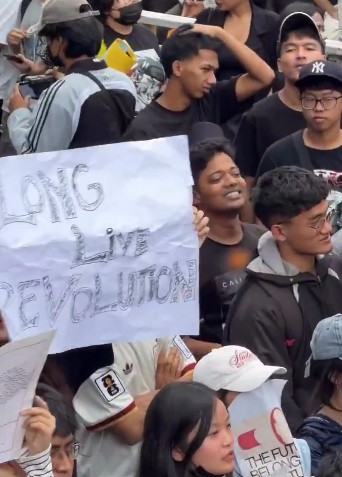
Successive governments have responded with investigations, arrests and legislative measures. Yet recurring controversies suggest that punitive action alone cannot substitute for institutional reform.
As long as examination systems remain vulnerable to human interference, technological loopholes or institutional complacency, India’s youth will continue paying the price for governance failures they did not create.
CJP Protest Is Redefining Journalism in India—And Independent Media Is Leading
Follow The Raisina Hills on WhatsApp, Instagram, YouTube, Facebook, and LinkedIn




