


By TRH Op-Ed Desk
India’s viral satirical movement turns street-level pressure — and history may be on its side
New Delhi, June 23, 2026 — A grassroots protest movement born as internet satire is now testing the limits of Prime Minister Narendra Modi’s political resolve — and drawing uncomfortable parallels to the one major agitation that forced his government to back down.
The Cockroach Janta Party — colloquially known as the “Cockroach Party,” a name sparked in reaction to remarks by the Chief Justice of India — has occupied Jantar Mantar in New Delhi with a single, unambiguous demand: the resignation of Education Minister Dharmendra Pradhan.
The pressure is rooted in what critics call a cascading failure of India’s examination system: the NEET undergraduate entrance exam controversy, allegations of paper leaks, a cancelled re-examination, and Supreme Court petitions.
The Modi government’s response — deploying the Indian Air Force for question paper logistics and having the Solicitor General Tushar Mehtta stating in the Supreme Court that the Prime Minister is personally monitoring the matter — has done little to quiet outrage.
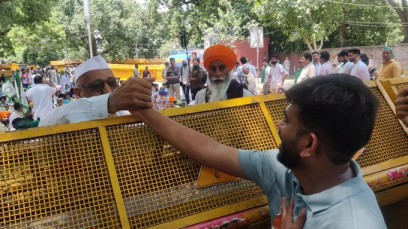
Protests have already swept Pune, Lucknow, and Jaipur, where movement leader Abhijeet Dipke was physically assaulted. Demonstrators remained at Jantar Mantar past their 5 PM police permit, through power cuts and reports of water supply being shut off.
“Modi can remove Dharmendra Pradhan the same way he removed Narendra Singh Tomar after the farmers’ protests — that precedent exists. But if the government yields immediately, it hands the Cockroach Party greater credibility and momentum to target the next minister, the next ministry. The movement’s leaders have already gone beyond education — they’ve attacked the government on unemployment and the economy. Pradhan may just be the opening move,” said Manish Anand, political analyst, in a monologue for the YouTube channel of The Raisina Hills.
The Tomar comparison looms large. After over a year of disciplined, nonviolent farmer protests at Delhi’s borders, Modi went on national television to withdraw all three contentious farm laws — and apologise. Tomar, then Agriculture Minister, was subsequently removed from cabinet and is today a state-level minister in Madhya Pradesh — a steep political demotion.
BJP insiders, Anand notes, are doubtful that Pradhan’s resignation alone would end this agitation. Abhijeet Dipke’s speeches have explicitly targeted the broader Modi government record, and party strategists fear capitulating on one demand only ensures a better-resourced, more emboldened movement returns with another.
The spectre of Jantar Mantar’s political history adds another layer of anxiety for the ruling party. It was protests at this very site — led by Anna Hazare and a then-unknown Arvind Kejriwal — that helped build the anti-UPA wave that swept Modi to power in 2014.
The Modi government’s next move will define whether this is a manageable controversy or the start of something larger.
(Manish Anand is a political analyst and host of The Raisina Hills.)
Follow The Raisina Hills on WhatsApp, Instagram, YouTube, Facebook, and LinkedIn




