


By AMIT KUMAR
‘School Thik Karo’: CJP’s Rural Education Campaign Draws Praise, Pushback — and Now a Death in Bengal
New Delhi, August 16, 2026 — The Cockroach Janata Party (CJP), born out of a satirical response to Chief Justice of India Surya Kant’s purported remarks, lit a firestorm in the Indian politics by accounting for the resignation of Union Education Minister Dharmendra Pradhan. Now, the CJP seems to have unleashed a storm across the country, as school children share videos of the poor state of their schools. The CJP’s ‘School Theek Karo’ is now arguably India’s social blowback against deteriorating conditions of educational infrastructure.
What’s unique and potentially charged with a domino effect campaign are the ability of the CJP to charge the pent up anger among the youth in the country. Smart phones are the weapons. Raw anger power the internet rage.
Experts provide the legitimacy. The campaign turns into a movement. The internet is now an inferno. To burn down the edifice of status quo and neglect.
“We are completely overwhelmed by the mass movement that #SchoolThikKaro campaign has turned into. Thousands of young Indians are auditing govt schools and the sights are not pretty. Our children have been condemned to failure by the apathy of governments,” the CJP said in a post on X.
Economist Jayati Ghosh seconded the CJP claim. “Everyone concerned with education should be REALLY grateful to CJP for this inspired and hugely necessary movement, giving voice to schoolchildren. The Right to Education Act has been dishonoured for too long; it’s great to see the demands to realise it,” Ghosh wrote on X.
Former diplomat Navdeep Puri chipped in, saying that “This could be a real game changer for education. And now some TV channels also jumping on the bandwagon to discover the dismal state of so many rural schools.”
A CJP volunteer’s father was allegedly killed in West Bengal and the outfit is raging to unleash the “Cockroaches” against the BJP-led government.
Patna Protests Signal CJP Movement Has Become a ‘People’s Movement: Analyst
What Is ‘School Thik Karo’?
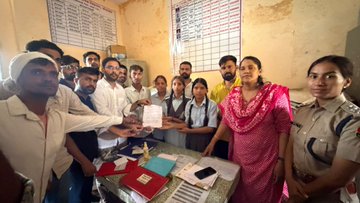
Announced on Independence Day, ‘School Thik Karo’ asks ordinary citizens — starting with parents — to walk into their local government school, check basic facilities like toilets, benches, water and windows, and post what they find. Village sarpanches are then expected to act on the findings. Abhijeet Dipke, co-founder of the CJP, framed it as a natural sequel to the earlier anti-NEET protest at Jantar Mantar.
Dipke launched the campaign himself in his native village of Santuk Pimpri in Maharashtra’s Hingoli district. He inspected a Zilla Parishad school. He posted videos of what he said were dirty toilets, broken windows and too few benches.
“Even after 80 years of Independence, our govt schools still lack basic amenities,” he wrote on X, adding that change was possible “when we come together and act.”
Dipke rubbed the raw nerves of the political establishment, asking “why funds were available for large banners at an Independence Day rally in Chhatrapati Sambhajinagar but not for school upkeep in rural areas.”
The Online Reaction
A commentary piece on entertainment-news site Gulte framed the central question well: whether an issue this universally relatable — “poor buildings, toilets, drinking water, classrooms” — can translate from online sympathy into a genuine youth-led movement, or whether it stays a viral moment. The piece’s verdict was cautious: real traction, it argued, would depend on whether CJP can turn scattered posts into sustained local pressure on authorities, not just visibility on social media.
Much of the visible “expert” commentary so far has come less from education policy specialists and more from journalists, lawyers and political figures weighing in on the campaign’s legitimacy and its fallout — which is worth noting, since the loudest voices in this news cycle are not academic voices but civil-society and political ones.
From Campaign to Crisis: The Bankura Incident
The tone shifted sharply after a CJP volunteer in West Bengal’s Bankura district, Shaik Abdul Hafeez, filmed the condition of a government school he once attended as part of the campaign on August 13. According to CJP and family accounts, a group of men — whom the volunteer and party leaders identified as local BJP workers — later entered the family’s home, and Hafeez’s father, Janab Mafik, suffered severe head injuries in the assault. Mafik died on August 15 at a government hospital in Bankura.
CJP co-convenor Ashutosh Ranka posted sharply on X, asking, “Are you still Police of West Bengal or already migrated to becoming Police of @BJP4Bengal?” CJP’s legal affairs head Ratna Singh alleged that the family’s house had been gheraoed and that local police had initially declined to register a complaint. Dipke himself wrote that he found it enraging that “people are being murdered simply for demanding” better schools, and pledged that a CJP team would travel to West Bengal to pursue the case.
West Bengal Chief Minister Suvendu Adhikari rejected the BJP link on Sunday, saying those named in the FIR were “criminals.
For now, School Thik Karo continues on two tracks simultaneously — as a genuine, if small-scale, exercise in citizen-led school inspections, and as the backdrop to a contested, still-unfolding case in Bankura that has drawn in the state’s top leadership.
CJP Protests Force a Reckoning: Has Mainstream Media Failed India’s Public Interest?
Follow The Raisina Hills on WhatsApp, Instagram, YouTube, Facebook, and LinkedIn




