


By TRH World Desk
Political analyst Manish Anand argues Modi’s late-night video was a “conditional forgiveness,” arriving only after two protesting teens publicly apologized
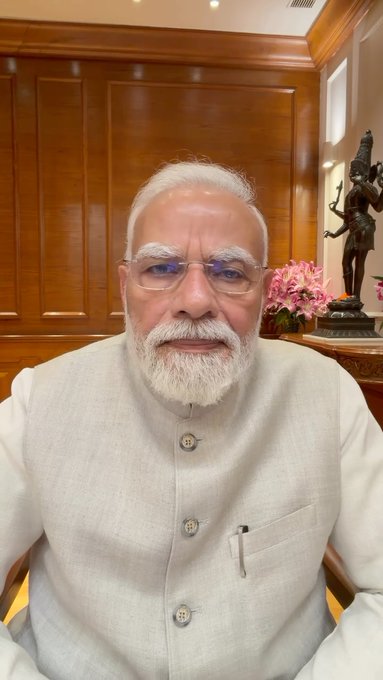
New Delhi, August 1, 2026 — Prime Minister Narendra Modi’s late-night selfie video addressing youth involved in an abuse-hurling incident at Jantar Mantar has triggered a fresh political debate, with analyst Manish Anand arguing the gesture was far more calculated than it appeared.
In his monologue for The Raisina Hills, Anand noted that Modi addressed the young protesters not as “friends” but as “children,” framing their conduct as a cultural shock and describing them as having strayed from the right path. The Prime Minister extended an offer to move forward together in nation-building.
Anand pointed out that Modi’s video did not arrive in isolation. It followed apology videos from at least two of the young people involved — one of them reportedly a minor, just 15 years old — who said they had acted under pressure amid what Anand described as massive online trolling and the disclosure of their personal details on social media.
Framing the sequence of events, Anand argued the developments amount to a package rather than a standalone act, since Modi’s forgiveness came only after the apology videos surfaced. He characterized it as conditional forgiveness rather than an unconditional gesture.
Anand also placed the confrontation in a broader context, linking the youth anger visible at the protest to India’s stalled job creation. He said the country’s economy has remained in a “jobless growth” phase for roughly 16 years since 2008, warning that India’s demographic dividend — with an average population age of just 27 — risks turning into a demographic burden if employment generation continues to lag behind the qualifications of its growing workforce.
Drawing a comparison to earlier eras of Indian politics, Anand contrasted today’s charged rhetoric with the measured public statements once made by leaders like Lal Bahadur Shastri, Jawaharlal Nehru, Ram Manohar Lohia, Atal Bihari Vajpayee, and Manmohan Singh, whose words became benchmarks that history still recalls, unlike today’s exchanges, which he suggested may not be remembered the same way.
He also invoked a common teachers’ saying about generational conflict, noting: “There are some battles which we will love to lose,” — describing disputes between parents and children as one such battle where elders should ultimately want the younger generation to prevail.
(Manish Anand is a political analyst. Views expressed are his own.)
Follow The Raisina Hills on WhatsApp, Instagram, YouTube, Facebook, and LinkedIn




