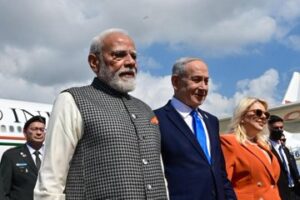
India, US Announce Interim Trade Agreement Framework
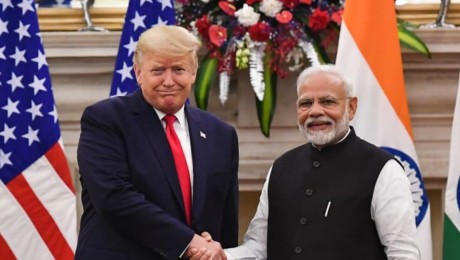
Image credit X.com
US-India Interim Trade Agreement promises tariff cuts, wider market access and stronger supply chains under Trump–Modi trade roadmap
By TRH News Desk
New Delhi, February 7, 2026 — India and the United States announced a framework for an Interim Agreement on reciprocal and mutually beneficial trade, marking a major step forward in negotiations for a comprehensive US-India Bilateral Trade Agreement (BTA), according to a statement issued by the Press Information Bureau (PIB).
The framework reaffirms commitments made when US President Donald J. Trump and Prime Minister Narendra Modi formally launched BTA negotiations on February 13, 2025. Both sides described the interim pact as a “historic milestone” that underscores their shared push for balanced trade, expanded market access and resilient supply chains.
Under the proposed US-India Interim Trade Agreement, India will eliminate or reduce tariffs on all US industrial goods and a wide range of American food and agricultural products. These include dried distillers’ grains, red sorghum for animal feed, tree nuts, fresh and processed fruits, soybean oil, wine and spirits, among others.
The United States, in turn, will apply a reciprocal tariff rate of 18 percent on Indian-origin goods under existing executive orders, covering sectors such as textiles and apparel, leather and footwear, plastics and rubber, organic chemicals, home décor, artisanal products and certain machinery. Subject to the successful conclusion of the interim deal, Washington will remove reciprocal tariffs on a broad list of Indian exports, including generic pharmaceuticals, gems and diamonds, and aircraft parts.
The US also agreed to lift tariffs on select Indian aircraft and aircraft parts imposed earlier on national security grounds, while India will receive preferential tariff-rate quotas for automotive parts. Outcomes related to Indian generic pharmaceuticals will depend on the findings of an ongoing US Section 232 investigation.
Both countries committed to granting preferential market access in key sectors of interest, establishing robust rules of origin, and addressing long-standing non-tariff barriers. India has agreed to ease restrictions affecting US medical devices, ICT goods, and food and agricultural exports, and to review acceptance of US and international standards within six months of the agreement’s entry into force.
The framework also outlines cooperation on standards, conformity assessment procedures, digital trade rules, and economic security alignment, including export controls and investment reviews aimed at countering non-market policies of third countries.
In a significant commercial pledge, India said it intends to purchase $500 billion worth of US energy products, aircraft and aircraft parts, precious metals, technology products and coking coal over the next five years. Both sides also agreed to scale up trade in advanced technology products such as GPUs and data centre equipment.
India–US Trade Deal: Zero Duty for US, 18% for India—Who Won?
Follow The Raisina Hills on WhatsApp, Instagram, YouTube, Facebook, and LinkedIn




About The Author