How Modi Is Building Diplomatic Leverage for a Tougher World
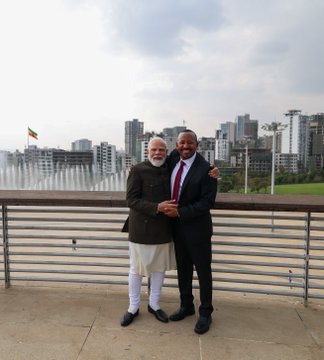
Prime Minister Narendra Modi with his Ethiopia PM Abiy Ahmed Ali (Image Modi on X)
As global diplomacy turns into a high-stakes war of leverage, India’s push on critical minerals and strategic capital may define Narendra Modi’s response to an increasingly hostile world
By TRH Foreign Affairs Desk
New Delhi, January 3, 2026 — As global fault lines harden and diplomacy increasingly resembles warfare by other means, the question confronting New Delhi is stark: how prepared is India to defend its national interests beyond 2026?
A telling warning recently came from an unexpected quarter. Italy’s Prime Minister Giorgia Meloni, known to share warm personal ties with Prime Minister Narendra Modi, remarked candidly: “2025 was very bad—but don’t worry, 2026 will be worse.”
It was not sarcasm. It was a geopolitical signal.
“The global stage today resembles a battlefield—one where the United States, China, Russia, Europe and Gulf powers are locked in continuous diplomatic combat. India is no longer a spectator,” said Manish Anand, while weighing emerging geopolitical challenges for India for the YouTube channel of The Raisina Hills. Its national interest is directly embedded in this struggle, he added.
“The weapons in this new war are not missiles or tanks—but leverage,” stressed Anand.
In diplomatic circles, “leverage” has become the most frequently used word. “It means possessing assets so critical that powerful nations are forced to respect your position, your red lines, and your interests. China understood this early—and weaponised it ruthlessly,” Anand explained.
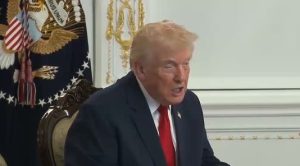
The clearest example lies in critical minerals. Despite aggressive attempts by US President Donald Trump to decouple global supply chains from China—beginning with punitive tariffs in 2017 and intensifying during his second term—Washington eventually ran into a wall.
“Modern fighter jets, electric vehicles, advanced electronics, mobile phones and defence systems cannot exist without critical minerals and rare earth magnets,” argued Anand, adding: “China dominates this ecosystem.”
Without Chinese supply chains, even America’s defence-industrial complex would grind to a halt, noted Anand. “That dominance shattered the illusion that decoupling from Beijing was easy. China’s leverage proved decisive,” he asserted.
This raises an unavoidable question: Where does India stand in this war of leverage? “The answer may lie in what appears, at first glance, to be a routine market event—but is anything but,” added Anand.
India’s largest coal producer, Coal India Limited, is preparing a major IPO of its subsidiaries. “While IPOs are common, this one has attracted intense scrutiny from global strategic analysts, particularly in North America and Europe,” added Anand.
Canadian geopolitical experts argue, said Anand, that the thousands of crores raised will not merely strengthen Coal India’s balance sheet—but help New Delhi quietly build a strategic war chest. “This capital, they believe, will be deployed to acquire overseas mining assets, critical mineral technology, and processing capabilities,” noted Anand.
This is not speculation without basis. Just last month, the Modi government approved an aggressive National Critical Minerals Mission, alongside expanded Production-Linked Incentive (PLI) schemes aimed at building domestic processing capacity. “India possesses significant mineral reserves—but historically failed to invest in refining, technology and extraction capability,” added Anand.
Why? Because importing from China was easier. “For decades, Indian industry chose convenience over capability. But the world has changed. Export bans, supply chain coercion and economic weaponisation have exposed that dependency as a strategic liability,” explained Anand.
Now, policymakers have recalibrated. “India is no longer content with being a raw consumer. It wants leverage,” added Anand.
Strategic agreements with Australia and Canada on critical mineral cooperation signal this shift. “Public sector players such as Coal India and Gujarat Mineral Development Corporation are being positioned as instruments of geopolitical strategy—not just commercial entities,” added Anand.
This is why the Coal India move matters. “It signals that India has entered the leverage game—late, perhaps, but decisively. As the old saying goes: better late than never,” argued Anand.
In a world where diplomacy is increasingly brutal and transactional, only nations with leverage survive with dignity, said Anand, adding: “India, under Narendra Modi, appears to have grasped that reality just in time.”
The battle for 2026 has already begun.
(Manish Anand hosts discussion on geopolitics for the YouTube channel of The Raisina Hills)
Critical Minerals Whet Trump Imperialism with Eye on Greenland
Follow The Raisina Hills on WhatsApp, Instagram, YouTube, Facebook, and LinkedIn




About The Author