Bangladesh Votes for Referendum and Polls: A Date with Destiny?
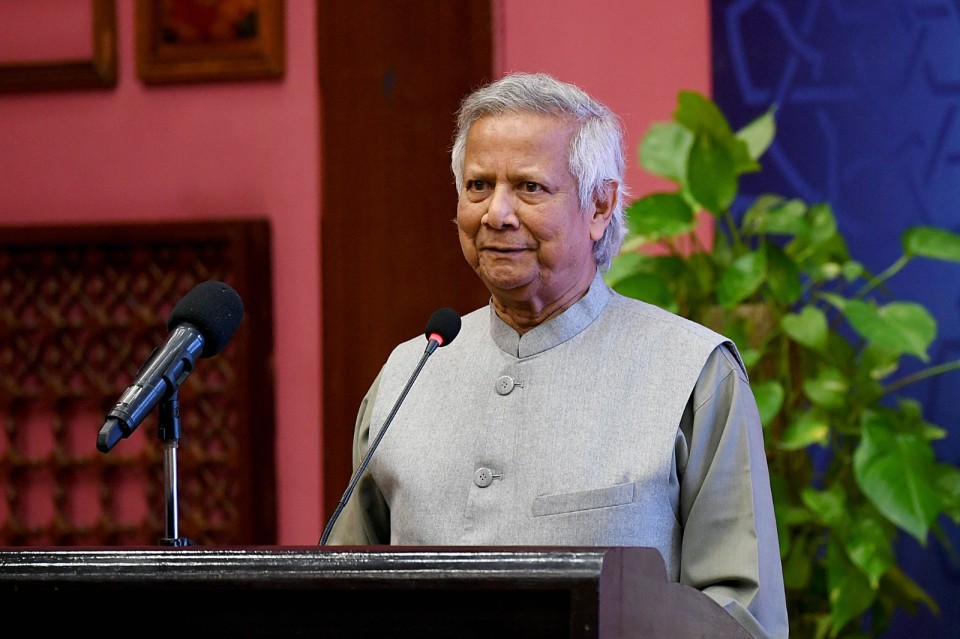
Chief Adviser Bangladesh Muhammad Yunus delivers a speech at Al-Azhar University, Cairo. Image credit @ChiefAdvisorGoB
A Constitution amending referendum is in spotlight as Bangladesh votes on Thursday
By NIRENDRA DEV
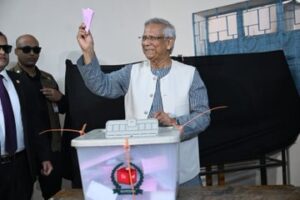
New Delhi, February 12, 2026 — Finally, the day of reckoning has arrived. Almost 130 million voters in Bangladesh face the test of history—to vote on July Charter and reshape parliament and the Constitution. Amid unanswered questions to allegations of a staged election, Bangladesh votes on Thursday.
In the end, the fate of Bangladesh National Party (BNP) or a resurgent Jamaat-e-Islami may not matter. That the people have to also vote on referendum is seen most consequential. That referendum seeks a “yes” vote for the July Charter.
The Interim Government of Muhammed Yunus had almost one year to bring reforms—in administration, judiciary, Election Commission, and other areas of governance. But the Yunus administration sought to pass the buck to the people—asking them to vote on referendum.
The first paragraph on the ballot states: “The election-time caretaker government, the Election Commission, and other constitutional institutions will be formed in line with the process outlined in the July charter.”
It is followed by another paragraph that reads: “The next parliament will be bicameral. A 100-member upper house will be formed in proportion to the votes received by parties in the national parliamentary election. Approval from a majority of the upper house will be required to amend the Constitution.”
The ballot itself briefly mentions a selection of proposals and presents them as a done deal. The government’s campaign—openly in favour of a “yes” vote—claims that a positive mandate will “defeat fascism.” But the people have not been provided with on the way the process will unravel after the referendum.
A negative vote will obviously shut the door on the “reform process.” Reform was seen as the core mandate of the Yunus-led administration. A positive vote on the referendum will lead to more steps—the 47 measures requiring constitutional amendment.
The formation of a constitutional reform council is also key to the referendum. The people have to vote on the way the council will be constituted.
The Ordinance outlining the referendum has already been issued. It provides for the legal framework for the Election Commission.
The constitutional reform council will have the mandate to pass July charter recommendations—amending the Constitution. A simple majority of the entire council—151 votes in a 300-member body—will suffice for changes. The council has to fulfil the task in 180 working days.
However, there is no contingency. The order makes no provision for what happens if the council fails to meet the deadline or does not address all the July charter issues.
Once the council is dissolved, its decisions will be incorporated into the Constitution and published as a gazette. Daily Star, a leading Bangladesh daily, stated that “there is no way to predict what the final language of the Constitution will look like, and voters will have no control over that outcome if they vote yes.”
Follow The Raisina Hills on WhatsApp, Instagram, YouTube, Facebook, and LinkedIn




About The Author