Bangladesh Mandate 2026: Status Quo or Strategic Reset?
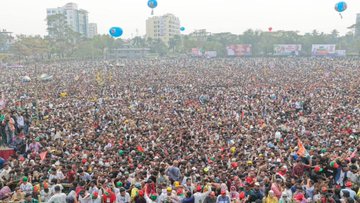
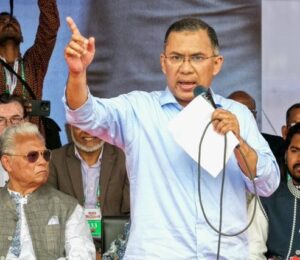
Bangladesh election rally of BNP leader Tariq Rehman (Image BNP on X)
30 Awami League–Dominated Seats, Youth Surge and India Stakes Make Bangladesh Polls Too Close to Call
By NIRENDRA DEV
New Delhi, February 12, 2026 — The Bangladesh Mandate 2026 may well deliver yet another round of status quo — but the road to that outcome is anything but predictable.
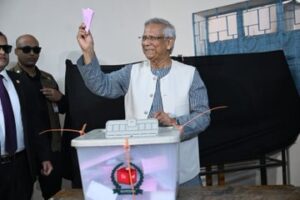
With 30 Awami League–dominated seats emerging as decisive battlegrounds in a closely fought contest, the Feb 12 elections and referendum have pushed Bangladesh into a moment of deep political uncertainty.
An editorial in Dhaka-based The Daily Star captured the mood succinctly: “Tailored election messages are undoubtedly important, but they are often vague… there was little substantive public discussion… many experts now view these manifestos as laden with over-ambitious and hollow promises.”
The critique underscores a campaign driven more by narratives than policy clarity. BNP and Jamaat-e-Islami released policy documents ahead of manifestos, but public scrutiny remained thin. The result: competing storylines, limited debate, and voters navigating ambiguity.
Youth Factor and Electoral Math
Out of 126 million voters, 4.5 million are first-time voters, while 56 million fall in the 18–37 age bracket. This youth surge could tilt margins in key constituencies.
Major issues shaping voter sentiment include:
- Fallout of the July 2024 protests and August 5 developments
- Unemployment and economic stagnation
- Women and minority voter concerns
- Security and governance
- Bangladesh’s foreign policy orientation — crucial for India
A History of Dominance and Boycotts
Since 2009, Bangladesh’s electoral trajectory has largely favored the Awami League. The BNP’s boycott in 2014 and 2024, the marginalisation of Jamaat, and allegations over fairness have shaped a one-sided political era.
Yet 2026 appears more fluid.
Three Possible Scenarios
Scenario A: Jamaat secures majority influence and continues the Muhammad Yunus setup. A recalibration of foreign ties toward Pakistan, Turkey, Saudi Arabia and the US could complicate India relations.
Scenario B: A hung parliament with BNP ahead. Coalition manoeuvring intensifies. The Bangladesh Army, led by Gen Waker, assumes heightened importance. Status quo in India ties likely.
Scenario C: BNP majority under Tarique Rahman. Yunus exits. Army backing becomes pivotal. Relations with India potentially stabilize or improve.
Global Pressures Add Uncertainty
Global headwinds — including US tariff shifts and geopolitical volatility — have made export growth fragile and investment inflows uncertain. Economists warn that promises of rapid job creation and sweeping welfare expansion may prove unrealistic in the next term.
In the end, Bangladesh’s political chessboard hinges on alignment among competing power centres — civilian leadership, the military establishment, and emerging youth sentiment.
February 12 may not just decide a government. It may determine whether Bangladesh stays the course — or resets its trajectory.
Bangladesh Votes for Referendum and Polls: A Date with Destiny?
Follow The Raisina Hills on WhatsApp, Instagram, YouTube, Facebook, and LinkedIn




About The Author