1971 Revisited: When Indira Gandhi Trapped Yahya Khan
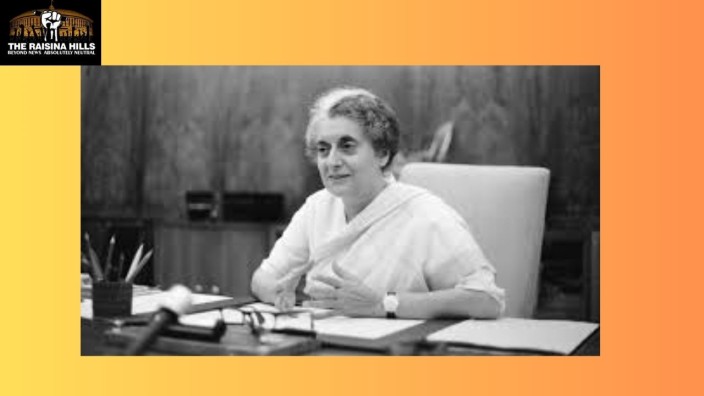
Former Prime Minister Indira Gandhi (Image INC India)
As Bangladesh faces renewed turmoil, the ghost of 1971 returns—revealing how India’s resolve clashed with Pakistan’s brutality and America’s cold-blooded geopolitics.
By NIRENDRA DEV
New Delhi, December 23, 2025 — As the world debates Bangladesh’s present turmoil, it is worth pressing the refresh button—and rewinding history to 1971. That year, Pakistan’s military ruler Gen Yahya Khan found himself cornered, politically and morally. What tormented him most, as the Sunday Times of London observed, was not merely the trap—but who had sprung it.
“Rage and sweet reasonableness alternated in Yahya’s rambling confidence… to a Muslim general the idea that the screw is being turned by a Hindu in a sari is clearly agonising,” the paper wrote. Just days before war broke out, Yahya thundered before Western journalists: “If that woman thinks she is going to cow me down… If she wants a war, I will fight it.”
That “woman” was Indira Gandhi—and she had already captured the imagination of the world.
In 1971, Gandhi embarked on a global diplomatic tour, explaining India’s position amid the massive influx of refugees fleeing atrocities in East Pakistan. She sought international pressure on Yahya Khan to release Sheikh Mujibur Rahman and pursue a political settlement. Even US President Richard Nixon received what diplomats recall as an unusually firm lecture.
Yet Washington chose realpolitik over human rights. The Nixon administration, deeply suspicious of India’s closeness to the Soviet Union, remained firmly pro-Pakistan. Pakistan, after all, was the secret bridge through which the US was reaching out to China. A crackdown in East Pakistan—and India’s moral outrage—were inconvenient truths.
Birth of Bangladesh: Niazi’s ‘Kuj palley hai’ Set up Pakistan’s Surrender
The now-declassified White House tapes from July 2005 stripped the veneer off that diplomacy. Nixon privately called Indira Gandhi an “old witch,” while Henry Kissinger used slurs against her and Indians more broadly. The language was crude, misogynistic and revealing. Later, Kissinger would express regret, blaming the “Cold War atmosphere” of the time.
But history’s verdict was harsher on Washington than on New Delhi.
India refused to buckle. The 1971 war reshaped South Asia and gave birth to Bangladesh. Gandhi emerged as a decisive stateswoman—though, within a few years, even her admirers would see a different, more insecure leader emerge during the Emergency of 1975.
Still, 1971 remains her finest hour.
As Bangladesh once again finds itself at the centre of global concern, the lessons are stark. Great powers may look away when it suits them. Principles are often sacrificed at the altar of strategy. And sometimes, history turns not on brute force—but on the resolve of a leader who refuses to blink.
(This is an opinion piece. Views are personal.)
Military Diplomacy with Bangladesh: India’s Quiet Security Reset
Follow The Raisina Hills on WhatsApp, Instagram, YouTube, Facebook, and LinkedIn




About The Author