You Called Me a Dictator…”: Indira Gandhi and the Indian Paradox
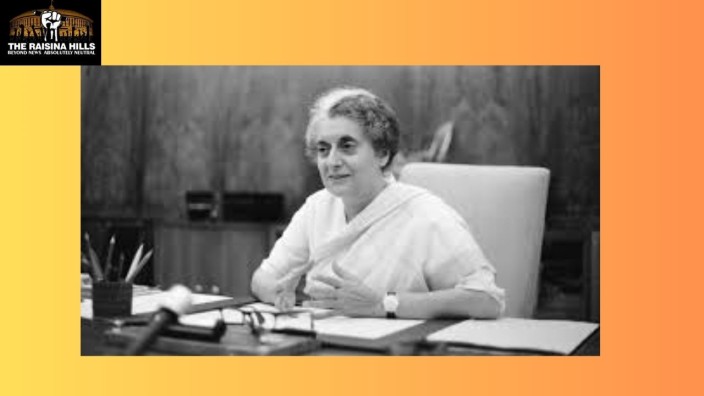
Former Prime Minister Indira Gandhi (Image INC India)
Fifty years after the Emergency and 54 years after Bangladesh’s creation, India revisits a dark chapter that tested press freedom, political courage, and the meaning of democracy
By NIRENDRA DEV
New Delhi, January 3, 2026 — As we said a goodbye to 2025, India quietly crossed two profound historical milestones: over 50 years since the Emergency and 54 years since the creation of Bangladesh.
Both events were shaped by power, resistance, and paradox. And nowhere is that paradox sharper than in a single sentence uttered by Indira Gandhi in Parliament on July 22, 1975—barely a month after the Emergency was imposed.
“You have been calling me a Dictator when I was not. Now I am.”
It was vintage Indira Gandhi—defiant, theatrical, and politically calculated.
The Quote That Was Killed
The remark was dutifully filed by Press Trust of India (PTI). But within five minutes, the official censor struck it down. Almost instantly, PTI flashed a rare “kill-kill” message to all subscribers across India via teleprinters.
Veteran journalist R.C. Rajamani, who lived through that era, later recalled the surreal absurdity of it all. “Every darker moment has its lighter moment too… Emergency was a period when an atmosphere of cloak-and-dagger persisted,” he recalled.
But beneath the gallows humour lay fear. Journalists were routinely targeted. Independence became a casualty.
Yet resistance survived—often through wit, sarcasm, and coded defiance.
When News Agencies Became One Voice
One of the most damaging blows to press freedom came in early 1976, when four news agencies—PTI, PTI Bhasha, UNI, and UNI-Varta—were merged into a single conglomerate: Samachar.
The result was predictable. Journalism lost its autonomy. Samachar functioned like a state mouthpiece and was frequently compared to the Soviet agency TASS.
Even today, Samachar Apartments in Mayur Vihar, East Delhi, stand as a quiet monument to that era—once home to young reporters whose professional independence had been erased overnight.
After the Janata Party government came to power in 1977, with L.K. Advani as Information & Broadcasting Minister, Samachar was dismantled in April 1978.
A joke did the rounds: Why was Samachar closed? Because AIR newsreaders always ended bulletins saying—“Samachar Samapt Huye.”
Bobby vs the People
The regime’s desperation also revealed itself in spectacle.
Ahead of a massive opposition rally, Doordarshan aired the blockbuster film “Bobby”, starring Rishi Kapoor and Dimple Kapadia, hoping to keep people indoors.
It didn’t work. Crowds turned up in massive numbers. The next day’s headline was unforgettable: “Babu Beats Bobby.” (Babu Jagjivan Ram being the opposition’s towering figure.)
Censorship at Its Most Absurd
Even criticism of American imperialism was not spared.
Communist leader Indrajit Gupta once thundered in Parliament against what he called the “wooden-headed stupidity” of Emergency censors. An article he wrote condemning American imperialism had that very phrase struck out.
Why? No one could explain.
Another voice of conscience, Mohan Dharia, ended a parliamentary speech by pointing to a plaque at the entrance of the British House of Commons, quoting Voltaire: “I detest what you say, but I will fight unto death to preserve your right to say it.”
That sentence captured what India had lost—and what it eventually reclaimed.
The Paradox Endures
The Emergency ended. Democracy returned. But the paradox remains.
India defeated authoritarianism not by forgetting it—but by remembering how fragile freedom truly is.
(This is an opinion piece. Views expressed are author’s own)
Follow The Raisina Hills on WhatsApp, Instagram, YouTube, Facebook, and LinkedIn




About The Author