Xi’s Military Purge Sends a Warning to India—and an Opportunity
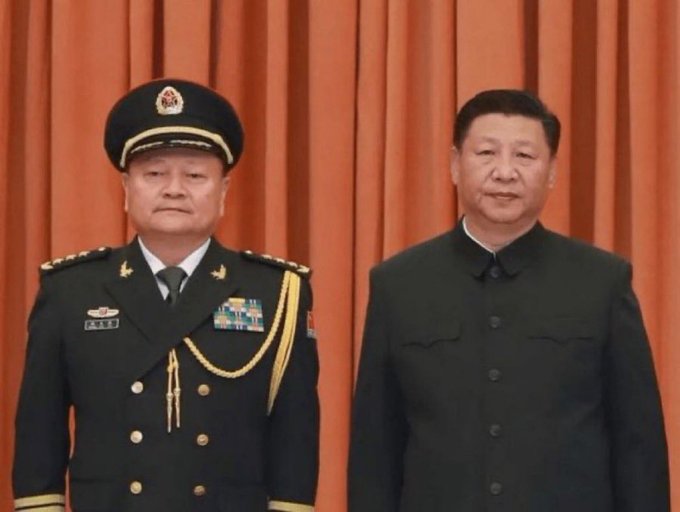
Chinese President Xi Jinping with arrested CMC deputy chief Zhang Youxia (Image Jeniffer Zeng on X)
As Xi Jinping tightens party control over the PLA, India must read the turbulence in Beijing as both a strategic message and a moment for recalibration
By SIDHARTH MISHRA
New Delhi, February 6, 2026 — Recently China’s President Xi Jinping removed several top military officers on charges of corruption or disciplinary violations. The message from these moves is clear that loyalty must be to the Party and to the leadership.
In China’s history, the emergence of the military as an independent power centre has always been a matter of concern for the Communist Party, and Xi also concurs with this concern.
In our neighbouring country, in promotions within the defence forces, party loyalty has been made as decisive as professional competence. Control over the Central Military Commission has over the years been strengthened, and decision-making authority has been increasingly centralized at the top.
In China, the guiding principle has always been that “the army belongs to the Party,” not to the nation-state. Under Xi Jinping, this principle appears to be enforced even more rigidly, to ensure that no dissenting voice or independent power center can emerge.
It’s in this sequence of events that China recently removed two senior military officers. Generals Zhang Youxia and Liu Zhenli were accused of violating the “Chairman Responsibility System.” This implies that they directly challenged the authority of President Xi Jinping and damaged the combat readiness of both the Communist Party and the People’s Liberation Army (PLA).
The speed with which action was taken against these generals reflects Xi Jinping’s determination to eliminate any form of independent power in China. The objective of this move is to bring the PLA’s top leadership firmly under control, ahead of leadership changes expected at the 21st Party Congress next year. The larger question is how Xi Jinping’s actions will affect China’s defense policy and India’s security—especially vis-a-vis India.
General Zhang, who was removed from office, was a childhood friend of Xi Jinping and had been a close associate since 2012. Like Zhang, General Liu was also a veteran PLA soldier who had learned much from his experience in the war with Vietnam.
Naturally, he was unable to fully align with Xi Jinping’s approach on Taiwan. The level of preparedness demanded by the leadership was not achieved at the pace expected. For Xi Jinping, anyone who is “not fully loyal is a traitor.” It is for this reason that both senior military officers were removed.
Xi Jinping’s actions are likely to cause political turbulence within China, especially within the PLA, for several years to come. Filling the vacancies in the Central Military Commission with new faces will also take time. Even if new leaders are appointed to the CMC at next year’s Party Congress, investigations will remain strict and will continue for a long period.
However, the impact on combat capability of the Chinese army is going to be limited. Although many senior officers have been removed in recent years, the PLA still has thousands of officers at the rank of major general and above. Until Xi Jinping assembles a group of officers he fully trusts, promotions and removals are likely to continue.
As a fallout, these developments offer Taiwan a measure of relief. Although Xi Jinping may appear impatient, he is not reckless. It seems he does not yet have complete confidence in the PLA’s capabilities regarding Taiwan. It is also difficult for him to accurately assess the PLA’s real strength in confronting US and allied forces in the Eastern Theater Command.
In recent months, India and China have cautiously extended gestures of friendship. Both countries have improved economic ties and taken steps to ease communication between governments and institutions. However, this has not reduced strategic competition. Around 50,000 troops are still deployed along the LAC.
China’s close cooperation with Pakistan during Operation Sindoor was also evident. Its expanding activities in the Indian Ocean further undermine trust. While such internal purges may matter to the PLA’s internal structure, peace and the status quo along the LAC may nevertheless continue.
India has consistently misjudged China’s three core strategies that shape bilateral relations—agreements, time, and ambiguity. India treats agreements as binding commitments, whereas China views them as tools to shape an adversary’s behavior. As a result, New Delhi’s restraint often encourages Beijing’s adventurism.
For India, giving time to bilateral relations is seen as a stabilizing factor, while China uses time to strengthen preparations and gradually change facts on the ground. China never resolves ambiguity and instead, it turns ambiguity into a source of strength. Therefore, India must focus on making its LAC policy more proactive. The turbulence within the PLA presents India with an opportunity to enhance its own capabilities and strengthen itself.
(This is an opinion piece. Views expressed are author’s own.)
Xi Jinping vs Zhang Youxia: A Reckoning Inside China’s Military
Follow The Raisina Hills on WhatsApp, Instagram, YouTube, Facebook, and LinkedIn




About The Author