Xi Jinping vs Zhang Youxia: A Reckoning Inside China’s Military
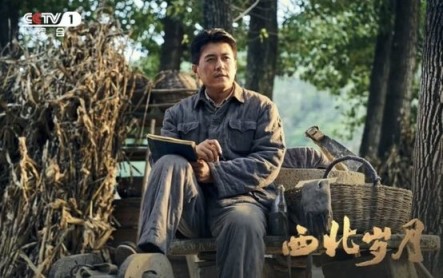
Xi Jinping’s Father Xi Zhongxun (Image credit X.com)
Disappearance speculation of Zhang Youxia has a history unravelling when his and Xi Jinping’s fathers were locked in a fierce battle
By TRH World Desk
New Delhi, January 24, 2026 — The reported disappearance of Zhang Youxia, Vice Chairman of China’s Central Military Commission (CMC), has triggered speculation abroad about another routine purge inside the People’s Liberation Army (PLA). That interpretation is too shallow. What appears to be unfolding is not merely an anti-corruption sweep or a factional adjustment, but the resurfacing of a long-buried revolutionary history—one that directly links the fathers of Zhang Youxia and Xi Jinping, and sheds light on why no pedigree now offers protection inside Xi’s China.
A revealing thread by historian Joseph Torigian shared in 2023 provides crucial historical context. The relationship between Zhang Zongxun, Zhang Youxia’s father, and Xi Zhongxun, the father of Xi Jinping, was forged not in triumph but in failure—failure that left scars within the Chinese Communist Party (CCP) and shaped elite politics for decades.
“In 1945, as the Chinese Civil War intensified, the Kuomintang (KMT) seized territory north of Xi’an. Zhang Zongxun and Xi Zhongxun were appointed commander and political commissar, respectively, of CCP forces tasked with counterattacking in the northwest,” wrote Torigian.
The stakes were existential: the northwest base area, including Yan’an, was central to CCP survival.
What followed was a debacle. “During the Battle of Xihuachi in March 1946, CCP forces suffered severe losses due to poor reconnaissance, weak coordination, unfamiliarity with terrain, and flawed deployments,” added Torigian. At precisely the moment when Mao’s forces needed to preserve manpower, Zhang and Xi oversaw costly setbacks. In a rare act of collective self-criticism, the two sent a telegram to the Party Centre admitting that their emotional desire to defend Yan’an had driven them into excessive aggression.
“The situation deteriorated so rapidly that on March 17, 1947, with KMT forces already on Yan’an’s outskirts, Peng Dehuai was rushed in as commander of all northwest forces, with Xi Zhongxun demoted to commissar under him. Peng—then a Central Military Commission vice chairman—accepted what amounted to a major political comedown,” stated Torigian. Yan’an fell shortly thereafter.
This episode never became heroic lore. Instead, it lingered as an uncomfortable reminder that revolutionary credentials could coexist with catastrophic judgment.
The tension resurfaced in 1952, when Mao Zedong personally rebuked Zhang Zongxun and Xi Zhongxun during the “Three Antis” campaign. “Mao complained that corruption purges in the Northwest Military Region were dangerously lax. Not a single major ‘tiger,’ Mao noted angrily, had been caught—demanding instead a proper budget for attacking tigers,” added Torigian. The message was unmistakable: revolutionary service did not excuse political inadequacy.
Streaming in China Now: Glory of Xi Jinping’s Father Xi Zhongxun
Why does this matter today?
Because Xi Jinping’s rule has systematically dismantled the old revolutionary bargain—the implicit understanding that shared revolutionary lineage created collective ownership of the state. Under Xi, that compact is dead.
Since coming to power, Xi has pursued a hyper-centralisation of military authority, reshaping the PLA into a force loyal not to the Party as an institution, but to the Chairman personally. Entire generations of officers—many with impeccable “red” backgrounds—have been sidelined, purged, or rendered politically irrelevant. The post–20th Party Congress imagery of the CMC, now circulating with entire figures visually crossed out, feels less symbolic than diagnostic.
Zhang Youxia occupies a particularly sensitive position within this transformation. He is not merely a senior officer but a princeling general, whose father’s revolutionary service in the northwest mirrors that of Xi’s own father. That shared history confers legitimacy—but also autonomy. In Xi’s system, autonomy is intolerable.
If Zhang Youxia has indeed been removed, sidelined, or disappeared from public view, it signals a crucial evolution in Xi’s rule. The target is no longer corruption, inefficiency, or even rival factions. It is revolutionary equivalence itself—the idea that any lineage can claim standing independent of Xi.
This is the deeper meaning of the PLA reshuffle. Xi is not just consolidating power; he is closing history, erasing parallel revolutionary narratives that might compete with his own carefully curated legacy. In doing so, he transforms the CCP from a collective revolutionary project into a personalised political inheritance.
The implications extend beyond China’s borders. A PLA structured around personal loyalty rather than institutional balance may be more responsive—but also more brittle. Decision-making narrows. Dissent disappears. Strategic risk increases.
In Xi’s China, even revolutionary blood no longer offers protection. It is, increasingly, a liability.
And that is what makes Zhang Youxia’s apparent disappearance so consequential—not as an event, but as a signal.
Follow The Raisina Hills on WhatsApp, Instagram, YouTube, Facebook, and LinkedIn
Is China’s Military Facing a Silent Purge? What We Know So Far




About The Author