Winter Session: Modi’s High Ground vs an Opposition in Crisis
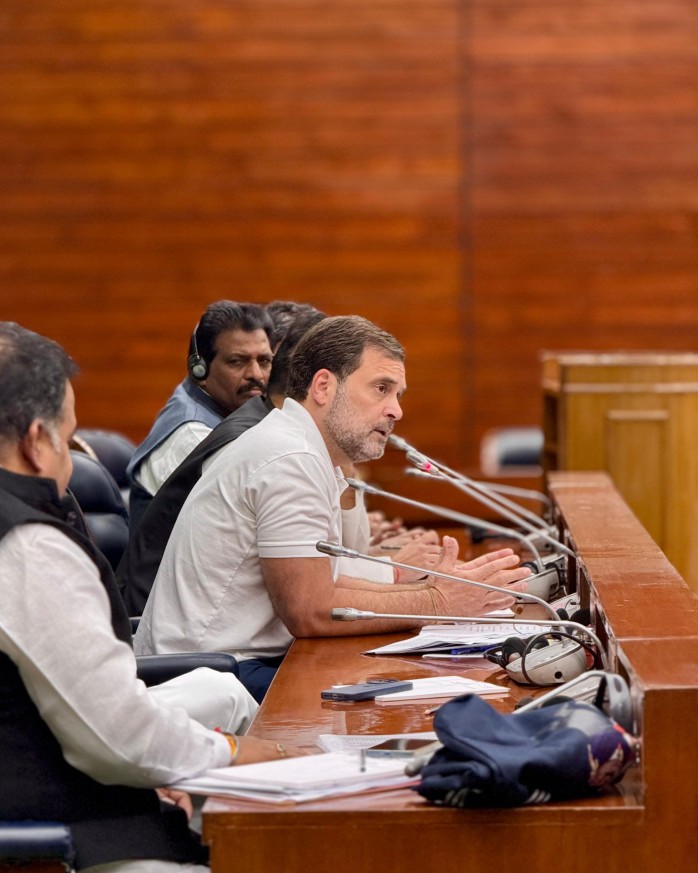
LoP Rahul Gandhi addresses CPP Meeting in parliament on Tuesday. Image credit Congress
From electoral roll revision to the first test of new Rajya Sabha Chairman C.P. Radhakrishnan, Parliament’s short Winter Session promises high political drama, says Manish Anand on The Raisina Hills.
By TRH Political Desk
New Delhi, November 30, 2025—Political temperatures are set to soar in Parliament despite the winter chill outside as the Winter Session of Parliament begins on December 1 and runs till December 19. In a curtain-raiser on The Raisina Hills, senior journalist Manish Anand warned that the session, though unusually short, is likely to witness intense confrontation between the government and the Opposition.
According to Anand, the Opposition enters the session in an aggressively combative mood, convinced that its political survival itself is under threat. The flashpoint is the ongoing Special Intensive Revision of electoral rolls being conducted by the Election Commission of India. Opposition parties allege that the exercise is a “systematic attempt to manipulate elections”, a charge the government has strongly denied.
The Congress, the Trinamool Congress and the DMK are expected to lead the attack. Leader of Opposition in the Lok Sabha Rahul Gandhi has repeatedly refused to accept the mandates of recent Assembly elections in Maharashtra, Haryana and Bihar, alleging “vote theft” and claiming that democratic mandates are being “stolen”.
The government’s counter is equally firm. The Modi administration maintains that the Election Commission is an independent constitutional authority functioning strictly under the Representation of the People Act, a law enacted by Parliament itself, and that the government has no role in influencing its operations.
However, tensions have sharpened after the recent change in the Chief Election Commissioner’s appointment process, which removed the Chief Justice of India from the selection committee. The current panel now includes the Prime Minister, the Leader of Opposition and the Union Home Minister—giving the government two out of three votes. The Opposition argues this tilts the balance decisively in favour of the ruling establishment. Rahul Gandhi has already boycotted such meetings and placed his dissent notes in the public domain.
Manish Anand pointed out that Parliament turning into a political “dangal” is not new under Prime Minister Narendra Modi. From frequent disruptions and walkouts to mass suspensions of MPs and even disqualifications, intense turbulence has marked several sessions since 2014. During the presidency of Pranab Mukherjee, extraordinary appeals had even been made to keep Parliament functional amid relentless disruptions.
The role of presiding officers is also under sharp political scrutiny. Rahul Gandhi has on multiple occasions accused Lok Sabha Speaker Om Birla of partisanship—an issue that continues to fuel Opposition anger inside the House.
This Winter Session will also be the first major test for new Rajya Sabha Chairman C P Radhakrishnan, following the resignation of former Vice President Jagdeep Dhankhar. Dhankhar’s prolonged absence from public life after his resignation, followed by his recent reappearance at an RSS-linked book event in Bhopal, has only deepened political speculation about the circumstances of his exit, despite official claims of health reasons.
Anand noted that expectations are high to see whether Radhakrishnan adopts a different approach from his predecessor, who faced repeated accusations from the Opposition of muzzling dissent in the Upper House. “His conduct will face an immediate trial by fire,” Anand said, adding that the aggressive mood of the Opposition will leave little room for procedural comfort.
At the heart of the confrontation lies the Opposition’s belief that the very architecture of India’s electoral democracy is under pressure. The government rejects these claims as politically motivated and insists that constitutional institutions remain independent and robust.
With both sides hardening their positions, the brief Winter Session is expected to witness high-voltage exchanges, frequent disruptions and bruising political theatre. As Manish Anand concluded, “The cold of Delhi may not be biting yet—but inside Parliament, the political heat will be impossible to ignore.”
Follow The Raisina Hills on WhatsApp, Instagram, YouTube, Facebook, and LinkedIn




About The Author