Why Young Chinese Migrants Are Choosing Japan Over the West
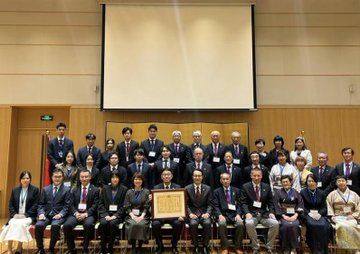
Chinese students in Japan (Image Chinese embassy in Tokyo)
From asset safety to education and speech freedoms, Japan is emerging as the quiet refuge for China’s urban elite—while the US and its allies lose appeal.
By TRH World Desk
New Delhi, December 20, 2025 — For decades, the dream destination for ambitious Chinese migrants lay firmly in the West—America, Canada, Australia. That map is now being quietly redrawn. A growing new generation of Chinese immigrants is choosing Japan instead, creating what Japanese researcher Takehiro Masutomo calls the “Run-Ri” phenomenon—literally, “running to Japan.”
In his book Run-Ri, Masutomo traces this shift to three overlapping anxieties inside China: economic insecurity, suffocating competition in education, and shrinking freedom of expression. Speaking to Philippe Rheault in a University of Alberta-hosted interview, Masutomo explains that many Chinese families no longer feel safe keeping assets solely in China. Japan’s depreciated yen, stable inflation, and accessible property market make it an attractive hedge. For a homeowner in Shanghai or Shenzhen, selling a flat can easily translate into buying an apartment in Tokyo.
Education is the second driver. China’s hyper-competitive school system has exhausted middle- and upper-middle-class families. Japan, facing depopulation, offers less brutal competition and—crucially—equal tuition fees for domestic and international students. At elite institutions like the University of Tokyo, Chinese students now form a striking share of the student body.
The third factor is freedom. While Japan insists it is “not an immigration country,” it still offers space for speech, research, and lifestyle choices that are increasingly constrained in China. For many Run-Ri migrants, Japan enables a “quasi-immigrant” life—close enough to China to maintain business ties, yet distant enough to breathe.
Geopolitics has accelerated the shift. Rising anti-Chinese sentiment, tougher visa regimes, and US–China tensions have dulled Western allure. Japan, by contrast, offers proximity, cultural familiarity, and discretion.
Run-Ri is not an anti-China rebellion. It is a backup plan—quiet, pragmatic, and telling. And it signals that global competition for talent and capital is no longer a West-versus-East story, but a far subtler Asian realignment.
Nepali Immigrants Transform Japan’s Culinary and Real Estate
Follow The Raisina Hills on WhatsApp, Instagram, YouTube, Facebook, and LinkedIn




About The Author