Why Trump’s America Is Squeezing India Instead of China
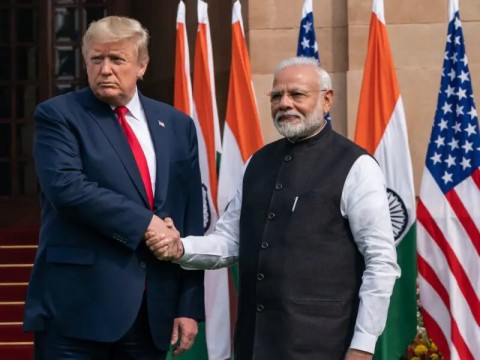
US President Donald Trump & India PM Narendra Modi (Image credit X.com, File)
As Washington’s decline anxiety reshapes its alliances, India finds itself recast from strategic partner to convenient pressure point.
By TRH Foreign Affairs Desk
New Delhi, December 29, 2025 — For more than two decades, the United States treated India as a strategic exception. From the late 1990s onward, Washington practised what analyst Keji Mao calls “strategic altruism”—absorbing real diplomatic costs to back New Delhi on the assumption that a rising democratic India would one day balance China.
Mao said that the “most dramatic example was the civil nuclear deal, which carved India out of global non-proliferation norms at considerable political expense.”
That era is ending, he added.
Donald Trump’s second term marks not merely a policy adjustment but a structural rupture, Mao stressed in his long analysis shared on X, which is now inviting wider scrutiny among geopolitical observers.
“Steep tariffs, higher visa fees, tighter outsourcing rules, and openly disparaging rhetoric towards India signal that Washington no longer sees New Delhi as a long-term bet worth subsidising,” he argued.
The analyst stated that “many in the West dismiss this as a Trump anomaly, or blame India’s limited capabilities, or argue that Trump views China through a purely economic lens rather than a geopolitical one.”
These explanations miss the deeper pattern, he added.
As Mao argues, the real driver is American anxiety over its own relative decline—an anxiety now stronger than concern over external threats. “In this worldview, costly long-term strategic investments give way to short-term extraction,” he added.
Allies are no longer force multipliers; they become what Mao bluntly calls “blood bags”, squeezed for immediate gains to shore up a weakening core.
This logic explains the apparent paradox of Trump’s behaviour. China and Russia, capable of hard retaliation, face aggressive rhetoric but constrained action. “India, by contrast, is seen as less able to impose costs—and therefore safer to pressure. It has enjoyed American indulgence but lacks the industrial heft of Japan, Europe, or South Korea to bargain from strength,” Mao argued.
Worse, he stated, India insists on strategic autonomy, making it appear, “conspicuously ungrateful.”
“The result is a double bind. India did not kneel, as China did not—but unlike Beijing, New Delhi did not anticipate being targeted,” he noted. As Taiwan-based analyst Angelica Oung notes, India was the strategic darling of the Biden years. “The Trump tariffs came as shock therapy. China weathered the trade war and adapted. India absorbed the blow in disbelief,” she argued.
More troubling is Mao’s audacious suggestion that Washington may now view India not just as a troublesome ally, but as a potential rival—an aspirant to the world’s number-two position. “On the surface, this seems implausible. Yet India’s population scale, growth potential, and determination to preserve autonomy set it apart from a compliant Europe or a constrained Japan,” Mao noted.
Why Modi May Actually Thank Trump for India and Canada Reset
Follow The Raisina Hills on WhatsApp, Instagram, YouTube, Facebook, and LinkedIn




About The Author