Why the EU–India Summit 2026 Is a Strategic Turning Point: Kallas
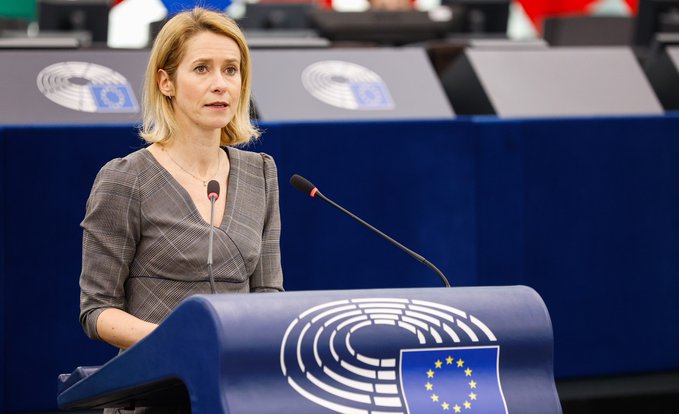
Kaja Kallas, EU High Representative for Foreign Affairs and Security Policy, speaks in EU Parliament (Image Kallas on X)
As the rules-based global order fractures, the EU–India partnership heads for a decisive reset in New Delhi
By TRH World Desk
New Delhi, January 22, 2026 — In a few days, New Delhi will host the 16th EU–India Summit—a meeting that European leaders now openly describe as pivotal rather than routine. Speaking in the European Parliament, EU foreign policy chief Kaja Kallas framed the summit as a strategic necessity, not a diplomatic courtesy.
“At a time when the rules-based international order is under unprecedented pressure—through wars, coercion and economic fragmentation—two major democracies cannot afford to hesitate,” Kallas said.
Her message was clear: Europe and India are moving closer because the world is becoming more dangerous.
With wars reshaping geopolitics, supply chains weaponised, and multilateral institutions under strain, the EU–India relationship is being repositioned from partnership to strategic alignment. According to Kallas, preparations for the New Delhi summit are advancing with “renewed political momentum and a clear sense of purpose,” even as negotiations remain complex.
From Declarations to Deliverables
The summit will adopt a new EU–India Comprehensive Strategic Agenda, charting cooperation through 2030. Leaders are expected to endorse outcomes designed to move the partnership “from words to action.”
Three deliverables stand out.
First, both sides aim to conclude negotiations on the EU–India Free Trade Agreement (FTA)—a long-delayed deal that could unlock markets, reduce trade barriers, and strengthen critical supply chains in clean technologies, pharmaceuticals, and semiconductors.
Second, the EU and India plan to formalise a Security and Defence Partnership, covering maritime security, cyber security, and counter-terrorism. Negotiations on a Security of Information Agreement are also set to begin—an acknowledgment that trust, not just trade, now underpins global partnerships.
Third, a mobility framework agreement will facilitate movement for students, researchers, seasonal workers, and highly skilled professionals, while boosting innovation and people-to-people ties.
Why Europe Needs India—and Vice Versa
The EU is already one of India’s largest trading partners, while India is increasingly seen as indispensable to Europe’s economic resilience. Cooperation on clean energy, green hydrogen, and sustainable manufacturing links climate ambition with industrial competitiveness.
On technology and security, the EU–India Trade and Technology Council is shaping collaboration on artificial intelligence, semiconductors, cyber security, and digital infrastructure—with the strategic goal of embedding trusted standards globally rather than reacting to others’ rules.
In the Indo-Pacific, Kallas noted, Europe and India can jointly anchor stability by defending open sea lanes, strengthening maritime awareness, and resisting coercion “in all its forms.”
A Summit That Signals Intent
“This summit matters for what it sets in motion,” Kallas told lawmakers. The opportunity, she argued, is to convert political momentum into tangible gains for citizens, companies, and economies—while defending the rules-based order on which shared security and prosperity depend.
Follow The Raisina Hills on WhatsApp, Instagram, YouTube, Facebook, and LinkedIn




About The Author