Why Modi May Actually Thank Trump for India and Canada Reset
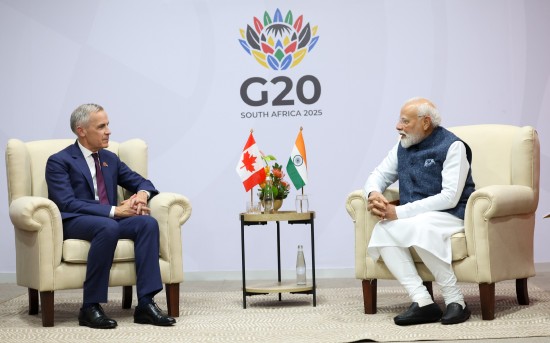
Prime Minister Narendra Modi with Canada's PM Mark Carney on the sidelines of the G20 Summit. (Image PMO)
Despite tariffs, visa curbs and Pakistan outreach, Donald Trump inadvertently helped revive frozen India–Canada ties after the Nijjar crisis.
By TRH World Desk
New Delhi, December 1, 2025 — In a sharp geopolitical analysis on The Raisina Hills, analyst Manish Anand raises a provocative question: Should Prime Minister Narendra Modi thank US President Donald Trump?
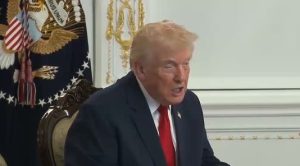
At first glance, the idea seems implausible. Since returning to office, Trump has slapped 50% tariffs on Indian exports, hiked H-1B visa fees to $100,000, and publicly displayed warmth towards Pakistan Army chief Asim Munir—moves that hardly signal goodwill toward New Delhi.
Yet Anand argues that one unintended consequence of Trump’s disruptive diplomacy has benefited India directly: the revival of India–Canada relations, which had collapsed under former Canadian Prime Minister Justin Trudeau.
The Nijjar Flashpoint and the Five Eyes Factor
Ties nosedived after Trudeau accused India of involvement in the killing of Khalistani separatist Hardeep Singh Nijjar, citing intelligence inputs from the Five Eyes network—comprising the US, UK, Canada, Australia, and New Zealand. He later specifically referred to inputs allegedly sourced from American intelligence intercepts of Indian diplomats.
India rejected the charges outright and demanded proof. What followed was a full-blown diplomatic rupture:
- Expulsion of diplomats
- Freeze on trade momentum
- Indian students facing hurdles in Canadian universities
- Uncertainty over billions of dollars of Canadian pension fund investments in Indian markets
While Australia and New Zealand stood by India, Anand notes that the US tacitly encouraged Canada’s confrontational posture during the Trudeau phase.
Trump, Tariffs and Trudeau’s Exit
The equation shifted dramatically after Trump returned to power. His 50% tariffs on Canadian imports and provocative remarks about making Canada the 51st US state destabilised Ottawa’s politics. Amid mounting economic pressure and political turmoil, Trudeau exited the scene.
His successor, Prime Minister Mark Carney, moved swiftly to reset diplomatic priorities—including repairing ties with India.
G20 Reset and Trilateral Tech Cooperation
At the sidelines of the recent G20 Summit, Canada, India and Australia signed a trilateral technology and critical minerals cooperation agreement, covering clean tech, advanced manufacturing and strategic minerals.
Carney’s government has also fast-tracked talks on a long-pending India–Canada Free Trade Agreement, signalling a decisive shift from confrontation to cooperation.
Why This Matters for India
Anand underlines why Canada remains strategically vital for India:
- A key partner in clean and advanced technologies
- A major source of critical minerals
- A financial powerhouse, with deep pension fund exposure to Indian equities
- A historic partner—Canada helped set up India’s first nuclear reactor
With US–Canada relations still strained under Trump’s tariffs, three democracies—India, Canada and Australia—are quietly aligning more closely, even as their individual ties with Washington remain unsettled.
The Paradoxical Thank-You
Manish Anand concludes that while Trump’s policies toward India remain harsh, his pressure on Canada unintentionally dismantled the political eco-system that had frozen India–Canada ties. In that limited but crucial sense, New Delhi has gained strategic space—and for that alone, Anand says, Modi could “paradoxically” thank Trump.
Follow The Raisina Hills on WhatsApp, Instagram, YouTube, Facebook, and LinkedIn




About The Author