Why India Must Fast-Track Dedicated Rail Corridors: Ex-Rail GM
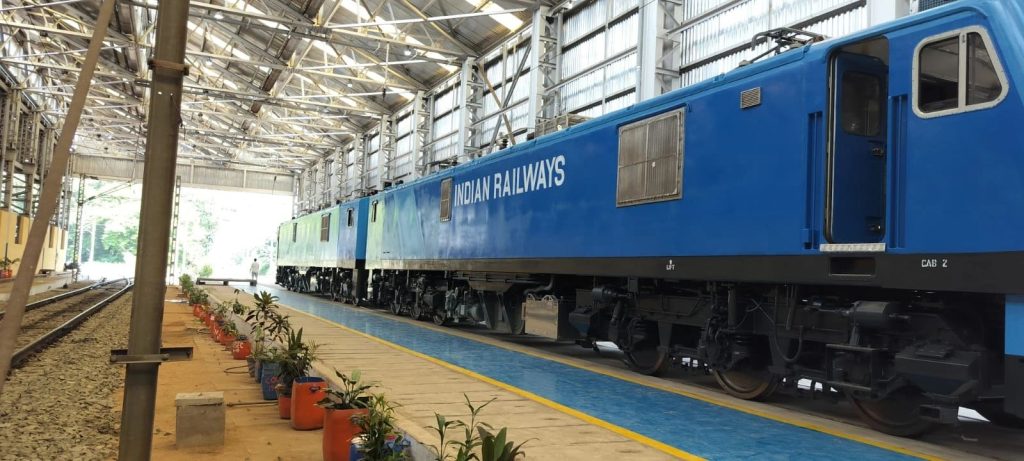
Twin WAG9Hi locomotive developed by CLW
In a detailed LinkedIn post, former railway expert Lalit Chandra Trivedi argues that while expressways are India’s mobility success story, Dedicated Rail Corridors are the real engines of climate strategy, logistics efficiency, and national competitiveness.
By TRH News Desk
New Delhi, November 1, 2025 — Veteran railway professional Lalit Chandra Trivedi has sparked an important discussion on LinkedIn with his analytical post titled “Why Expressways Get Built Faster — And Why India Must Prioritise Dedicated Rail Corridors (DRCs).”
While praising India’s expressway revolution, Trivedi argues that the nation’s next big leap must come from rail-based freight corridors, not roads. “As we move toward a low-carbon economy, Dedicated Rail Corridors must take centre stage,” he wrote, adding: “Rail is the most energy-efficient, land-efficient, and climate-friendly way to move freight at scale.”
He pointed out that each freight train can replace 250–300 trucks, drastically cutting emissions and road congestion. “If India aims for net-zero, energy security, lower logistics cost, and decongestion, fast-tracking DRCs is not optional — it is a strategic necessity,” Trivedi emphasised.
Why Roads Get Built Faster
Trivedi detailed five key reasons expressways progress more swiftly than rail projects:
Land Economics — Roads enhance surrounding land value, while rail corridors can divide land parcels, causing more objections.
Alignment Flexibility — Roads can accommodate sharper curves and gradients; rail lines demand precision.
Operational Constraints — Rail projects near active lines require traffic blocks and signalling integration.
Approval Layers — Rail projects undergo multiple technical clearances, unlike simpler road EPC routes.
Contracting Complexity — Rail involves specialised packages versus the standardised EPC models for highways.
The Road Ahead for DRCs
Trivedi proposed several solutions for speeding up DRC execution:
- Special land acquisition powers akin to NHAI’s.
- Compensation and mitigation for landowners, including annuity and underpass options.
- Green financing windows for low-cost funding.
- A single-window Rail Corridor Authority for faster clearances.
- Integrated logistics planning linking ports, MMLPs, ICDs, and industrial zones under PM Gati Shakti.
“Highways gave India mobility,” Trivedi said, adding: “Dedicated Rail Corridors will give India efficiency, competitiveness, and climate resilience. Steel wheels and expressways together will build a balanced, future-ready logistics backbone.”
Follow The Raisina Hills on WhatsApp, Instagram, YouTube, Facebook, and LinkedIn




About The Author